A purchasing evaluation framework for B2B buyers comparing LiFePO4 power stations before sending an RFQ. It covers five dimensions—output and waveform quality, cycle life and warranty, expansion paths, certification and shipping compliance, and OEM/ODM boundaries—then maps DRIVELONG product lines to buyer scenarios, with an FAQ explaining what a portable power station is.
How professional buyers define “best”
In a B2B sourcing cycle, “best” rarely means the highest headline wattage. It means the best-fit unit for a defined product line: one whose output waveform matches the loads your customers actually run, whose cycle rating and warranty terms can be quoted in a tender document, whose expansion path scales with the system sizes you plan to sell, and whose compliance file clears customs in your destination markets. That definition is testable. This framework gives you five dimensions to check a supplier’s line against, so the RFQ you send asks the right questions instead of comparing brochure numbers.
Before scoring any model, it is worth reading the unit-level verification checklist at LiFePO4 Portable Power Station: What B2B Buyers Verify. It covers the document set and bench checks that turn a quotation into a comparable bid.
Five evaluation dimensions
Rated output versus peak output, and waveform quality
Every professional data sheet should show two power figures: continuous rated output and short-duration peak output. The ratio between them tells you how the unit handles motor inrush—compressors, pumps, and power tools draw several times their running current for a fraction of a second. A 2:1 peak-to-rated ratio, such as 3600W rated against 7200W peak on the BP3600, is a normal design point for this class. What matters for procurement is that your load schedule is built on the rated figure, with the peak reserved for start-up transients.
Waveform quality is the second half of this dimension. Pure sine wave output with total harmonic distortion (THD) below 3 percent is confirmed on several DRIVELONG models, including the BP3600, BP2400, and EP5000iL. For sensitive loads—medical devices, variable-frequency drives, audio equipment, and precision instruments—distortion above that level can cause overheating or erratic behavior. Where THD is not stated on a model record, treat it as an RFQ checkpoint: ask for the measured figure at a defined load, not a generic “pure sine wave” claim.
LiFePO4 cycle life and warranty wording
A cycle rating should always be read with its depth-of-discharge condition. “5000+ cycles to 80 percent capacity” means the cell is projected to retain 80 percent of its original capacity after 5000 full charge–discharge cycles. That is a procurement metric, not a marketing number: it sets the replacement interval your after-sales team should plan for, and it feeds into total cost of ownership calculations for fleet or rental programs.
Compare ratings at the same depth of discharge. The BP500 and BP1000 use ultra-low-voltage LiFePO4 cells rated for 8000 cycles, while the high-power models such as the EP5000iL and BP3600 are rated for 5000+ cycles to 80 percent. The difference is cell architecture, not a quality hierarchy—each design is optimized for a different power-to-energy ratio. A written 5-year warranty on every model record in this line is a supply-chain signal: it indicates the supplier is willing to stand behind the cell and system design for a defined period, and it gives your tender response a citable term. For a deeper treatment of cycle life mechanics, see How Long Do LiFePO4 Batteries Last in a Power Station.
Expansion paths: extra battery packs versus parallel units
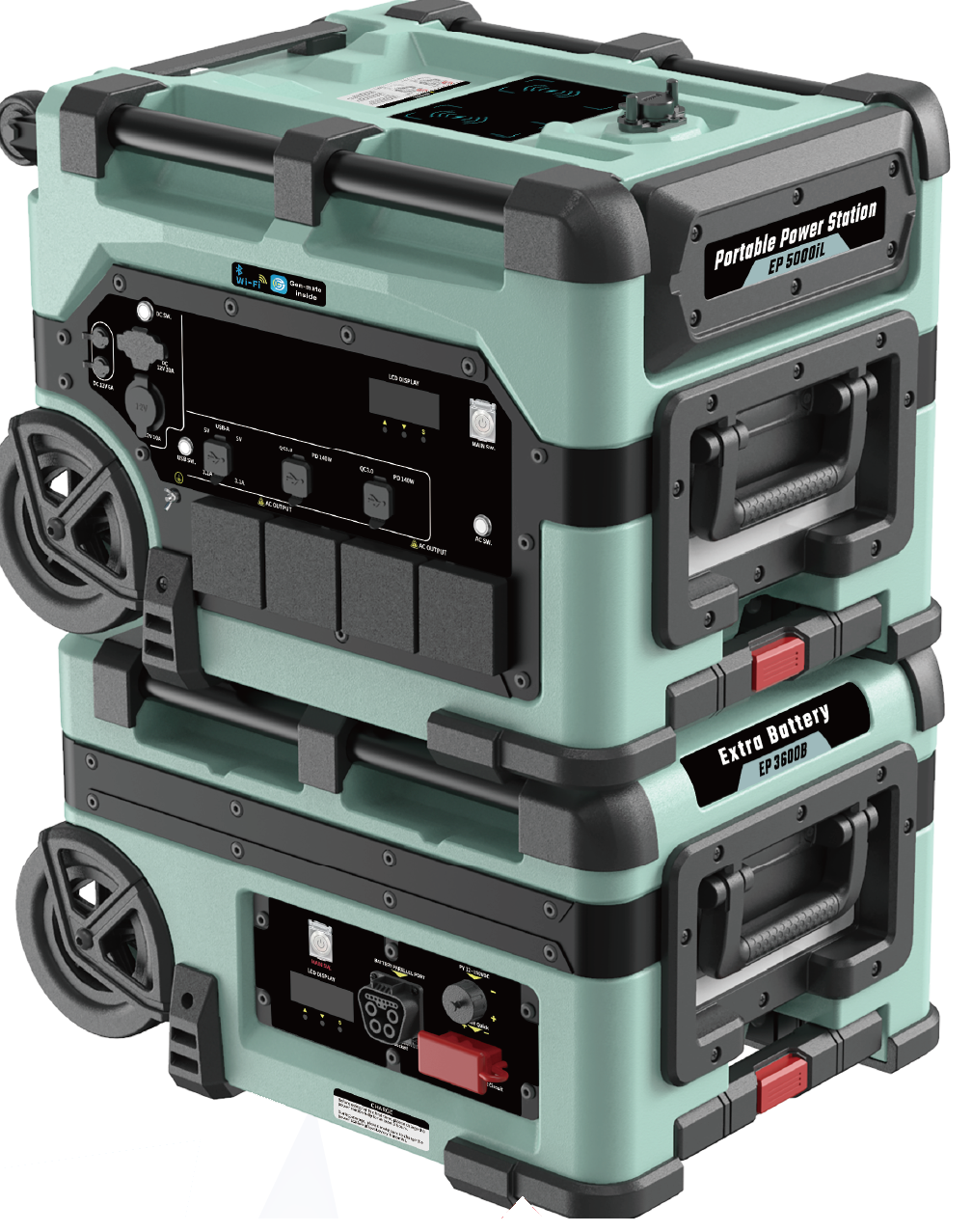
Two expansion architectures appear in this category, and they solve different problems. Extra battery packs increase energy—run time and backup duration—without raising output. Parallel units increase power by combining two or more complete stations. The DRIVELONG line supports both: the EP5000iL accepts up to 31 EP3600B packs for 109kWh, and two stacked units parallel to 10kW. The EP12000iL flagship reaches 24kW maximum parallel output and up to 372kWh with 31 extra batteries.
When you compare suppliers, ask for the maximum system size in both directions—maximum parallel power and maximum energy with packs—and confirm whether the packs are shared across models. A stackable pack architecture that crosses model lines simplifies your inventory and spares planning. The power-tier comparison at High-Capacity LiFePO4 Power Stations: 2 to 12 kW Compared sets out how the tiers differ in load capability.
Certification and shipping compliance
CE, RoHS, and UN 38.3 are documented on the EP5000iL, BP2400 and BP3600 product records; certification files for the other models in the line must be requested and verified during the RFQ. UN 38.3 is the transport-test standard for lithium batteries; without a passing test summary, air and sea carriers will not accept the shipment. CE and RoHS support entry into the EU market. These three are the baseline file you should request with any quotation.
Destination-market approvals beyond that baseline must be confirmed per project. PSE for Japan, IEC reports for markets that accept them, and any local grid-code registration are items to raise during the RFQ, not assumptions to carry into a product listing. Ask for the certificate scope—entity, model, and issuing laboratory—because a report for one model does not automatically extend to the full line. Chemistry differences that affect compliance packaging are explained at LiFePO4 vs Lithium-Ion in Portable Power Stations.
OEM and ODM customization boundaries
Customization is negotiable per project, and the scope should be defined in the RFQ rather than assumed. Typical topics to raise include logo and branding placement, housing color and finish, firmware configuration (display units, language, protection thresholds), plug types and socket standards for your market, and retail packaging. MOQ, tooling cost, and lead time are commercial terms that vary with the change requested—ask for them explicitly instead of inferring a number from a catalog.
For a new program, separate “must-have” specification changes from “nice-to-have” cosmetic ones. A firmware change may carry a different validation cycle than a packaging change, and mixing them in one RFQ makes the quotation harder to compare. The incoming QC checklist at What to Check in a LiFePO4 Battery Power Station is a useful companion for first-article inspection.
Evaluation criteria at a glance
| Dimension | What to request in the RFQ | Why it matters |
|---|---|---|
| Output and waveform | Rated vs peak output; measured THD at defined load | Load scheduling and sensitive-load compatibility |
| Cycle life and warranty | Cycle rating with depth of discharge; written warranty term | Replacement planning and tender documentation |
| Expansion | Maximum parallel power; maximum energy with packs; pack cross-compatibility | System sizing and spares inventory |
| Certification | CE, RoHS, UN 38.3 files; destination approvals with scope | Customs clearance and market entry |
| Customization | Branding, housing, firmware, plugs, packaging; MOQ and tooling terms | Product-line differentiation and cost control |
As a minimum bar where the records allow it: require measured THD below 3 percent when your load list includes sensitive equipment, a written warranty term of 5 years, and a UN 38.3 test summary with every quotation. Mark any dimension a supplier cannot document as pending rather than scoring it as met.
Mapping DRIVELONG product lines to buyer scenarios
The line is organized by power tier and portability, not by a single “best” model. The table below maps each family to the buyer scenario it fits. All models carry a 5-year written warranty on the product records.
| Series | Representative models and confirmed facts | Buyer scenario |
|---|---|---|
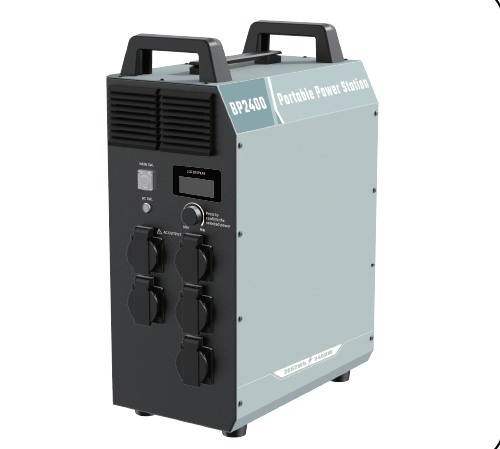
| BP series | BP500 (500W, 1004.8Wh, 8000-cycle cells, 350W MPPT, 10kg); BP1000 (1000W/2000W peak, 2010Wh, 8000-cycle cells, 500W MPPT, 18.5kg); BP2400 (2400W/4800W peak, 2662Wh, pure sine THD <3%, 1200W MPPT, UPS <10ms, IP53/IP66, auto-extinguishing device, app monitoring); BP3600 (3600W/7200W peak, 3430Wh, 2400W MPPT, integrated ATS, 5000+ cycles to 80%) | Entry-level and home backup programs where cost-per-watt and ATS integration drive the specification |
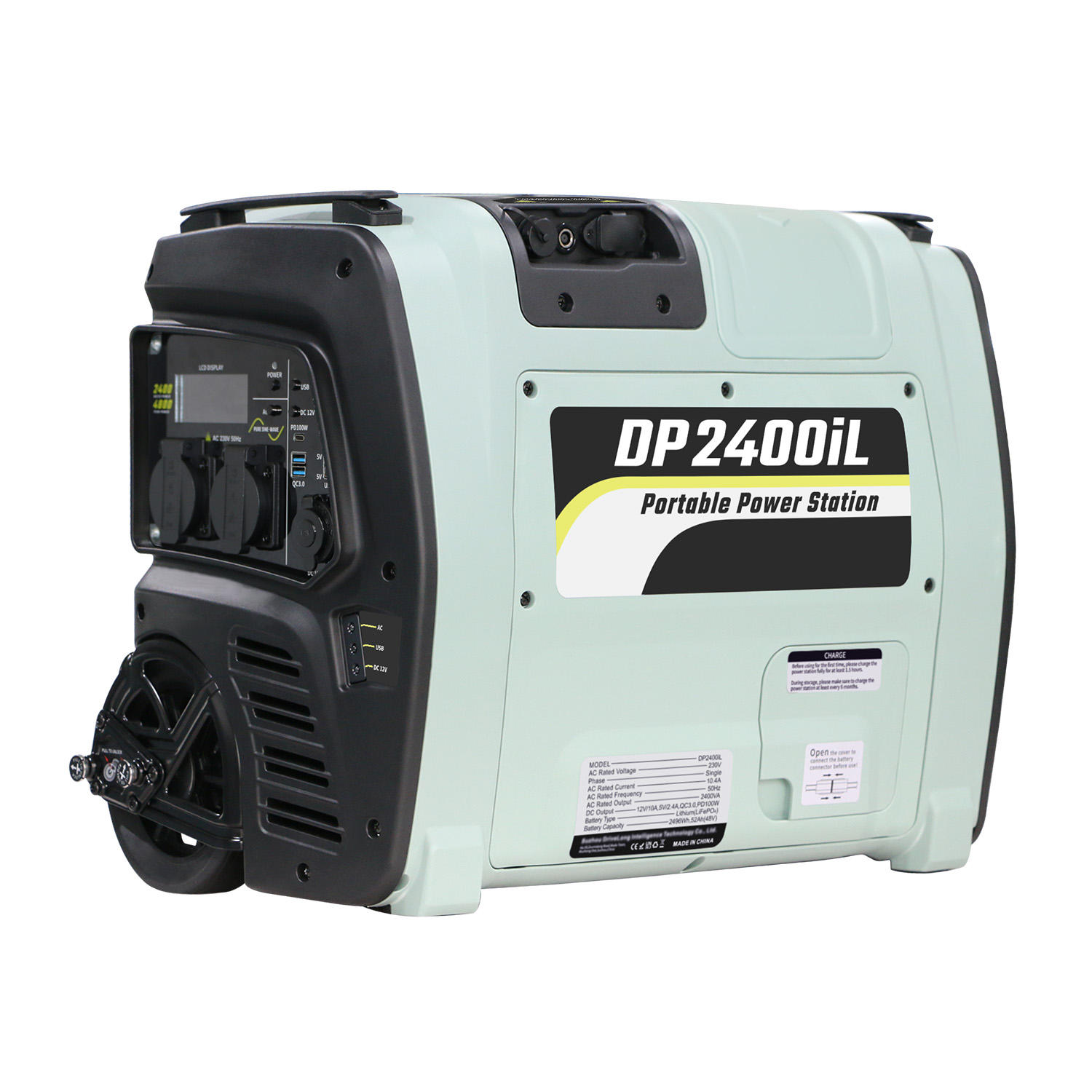
| DP series | DP2400iL (2400VA/4800VA peak, 2496Wh, parallel doubles output, 80% charge in one hour); DP3600iL (3600VA/7200VA peak, 2662Wh, 1200W MPPT, EV emergency charging); DP6000iL (6000VA/12000VA peak, 5376Wh, up to 31 batteries to 172kWh) | Mid-range portability with stackable expansion for RV, emergency, and rental fleets |
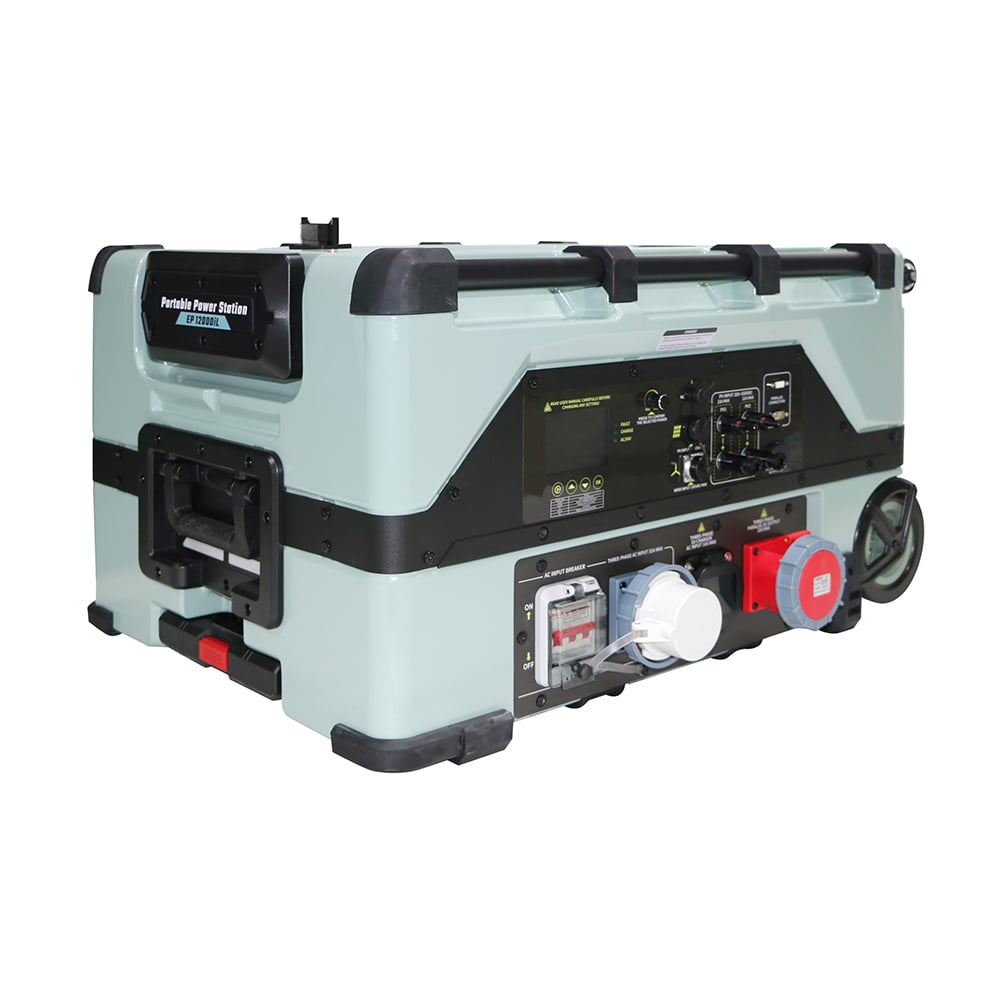
| EP series | EP5000iL (5000W/10000W peak, 3430Wh, THD <3%, 220/230/240V plus split-phase options, parallel to 10kW, 31 packs to 109kWh, UPS ≤10ms, IP53/IP66, 5000+ cycles to 80%); EP6000iLS (6000VA/12000VA peak, 5376Wh, 31 packs to 172kWh, 90% charge in one hour); EP12000iL (12000VA/24000VA peak, 7680Wh, rated continuous output of 12kW three-phase, 11kW single-phase and 10kW split-phase, 24kW parallel, 372kWh with packs, 22kW EV charger, 70-minute full charge) | High-power mobile and three-phase site power; flagship programs requiring large parallel systems |
| CP series | CP1200iL (1200VA/2400VA peak, 2048Wh, ~2-hour full charge, built-in ATS controller, patented telescopic rod) | Compact travel tier and portable retail programs |
The EP12000iL flagship is the reference point for high-power site work: 12000VA rated, 24000VA peak, 7680Wh LiFePO4, and rated continuous AC outputs of 12kW three-phase, 11kW single-phase, and 10kW split-phase. Its 22kW built-in EV charger and approximately 70-minute full charge make it a candidate for mobile service and construction programs. The EP12000iL product page lists the full configuration.
For mid-range programs, the EP5000iL carries the widest confirmed spec set in this article—THD below 3 percent, IP53/IP66 protection, 10ms UPS transfer, 5000+ cycles to 80 percent, and a 5-year warranty—and is the natural benchmark when you compare a 5kW-class unit across suppliers. For the entry tier, the BP2400 combines a 2400W rated output with an integrated auto-extinguishing device and app monitoring.
Naming differences you will encounter when sourcing
Suppliers and marketplaces use several names for the same class of product. A LiFePO4 generator and a LiFePO4 battery generator both describe a battery power station with an inverter output; the word “generator” is a market convention, not an indication of a fuel engine. The higher-volume spelling powerstation lifepo4 appears in search and catalog listings for the same category. When you compare quotes, align on the technical definition—rated output, stored energy, waveform, and chemistry—rather than the label. This article covers battery power stations only; fuel-driven equipment is outside its scope.
Solar configuration is the next variable after the unit itself. The MPPT input range and maximum solar power differ by model—the EP5000iL accepts 12 to 150VDC at up to 1600W, while the BP3600 has a 2400W MPPT on the same voltage window. Sizing the array to the MPPT limit is covered at What a LiFePO4 Solar Generator Is and How to Configure One.
FAQ
What is a portable power station?
A portable power station is a self-contained unit that stores energy in a battery and delivers AC power through a built-in inverter, usually with DC and USB outputs alongside. It charges from mains AC, solar, or both, and it can be moved by hand or on a chassis. The key difference from a fixed battery system is portability and plug-and-play deployment: a fixed system is installed at one site with dedicated wiring, while a portable station can be relocated and used as a standalone power source. For a full definition in sourcing terms, see What a LiFePO4 Solar Generator Is and How to Configure One.
How do I compare cycle ratings across models with different cell types?
Compare at the same depth of discharge and the same end-of-life capacity. The BP500 and BP1000 cells are rated for 8000 cycles, while the high-power models are rated for 5000+ cycles to 80 percent. A higher cycle count on a lower-power model reflects cell architecture optimized for energy throughput, not a claim of superiority across the line. Ask each supplier to state the cycle rating with its depth-of-discharge condition.
Are CE, RoHS, and UN 38.3 enough for every market?
They are the documented baseline on the EP5000iL, BP2400 and BP3600 records, but not a universal passport for the full line. Destination-specific approvals such as PSE for Japan, or IEC reports where accepted, must be confirmed with the supplier during the RFQ, including the certificate scope and the models it covers.
Can the product be customized for my brand?
Logo, housing, firmware, plug types, and packaging are negotiable per project and should be raised in the RFQ. MOQ, tooling, and lead time depend on the change requested, so ask for them explicitly rather than assuming a standard figure.
Use this framework as a verification sheet: request the files and figures listed in the evaluation table, compare the returned bids on the same conditions, and flag any dimension where a supplier’s answer does not state its scope.