
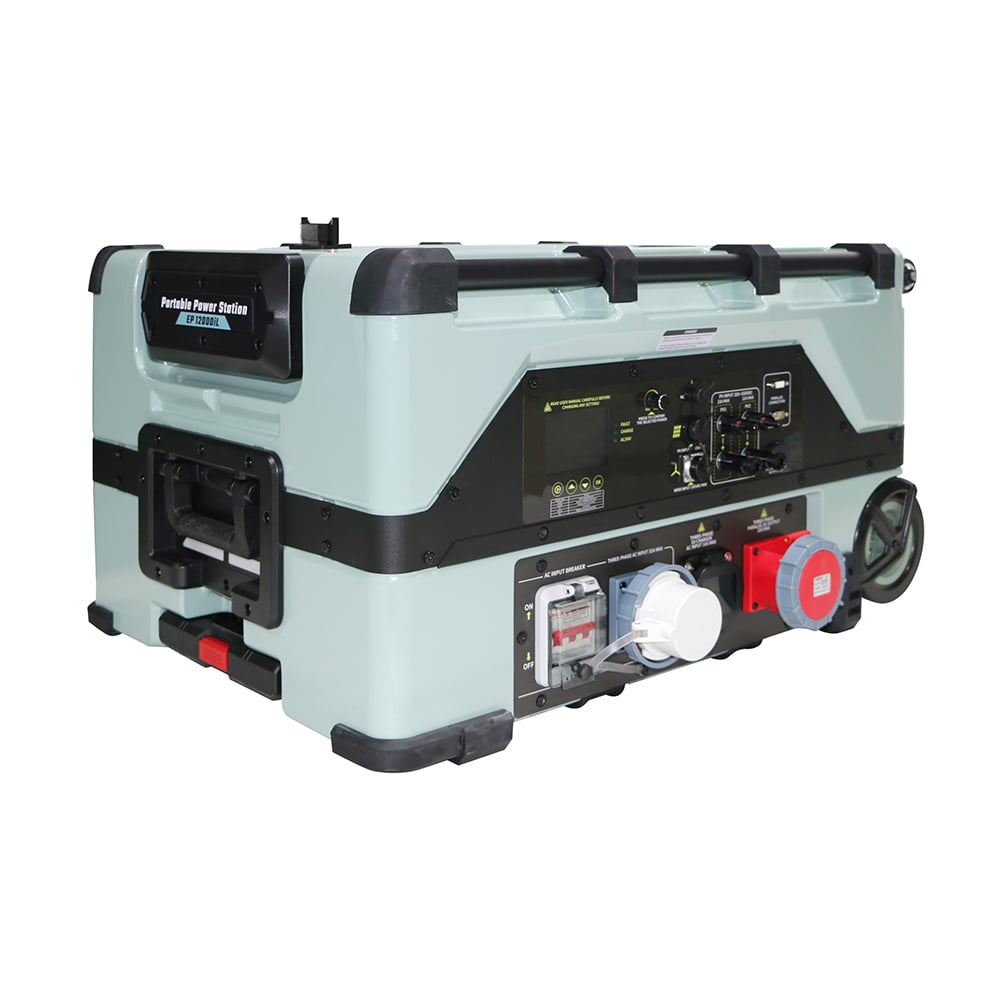
A spec-verified side-by-side of the DRIVELONG high-capacity lfp power station line, from the 2,662 Wh BP2400 to the 12,000 VA EP12000iL, plus selection guidance by application and a buyer checklist for supplier verification.
If you are shortlisting high-capacity lfp power station units for quotation, the hard part is not finding options. It is comparing models on the same parameters, without mixing rated output, peak output and expansion figures. Every number below comes from the DRIVELONG high-capacity line product records, so you can read the class in one pass before you request pricing.
Key takeaways
- Battery capacity across the line runs from 2,496 Wh to 7,680 Wh; rated output from 2,400 W to 12,000 VA; peak output from 4,800 W up to 24,000 VA.
- Expansion is where the line separates itself: some models reach 109 kWh, the DP6000iL and EP6000iLS reach 172 kWh, and the EP12000iL reaches 372 kWh.
- EV charging is built into the EP5000iL, the DP6000iL and the EP12000iL rather than added as a separate product.
- Warranty is 5 years across these models; rated versus peak output, phase options and expansion totals are the parameters that should be confirmed on paper before you shortlist.
The comparison table
Two naming conventions appear in the table, and they follow each model's product record: the BP models and the EP5000iL list a watt rating, while the DP models and the remaining EP models list a VA rating. Read the two designations as different unit systems rather than interchangeable figures, and match whichever one your load calculation uses.
| Model | Battery capacity | Rated output | Peak output | Standout capability |
|---|---|---|---|---|
| BP2400 | 2662 Wh | 2400 W | 4800 W | UPS switchover under 10 ms |
| BP3600 | 3430 Wh | 3600 W | 7200 W | 2400 W MPPT solar input |
| DP2400iL | 2496 Wh | 2400 VA | 4800 VA | Parallel function; expandable with up to 31 extra batteries to 109 kWh |
| DP3600iL | 2662 Wh | 3600 VA | 7200 VA | 1200 W MPPT; expandable to 109 kWh |
| DP6000iL | 5376 Wh | 6000 VA | 12000 VA | Supports EV charging; expandable to 172 kWh |
| EP3600iL | 3430 Wh | 3600 VA | 7200 VA | Four-wheel chassis; expandable to 109 kWh |
| EP5000iL | 3430 Wh | 5000 W | 10000 W | Two units in parallel reach 10 kW without extra kits; built-in EV charger can replace a 7 kW charging pile when stacked |
| EP6000iLS | 5376 Wh | 6000 VA | 12000 VA | Charges to 90% in one hour via 16A/32A dual input; expandable to 172 kWh |
| EP12000iL | 7680 Wh | 12000 VA | 24000 VA | 12 kW three-phase plus 11 kW single-phase plus 10 kW split-phase; expandable to 372 kWh; 24 kW parallel output; built-in 22 kW EV charger; full charge in about 70 minutes |
Rated and peak figures are as declared in the product records for each model; the W and VA designations follow each record as written.
What the numbers mean when you shortlist
Capacity and output are two different questions
Battery capacity sets how long a load runs; rated output sets what can run at the same time. The BP2400 and the DP2400iL carry close battery capacities (2662 Wh and 2496 Wh), while the DP3600iL matches the BP2400 on capacity but steps up to a 3600 VA rating. If your load list is already fixed, start from the output column and then check whether the capacity covers your runtime.
Peak output matters for motor loads
Every model in the table publishes both a rated and a peak figure: the BP2400 at 4800 W, the BP3600 at 7200 W, the DP2400iL at 4800 VA, the DP3600iL and EP3600iL at 7200 VA, the EP5000iL at 10000 W, the DP6000iL and EP6000iLS at 12000 VA, and the EP12000iL at 24000 VA. Peak output is relevant when equipment draws far more at start-up than it does while running. For loads with high inrush, compare peak against the equipment's own starting figures rather than against its nameplate running watts.
Expansion changes the class you are buying in
A 2,496 Wh unit sounds small until you see that the DP2400iL accepts up to 31 extra batteries for a 109 kWh total. The same 109 kWh ceiling applies to the DP3600iL and the EP3600iL. The DP6000iL and the EP6000iLS move up to 172 kWh, and the EP12000iL reaches 372 kWh. Expansion totals are a site-planning number: they determine how far a single platform can grow before you add another unit.
Charging speed is stated three ways
The EP6000iLS reaches 90% in one hour on 16A/32A dual input, and that 90% endpoint is not the same measurement as a full charge. The EP12000iL charges fully in about 70 minutes. The BP3600 takes 2400 W of MPPT solar input, and the DP3600iL takes 1200 W. These figures describe different endpoints and different inputs, so compare endpoints as well as minutes: time-to-charge for grid input, watts for solar input, and like with like on where the count stops.
Parallel operation and EV charging
The EP5000iL pairs with a second unit to reach 10 kW without extra kits, and its built-in EV charger can replace a 7 kW charging pile when stacked. The EP12000iL goes further with a built-in 22 kW EV charger and 24 kW parallel output. The DP6000iL supports EV charging, and the DP2400iL lists a parallel function. If EV charging is on your requirement list, the EP5000iL, the EP12000iL and the DP6000iL are the models to look at.
Selection guidance by application
Compact backup and short-duration bridging
For rack backup, control rooms or short bridging where switchover speed is the deciding factor, the BP2400 is the closest fit: 2662 Wh, 2400 W rated, 4800 W peak, and UPS switchover under 10 ms. The DP2400iL is the alternative when you expect to expand later rather than replace: 2496 Wh and 2400 VA, with expansion to 109 kWh.
Site and workshop use
For work sites that move between locations, the BP3600 pairs a 3600 W rating with 2400 W of MPPT solar input and a 7200 W peak. The EP3600iL adds a four-wheel chassis at 3430 Wh and 3600 VA, expandable to 109 kWh. The EP5000iL suits workshops that may later run two units side by side: 3430 Wh, 5000 W rated, 10000 W peak, and parallel output of 10 kW without extra kits. The EP5000iL shares its 3430 Wh pack with the EP3600iL while stepping up the output rating, a design trade-off confirmed in the product records rather than a data error.
Whole-facility and three-phase needs
Where the requirement is a full building load or three-phase supply, the EP12000iL is the model to quote: 7680 Wh, 12000 VA rated, 24000 VA peak, with 12 kW three-phase, 11 kW single-phase and 10 kW split-phase output, 24 kW parallel output and expansion to 372 kWh. The EP6000iLS and DP6000iL sit below it at 172 kWh expansion, with the EP6000iLS adding one-hour charge to 90% and the DP6000iL adding EV charging support.
What to verify with any supplier
- Rated versus peak output. Confirm which figure appears on the datasheet for the exact model and whether both are published. A VA rating and a W rating are not the same designation.
- Phase options. If your load is three-phase, ask for the phase configuration in writing rather than inferring it from the model name.
- Expansion totals. Confirm the maximum capacity including extra batteries, and what is included in the base unit versus supplied separately.
- Charging speed. Ask under what input configuration a time-to-charge figure applies, whether it ends at 90% or at full, and whether solar input is stated separately.
- Certifications and warranty. Request the certificates that apply to the specific model and destination market. Warranty across these models is 5 years; confirm the terms that accompany it.
Next step
Once you have matched capacity, rated output and expansion ceiling to your load list, the remaining variables are quotation terms and lead time. Send your load profile, required runtime, phase requirement and expected expansion total, and request pricing for the shortlisted models. The two models most often quoted for facility-level work are the EP12000iL for three-phase and high-output needs, and the EP6000iLS where fast charging and 172 kWh expansion are the priorities.