A practical inspection checklist for buyers comparing portable power stations with LiFePO4 batteries, covering capacity honesty, cycle ratings, BMS, protection grades, safety features, transport certification, and expandability. Includes verified examples from DRIVELONG's DP2400iL, BP2400, BP1000, and BP3600.
When you compare portable power stations, the marketing headline is usually watt-hours. That number tells you how much energy the battery holds, but it does not tell you whether the battery is a good fit for daily use, whether the capacity is measured honestly, or whether the system will survive the back of a truck. For B2B buyers, the battery inside the unit matters more than the badge on the front. This checklist focuses on what to inspect in a lifepo4 battery power station—the actual cells, management electronics, protection, certifications, and expansion options—so you can separate verified facts from claims that only look good on a spec sheet.
Key inspection areas: Capacity honesty (Wh and Ah at pack voltage), cycle rating basis, battery management system, ingress protection at the pack level, integrated fire suppression, transport certification, and expandability. Each item below includes what to look for and how to verify it with the supplier.
1. Start with capacity honesty: Wh and Ah at pack voltage
Capacity is the most common source of confusion in a portable power station with lifepo4 battery. A single watt-hour number is not enough. Ask for the pack voltage and the amp-hour rating so you can check the math: Wh = Ah × V. A station marketed as “2000Wh” might actually use a 48V pack rated at roughly 42Ah (48 × 42 = 2016Wh), or a 25.6V pack rated at 78Ah (25.6 × 78 ≈ 1997Wh). Both round to the advertised figure, but the configuration affects current draw, cable sizing, and how the battery behaves under load.
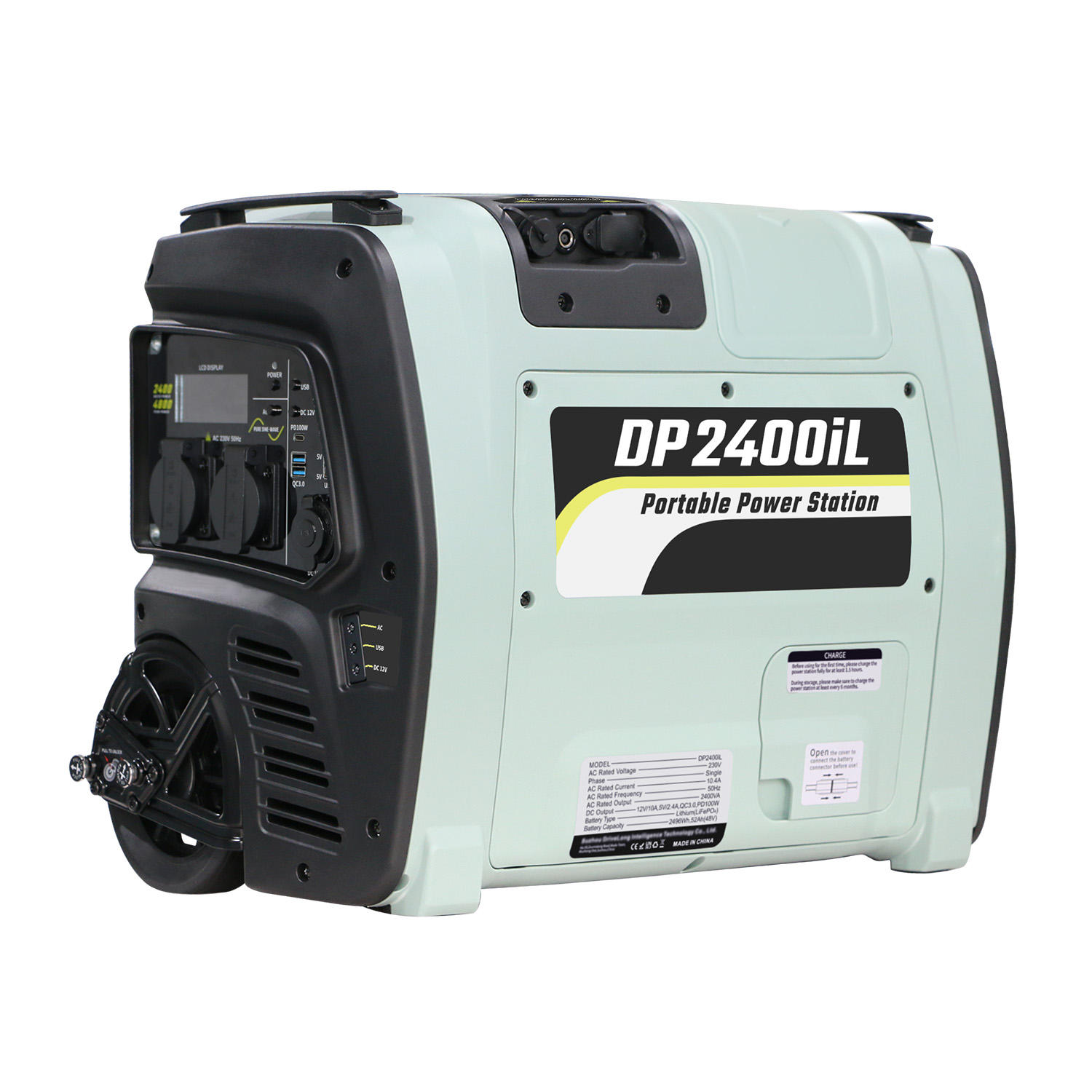
DRIVELONG publishes both numbers for the DP2400iL portable power station. Its nameplate shows 2496Wh, 52Ah, and LiFePO4 chemistry. That means the nominal pack voltage is 48V, which is a common choice for higher-power inverter systems because it keeps current lower for a given wattage. When you review a supplier’s datasheet, check that the Wh, Ah, and voltage are all stated and consistent. If only Wh appears, ask for the missing figure and the test condition used for the rating.
Capacity ratings are supplier-declared until you see a test report. A responsible supplier should be able to provide a capacity test report or a production test record that shows the measured Wh at a defined discharge rate and temperature. Treat the nameplate as a starting point, not the final proof.
2. Check the cycle rating and the basis behind it
Cycle life is usually written as “X cycles to 80% capacity.” That is a useful metric only if you know the depth of discharge, charge/discharge rate, and temperature behind it. A 5000-cycle rating and an 8000-cycle rating are not directly comparable unless the test conditions are the same. Ask the supplier what the cycle rating is based on: cell datasheet, pack-level test, or an internal estimate.
DRIVELONG provides two examples that show the difference in cell selection. The BP2400 pack is rated for 5000 cycles to 80% capacity. The BP1000 uses ultra-low-voltage cells and is rated for 8000 cycles to 80% capacity. These are supplier-declared figures. For a B2B buyer, the practical question is which rating matches your duty cycle. A station used for occasional backup may never approach 5000 cycles; a station used daily in a remote monitoring or rental fleet will. Match the rating to the application and ask for the cycle test conditions in writing.
3. Review the battery management system (BMS)
The BMS is the control layer that protects the cells from overcharge, over-discharge, overcurrent, short circuit, and extreme temperature. In a LiFePO4 pack, the BMS also handles cell balancing so that one weak cell does not drag down the whole pack. A good BMS is not a single chip; it is a set of protections that are documented and testable.
When inspecting a unit, ask for the BMS specification: protection thresholds, balancing method, communication interface (if any), and whether the BMS is integrated into the pack or the station. Look for a supplier who can explain how the BMS interacts with the inverter and the charger. If the BMS is proprietary, ask what failure modes it covers and whether the protection settings are fixed or adjustable. For fleet buyers, a BMS with communication can be valuable for monitoring, but only if the supplier supports the protocol.
4. Check ingress protection at the battery pack level, not just the unit
A station’s IP rating on the outer enclosure does not automatically mean the battery pack inside is protected to the same level. Water and dust can enter through vents, seams, or cable glands. For outdoor or mobile use, the pack-level IP rating is the one that matters for battery longevity and safety.
DRIVELONG’s BP2400 and BP3600 battery packs are rated IP66, while the complete units are rated IP53. That distinction is important: IP66 on the pack means it is protected against dust and high-pressure water jets, but the complete station is IP53, which is protected against dust and spraying water. In practice, this means the battery module itself is built for harsher conditions than the full station. If your application involves washdown or heavy rain, confirm both ratings and understand which components are covered.
5. Look for integrated safety features such as auto-extinguishing devices
LiFePO4 chemistry is generally more thermally stable than some other lithium chemistries, but a battery pack is still an energy storage device. An integrated auto-extinguishing device adds a layer of protection by detecting and suppressing a thermal event inside the pack. DRIVELONG includes an integrated auto-extinguishing device on the BP2400 and BP3600 packs. For buyers, the question is whether the device is certified, how it is triggered, and whether it is a serviceable part. Ask for the specification and any test evidence the supplier can share.
6. Verify transport certification, especially UN 38.3
If you are shipping lithium batteries by air, sea, or road, UN 38.3 testing is a common requirement. It covers altitude simulation, thermal cycling, vibration, shock, external short circuit, impact, overcharge, and forced discharge. DRIVELONG’s BP3600 and BP2400 packs carry UN 38.3 certification. That is a supplier-declared certification; ask for the test report or certificate number and confirm that it applies to the exact model and pack configuration you are buying. Transport regulations change, so verify that the certificate is current for your shipping mode and destination.
7. Assess expandability for future capacity needs
Expandability lets you start with a smaller station and add battery capacity later. It also affects how you design a system for a site: more batteries mean more energy, but also more weight, space, and wiring. Check the maximum number of external batteries supported, the total energy possible, and the connection method.
The DP2400iL accepts up to 31 extra batteries for a total of 109kWh. That is a significant expansion capability, but it is only useful if the BMS and inverter can manage the additional packs safely. Ask the supplier how the system handles battery balancing across multiple packs, what cables and connectors are required, and whether the expansion is supported by the warranty. For a B2B project, get the expansion limits and configuration rules in writing.
Inspection checklist summary
| Item | What to verify | DRIVELONG example |
|---|---|---|
| Capacity honesty | Wh, Ah, and pack voltage stated consistently | DP2400iL: 2496Wh, 52Ah, 48V nominal (LiFePO4) |
| Cycle rating | Cycles to 80% and test basis | BP2400: 5000 cycles; BP1000: 8000 cycles (ultra-low-voltage cells) |
| BMS | Protection thresholds, balancing, communication | Integrated BMS; ask for specification |
| Ingress protection | IP rating of pack vs. complete unit | BP2400/BP3600 pack: IP66; unit: IP53 |
| Fire suppression | Integrated auto-extinguishing device | BP2400 and BP3600 include integrated auto-extinguishing device |
| Transport certification | UN 38.3 certificate for exact model | BP3600 and BP2400: UN 38.3 |
| Expandability | Max extra batteries and total energy | DP2400iL: up to 31 extra batteries, 109kWh total |
Frequently asked questions
What does “capacity honesty” mean for a LiFePO4 power station?
It means the advertised watt-hours match the actual pack configuration. Ask for Wh, Ah, and nominal voltage. A 2496Wh pack at 52Ah implies 48V nominal. If the numbers do not multiply correctly, ask the supplier to explain.
Is a higher cycle rating always better?
Not automatically. The cycle rating must be compared at the same depth of discharge, rate, and temperature. A 5000-cycle rating and an 8000-cycle rating may be based on different test conditions. Ask for the test basis and match it to your usage.
Why does pack-level IP rating matter more than unit IP rating?
The pack contains the cells and BMS. If the pack is IP66 but the unit is IP53, the battery module is more protected than the enclosure. For outdoor use, check both ratings and understand how the unit is sealed.
Do I need UN 38.3 for all battery shipments?
UN 38.3 is widely required for lithium battery transport by air and sea. Confirm that the certificate applies to your exact model and is current for your shipping mode and destination.
Can I expand the DP2400iL later?
Yes, the DP2400iL accepts up to 31 extra batteries for 109kWh total. Check the connection method, BMS balancing, and warranty coverage for expanded configurations with the supplier.
For B2B buyers, the battery inside the station is the part that determines reliability, safety, and total cost of ownership. Use this checklist to ask specific questions, request test reports, and compare offers on what is actually inside the unit. If you need more details on the DP2400iL or BP1000, or want to discuss a configuration for your project, contact our team with your requirements.