
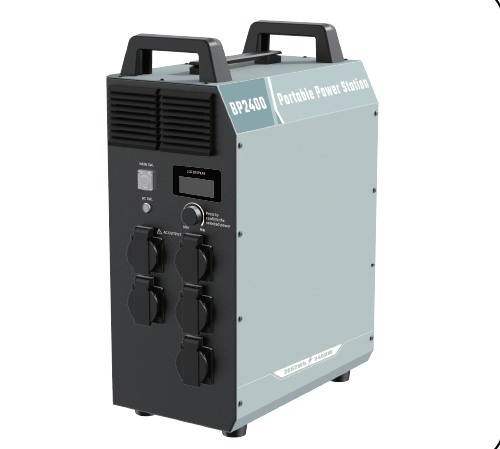
Understand what a LiFePO4 cycle-life rating measures, see DRIVELONG's declared ratings for the BP2400, BP3600 and BP1000, and learn which charging, discharge and storage habits shorten or extend real service life.
Battery service life explained
For a buyer, the most useful answer is the short one: a LiFePO4 pack in a portable power station is rated in charge and discharge cycles, and DRIVELONG's LiFePO4 packs are declared at 5000 cycles to 80 percent capacity on the BP2400 and BP3600, and 8000 cycles on the BP1000. Those are declared cycle ratings under the conditions covered below, not a calendar promise. Read on for what the number actually measures and what decides whether a unit gets close to it.
Key takeaways
Cycle life is counted until capacity falls to roughly 80 percent of the original rated value, not until the battery stops working.
DRIVELONG declared ratings: BP2400 and BP3600 LiFePO4 packs at 5000 cycles to 80 percent; BP1000 ultra-low voltage LiFePO4 cells at 8000 cycles.
Charging temperature is 0 to 45 degrees C; discharge runs from about minus 20 to 50 or 60 degrees C depending on the model.
The whole-unit life also depends on the inverter and on how the station is used, so battery cycle rating alone does not fix the service life of the product.
What a cycle-life rating actually measures
A cycle is one full charge followed by one full discharge. Manufacturers do not run a pack until it dies, because a LiFePO4 battery does not fail cleanly at a set point. Instead they count cycles until usable capacity has faded to about 80 percent of the original figure. That 80 percent line is the conventional end-of-life marker for this chemistry: below it, a pack still holds charge and still powers loads, but runtime on a given job is noticeably shorter.
Three details matter when you read a rating on a datasheet:
- The rating is tied to a test condition, usually a defined charge and discharge rate, a defined depth of discharge and a defined ambient temperature. A pack cycled gently and a pack cycled hard do not return the same count.
- The number is cycles, not years. Converting it to years requires an assumption about how often the unit is cycled, which is why calendar figures vary so much between users.
- Capacity fade is gradual. At 80 percent, a station that ran a load for ten hours when new would run it for roughly eight. Whether that matters depends on how close to the limit you were running.
This is why the same chemistry can be described with very different cycle counts across products. The rating follows the cell, the pack design and the test conditions, not the chemistry name alone.
DRIVELONG declared cycle ratings
The figures below are the declared ratings for the LiFePO4 packs in the DRIVELONG portable power station line.
| Model | Battery | Declared cycle rating | End point |
|---|---|---|---|
| BP2400 | LiFePO4 pack | 5000 cycles | 80 percent capacity |
| BP3600 | LiFePO4 pack | 5000 cycles | 80 percent capacity |
| BP1000 | Ultra-low voltage LiFePO4 cells | 8000 cycles | 80 percent capacity |
Ratings as declared by DRIVELONG for the named models. Cycle counts depend on the test conditions described above.
What 5000 cycles means in everyday use: an arithmetic illustration
Buyers often want the cycle count translated into years. The honest way to do that is arithmetic on the declared rating, with the assumption stated openly. If a unit completes one full cycle per day, a 5000-cycle rating spans more than 13 years before the pack reaches the 80 percent threshold. At one cycle every two days, the same rating covers roughly twice that span. At three cycles a day, it covers a third of it.
This is arithmetic, not a tested lifespan promise. It says nothing about how long a specific station will last in a specific installation. A day of light load and a day of heavy load are not the same cycle, and a full discharge stresses the pack more than a partial one. Treat the calculation as a way to compare models on equal assumptions, not as a warranty of years.
Charging and discharge temperature windows
Temperature is the single largest external factor in how close a pack gets to its rating. The declared windows are:
- Charging: 0 to 45 degrees C.
- Discharge: around minus 20 to 50 or 60 degrees C, depending on the model.
Charging below 0 degrees C is the case to watch in cold-climate deployments. The discharge window is wider, which is why a station may still run a load in conditions where it should not be recharged. If a site is regularly near or outside these limits, plan the charging routine around them rather than relying on the pack to absorb the abuse. None of these windows say the pack is inert outside the range; they define where normal charging and discharging are specified.
Storage habits for long idle periods
Many portable power stations spend most of their life in storage. Three habits keep a stored pack in better condition:
- Store at a moderate state of charge rather than fully charged or fully drained, following the manufacturer's guidance for the model.
- Recharge periodically during long idle periods so the pack does not sit at a very low state of charge for months.
- Keep storage away from temperature extremes and from conditions that would take the pack outside the operating windows above.
These habits do not change the declared cycle rating, but they affect the condition the pack is in when it is finally put back into service.
BMS protection and the auto-extinguishing device
Cell ratings assume the pack is operated within its limits. The battery management system (BMS) is what holds the pack to those limits in normal use, by managing the charge and discharge behaviour of the pack. On the BP2400 and BP3600, the units also include an integrated auto-extinguishing device. These are design features of those two models, not a substitute for correct installation and operating conditions.
What shortens life and what extends it
| Factor | Shortens life | Extends life |
|---|---|---|
| Cycle depth | Frequent deep discharges | Partial cycles where the application allows |
| Charging temperature | Charging outside 0 to 45 degrees C | Charging within the declared window |
| Discharge temperature | Operating beyond the model's discharge window | Operating within it |
| Storage | Months at very low charge or at temperature extremes | Moderate charge with periodic recharging |
| Protection | Operating a pack with a faulty or bypassed BMS | Normal BMS operation |
Warranty and the whole-unit picture
DRIVELONG offers a 5-year warranty across the portable power station line. That is the commercial backstop on the product; the battery cycle rating is a separate engineering declaration.
Buyers comparing stations on battery life alone should also weigh the rest of the unit. The inverter, the electronics and the way the station is loaded all bear on how long the product serves its purpose, and those parts have their own service considerations. A high battery cycle rating is one input to a purchase decision, not the whole of it. For a full comparison, ask the supplier how the rating was measured and what conditions apply to the warranty.
Frequently asked questions
How long does a portable power station last?
There is no single number. It depends on the battery's cycle rating, how often the unit is cycled, the temperature windows it is operated and stored in, and the service life of the inverter and electronics. The battery rating is the starting point, not the final answer.
Do the declared cycle ratings apply to every DRIVELONG model?
No. The BP2400 and BP3600 LiFePO4 packs are rated at 5000 cycles to 80 percent capacity. The BP1000 uses ultra-low voltage LiFePO4 cells rated at 8000 cycles. Check the model before quoting a figure.
Does reaching 80 percent capacity mean the battery must be replaced?
No. The pack continues to work, but runtime on a given load is shorter. Many users keep running a pack well past the 80 percent line if their loads allow it.
Can I charge a station below 0 degrees C?
The declared charging window is 0 to 45 degrees C. Charging outside that window is not within the specified operating conditions.
What is covered by the 5-year warranty?
The 5-year warranty applies across the portable power station line. Ask the supplier for the warranty document for the specific model so the terms are clear before purchase.