
A grid-charged LiFePO4 backup can serve a whole house without solar panels. This checklist explains how it differs from a solar-charged system, which DRIVELONG models charge from wall power, and the specifications — AC charging power and fill time, capacity and expansion, output and phase, and transfer behavior — that decide whether it fits your project before you send an RFQ.
Buyer checklist
Whole House Battery Backup Without Solar: What Works and What to Confirm
A whole house battery backup can run without solar panels. The unit charges from utility power, stores energy in its LiFePO4 battery, and supplies the load through its inverter when mains voltage drops. Solar changes how the battery refills — not whether it works. For a homeowner, distributor or project buyer comparing grid-charged options before ordering, the questions are practical: how fast a unit refills from the wall, how much storage it offers, what output and phase the installation needs, and whether the record states a transfer time for the model you are buying.
- A grid-charged LiFePO4 backup works as a complete backup system once it is installed into the circuits you want to protect; panels are an optional later addition for refilling, not a requirement for operation.
- AC charging power and fill time set how quickly the battery returns to full after an outage.
- Capacity and expansion headroom must match the loads you plan to keep running for the duration you need.
- Rated output, peak output and phase type determine which circuits a unit can serve; whole-house coverage belongs to the high-output models, while the compact units suit essential-load panels.
- Where the product record states a UPS transfer time, quote it; where it does not, confirm it with the supplier before promising performance.
How a grid-charged backup differs from a solar-charged system
The energy path is the difference. In a grid-charged system, the mains supplies the AC charger, the charger tops up the battery, and the inverter converts battery DC back to AC for the house. In a solar-charged system, the panels feed an input stage that does the same battery charging. Both then share the same storage and output stages. A buyer looking at backup-only operation is therefore choosing a battery and an inverter with a mains charger, and the solar input specification is secondary.
This is the practical meaning of home battery storage without solar: the system is sized around the load and the expected outage length, and refilling depends on the grid being back on. Where outages are short and the grid returns reliably, this is a straightforward design. Where outages are long, the charging rate becomes important because the battery must recover between events. The pillar guide, solar power battery backup: how it works and what to confirm before you order, covers solar-charged architectures and quote structure; this article stays on the grid-charged case.
DRIVELONG units that charge from wall power alone
Every model below is LiFePO4 and accepts utility charging. They differ in output, capacity and phase capability, which is what separates a single-room backup from a whole-house or three-phase installation.
| Model | Battery capacity | Rated / peak output | AC charging | Expansion |
|---|---|---|---|---|
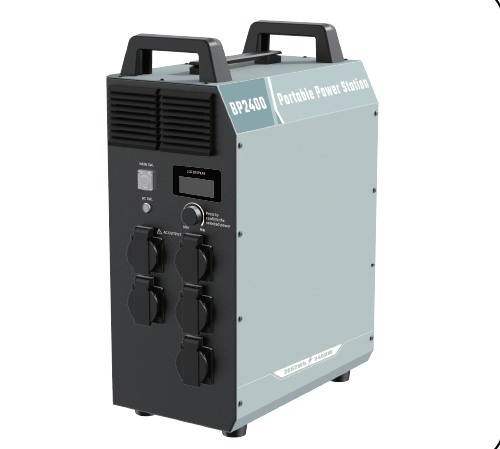
| BP2400 | 2662Wh | 2400W / 4800W | Max 1800W at 220–240VAC, full in 1.5 hours | Not stated as expandable in the record supplied |
| BP3600 | 3430Wh | 3600W / 7200W | Max 3000W at 220–240VAC | Not stated as expandable in the record supplied |
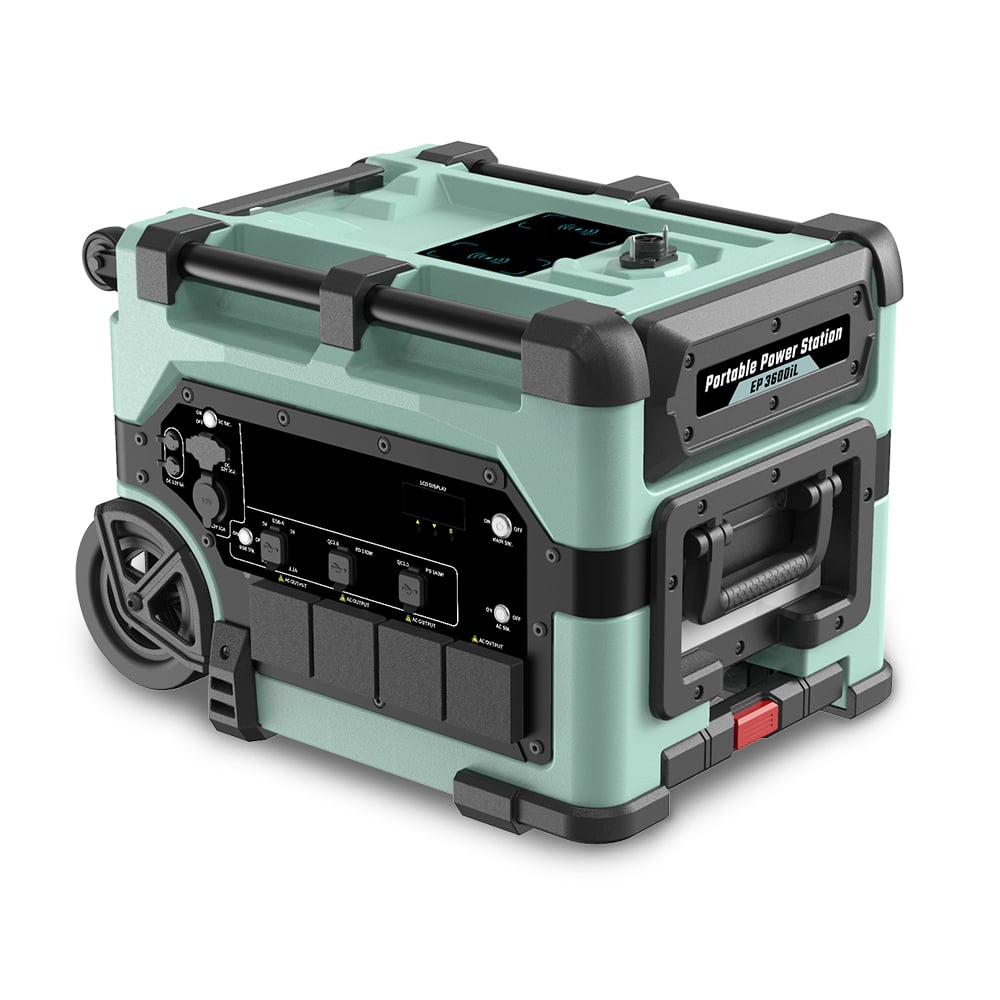
| EP3600iL | 3430Wh | 3600VA / 7200VA | Fast charging to 80% in 1 hour; utility charging supported | Up to 31 extra batteries, to 109kWh |
| EP5000iL | 3430Wh | 5000W / 10000W | Single-phase max 3000W in 1.2 hours; split-phase 1700W in 2 hours | Up to 31 EP3600B packs, to 109kWh; two units parallel to 10kW |
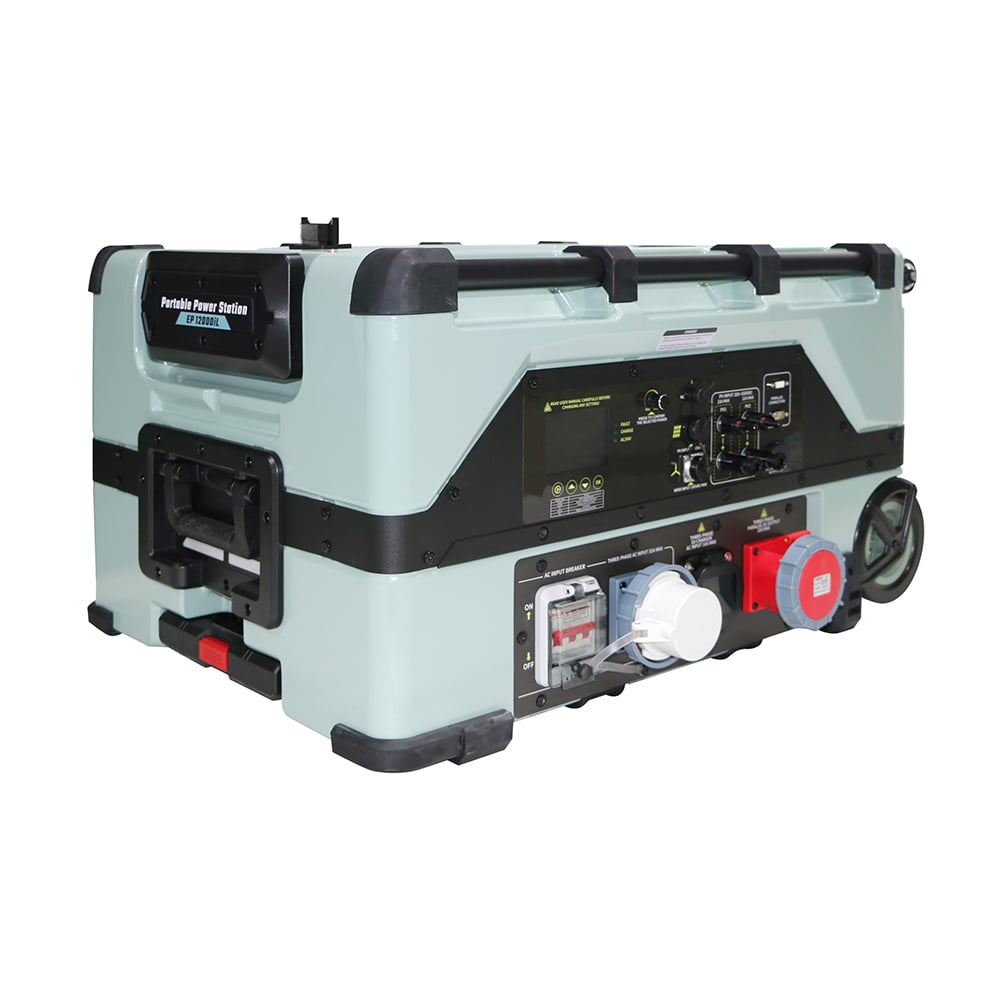
| EP12000iL | 7680Wh | 12000VA / 24000VA | Utility charging, full in 70 minutes | Up to 31 extra batteries, to 372kWh |
A note on units before comparing the rows: the BP models and the EP5000iL are rated in watts, while the EP3600iL and EP12000iL are rated in volt-amperes (VA). VA measures apparent power and watts measure real power; the ratio between them depends on the power factor of the connected load, so treat the two scales as different units rather than interchangeable figures and confirm the conversion for your load type with the supplier. The EP12000iL outputs 12kW three-phase, 11kW single-phase and 10kW split-phase as the rated continuous figures listed per phase type in its product record; confirm with the supplier how these figures apply to your wiring before fixing a load budget.
The BP2400 and BP3600 are the compact end of the line: IP53 unit and IP66 battery pack, a 10ms-or-less UPS transfer time, and a five-year warranty on both. The BP2400 also carries an integrated auto-extinguishing device and Wi-Fi and Bluetooth app monitoring. These compact units are positioned for apartments and essential-load panels, not for a full household load list; whole-house or three-phase coverage starts with the EP models. Essential loads mean the circuits the owner designates as priority during an outage — for example refrigeration, lighting and communication equipment — and the actual scope must be confirmed against the site's load list before ordering. The BP2400 portable power station is the unit pictured for this case.
The four specifications that decide fit
AC charging power and fill time
This is what a grid-charged buyer checks first. A unit that refills slowly leaves the house on battery longer than necessary after the mains returns. The EP5000iL smart mobile power station accepts 3000W single-phase charging and fills its 3430Wh battery in 1.2 hours; on split-phase input it charges at 1700W and takes 2 hours. The EP12000iL fills its 7680Wh battery in 70 minutes. State the supply voltage and phase available at the installation so the charging figure quoted is the one that applies.
Battery capacity and expansion path
Capacity alone is not the answer; it is capacity against the load and the outage length you are designing for. As a working method, size storage as the continuous load in watts multiplied by the backup hours you need, with a margin for inverter losses and the recharge window between outages; this simplified estimate excludes motor starting current, temperature derating and depth-of-discharge limits, so confirm the final pack count against the load list with the supplier. The load sizing and RFQ guide, whole house battery backup sizing: loads, expansion steps and the RFQ questions to ask a supplier, sets out the full method. What matters here is expansion: the EP5000iL and EP3600iL each reach 109kWh with up to 31 extra packs, and the EP12000iL reaches 372kWh. A distributor ordering for a range of home sizes can standardize on one inverter and scale the battery count.
Output and phase
Rated output must exceed the simultaneous load; peak output covers motor starting. A model serves a whole house only when three conditions hold together: its rated continuous output exceeds the simultaneous load you intend to run, its peak rating covers the starting current of the motors on those circuits, and its phase type matches the site supply. Verify all three against the load list rather than relying on the model family. The EP12000iL outputs 12kW three-phase, 11kW single-phase and 10kW split-phase from a 12000VA-rated unit, which lets it serve installations where three-phase is available. The EP5000iL reaches 10kW with two units in parallel. Match the phase the site actually has before ordering; a split-phase charging figure and a three-phase output figure belong to different supply arrangements.
Transfer behavior where the record states it
UPS transfer time is the interval between mains loss and battery supply. The EP5000iL, BP3600 and BP2400 records each state 10ms or less, which is why they are positioned for essential loads. By contrast, the EP12000iL and EP3600iL records do not state a transfer time. Do not put a figure in a specification sheet for those two models; ask the supplier to confirm what each model provides for the circuits you intend to back up, and decide from that answer.
When adding solar panels later makes sense
A grid-charged system can be specified first and panels added later if the unit accepts solar input; the pillar guide covers solar input windows and the quote details that go with them. Adding panels makes sense when the goal shifts from outage cover to daily refilling, or when outages are long enough that grid recovery cannot keep pace with the charging schedule. It does not make sense to buy a solar-charged system for backup alone if the site will not install panels. First: decide backup duration. Second: check charging rate against that duration. Third: add solar only if the daily energy balance requires it.
RFQ orientation: what to send a supplier
A useful RFQ for a grid-charged whole-house backup states the supply voltage and phase, the continuous and peak load, the circuits to be backed up, the outage duration to design for, and whether expansion is expected within the project. Include the model or output class you are comparing. Ask explicitly which models carry a stated UPS transfer time and, for those that do not, what the supplier can confirm. For distributors, add the battery pack quantities needed across your project mix so the expansion path is quoted per configuration rather than per unit. The EP12000iL flagship high-power mobile power station is the starting point for large three-phase projects; the EP3600iL high-power mobile power station covers the expandable whole-home case.
Ready to specify a grid-charged backup?
Send the supply voltage and phase, the load profile, the outage duration and the expansion requirement. DRIVELONG will reply with the model, the relevant charging and output figures, and the points its records state.
Common buyer questions
Can a whole house battery backup work without solar panels?
Yes. The battery charges from utility power and the inverter supplies the load when mains fails. Solar panels change the refill source, not whether the system operates.
Is home battery storage without solar still worth it if I may add panels later?
If the unit you choose accepts solar input, the battery and inverter you buy now continue to serve when panels are added. The decision to add panels is a separate question about daily energy balance and outage length.
Which models have a stated transfer time?
The EP5000iL, BP3600 and BP2400 records state 10ms or less. The EP12000iL and EP3600iL records do not state a transfer time, so confirm before relying on that figure in a specification.