
A buying guide for distributors and project purchasers on sizing a whole house battery backup from a load budget, translating that budget into kWh capacity and continuous versus peak power, selecting an expansion tier, and asking suppliers the RFQ questions that actually change a quotation.
A whole house battery backup quote is only as good as the load data behind it. Buyers who send a supplier a single number in kWh usually receive a single answer in kWh, and the conversation stalls there. The more useful path is sequential: build a load budget, convert it into capacity and power, decide where the system should be able to grow, then put the unresolved items to the supplier as specific questions.
This guide follows that order for both solar-paired and non-solar projects, including a home battery backup without solar where the only charging inputs are the utility supply and, optionally, an EV charger. The specifications cited here are the listed DRIVELONG records for the relevant models so that the arithmetic can be checked against real products.
Step one: build a load budget before discussing capacity
A load budget is a list of what must run, how many watts each item draws, and for how long. The duration column is what separates a useful budget from a wish list. A buyer who writes "refrigerator, 200W, 24 hours" and "well pump, 1,100W, 2 hours" has already produced most of what the supplier needs. The same document also answers the customer who asks for a battery backup for home power outage coverage rather than a daily-cycle system, because the duration column forces that difference into the open.
Two columns matter more than the rest: continuous watts and whether the load is essential. An air handler, sump pump or medical device belongs in the essential group; a clothes dryer does not, unless the buyer decides otherwise. Grouping loads this way lets the same kWh figure serve two different projects, because capacity is allocated to priorities rather than spread evenly across a house.
Worked example, using round hypothetical figures to show the method rather than a measured installation: essentials of 300W for 24 hours (7,200Wh), a 1,100W pump for 2 hours (2,200Wh) and 150W of lighting and networking for 12 hours (1,800Wh) total 11,200Wh per day. Divide that by the usable capacity of a candidate unit to get a rough runtime estimate. With a 3,430Wh pack, 11,200Wh ÷ 3,430Wh comes to about 3.3 packs per day of that load profile, which is where the expansion decision starts.
Estimates of this kind are arithmetic only. They ignore conversion losses, temperature derating and charger availability, so treat the result as a starting point for a supplier conversation, not a guaranteed runtime.
Step two: translate the budget into kWh capacity
Once the daily essential energy is known, capacity selection becomes a comparison of listed pack sizes against that number, with a reserve for loads the buyer forgot. DRIVELONG documents 3,430Wh in the EP5000iL and EP3600iL, 5,376Wh in the EP6000iLS, 7,680Wh in the EP12000iL and 2,662Wh in the standalone BP2400 portable power station. Each of these is the nominal figure for that model; the buyer's usable margin depends on the depth of discharge the project is comfortable with.
The chemistry and cycle claim belong in the same conversation. The EP5000iL is listed with LiFePO4 cells and 5,000+ cycles to 80% capacity, which is the number to compare when two quotes differ mainly in price.
Charging time is part of capacity planning, not a separate topic. The EP5000iL is listed at 3,000W AC charging for a full charge in 1.2 hours and solar MPPT input of 12–150VDC at 1,600W maximum for a full charge in 2.5 hours. Those figures set how quickly a depleted pack returns to service between outages.
Step three: separate continuous power from peak power
Capacity answers "for how long"; power answers "what can start at once." A system sized correctly in kWh can still trip on an inductive load if its rated output is too low. Asking for both numbers, and for the conditions attached to each, is the single most productive technical question in the RFQ.
| Model | Rated output | Peak output | Battery capacity |
|---|---|---|---|
| EP5000iL | 5,000W | 10,000W | 3,430Wh |
| EP3600iL | 3,600VA | 7,200VA | 3,430Wh |
| EP6000iLS | 6,000VA | 12,000VA | 5,376Wh |
| EP12000iL | 12kW three-phase; 11kW single-phase; 10kW split-phase | 24,000VA (single unit) | 7,680Wh |
| BP2400 | 2,400W | 4,800W | 2,662Wh |
The DRIVELONG records state rated and peak figures but do not state how long peak output can be sustained. That is a legitimate question to put to the supplier, because a pump start lasting two seconds and a motor that draws peak for a minute are different engineering problems. Buyers should also ask whether the peak rating assumes a particular ambient temperature; the EP5000iL is listed for discharge from -20 to 60°C, and performance at the ends of that range is worth confirming rather than assuming.
The EP5000iL output is listed as pure sine wave with THD under 3%, available in single-phase 220/230/240V and split-phase 100/200V, 110/220V and 120/240V at 50/60Hz. For distributors, that menu is the difference between one stock item and several, and it belongs in the first exchange rather than the last.
Step four: choose an expansion tier as a decision ladder
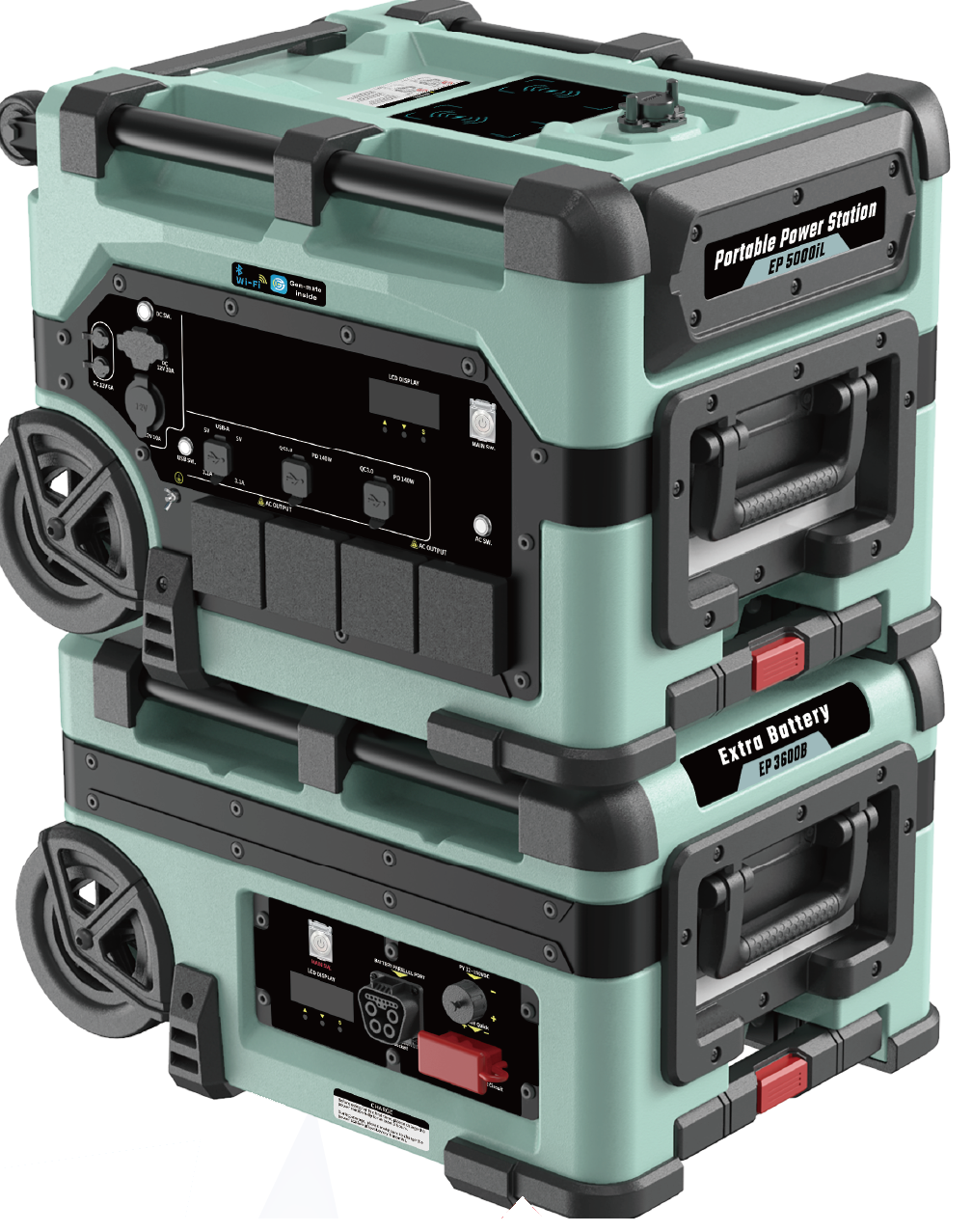
Expansion is easier to buy when it is treated as a tier with a named boundary rather than a vague promise of future capacity. DRIVELONG documents three tiers, each built from a base unit plus extra batteries up to a count of 31.
| Tier | Base unit | Maximum total capacity | Typical use case |
|---|---|---|---|
| 109kWh | EP5000iL or EP3600iL + up to 31 EP3600B batteries | 109kWh | Whole-home essentials with staged rollout; residential retrofit |
| 172kWh | EP6000iLS + up to 31 extra batteries (pack model to be confirmed with the supplier) | 172kWh | Larger homes, small commercial backup, longer autonomy |
| 372kWh | EP12000iL + up to 31 extra batteries (pack model to be confirmed with the supplier) | 372kWh; 24kW max output when two units are paralleled | Multi-unit projects and high-power three-phase loads |
The first tier suits a buyer who needs a working system now and a documented path to more capacity later. The EP5000iL portable power station is the natural entry point there, with a 10ms or faster UPS transfer listed, IP53 rating on the unit and IP66 on the battery pack. Two units can be paralleled to 10kW maximum without a parallel kit.
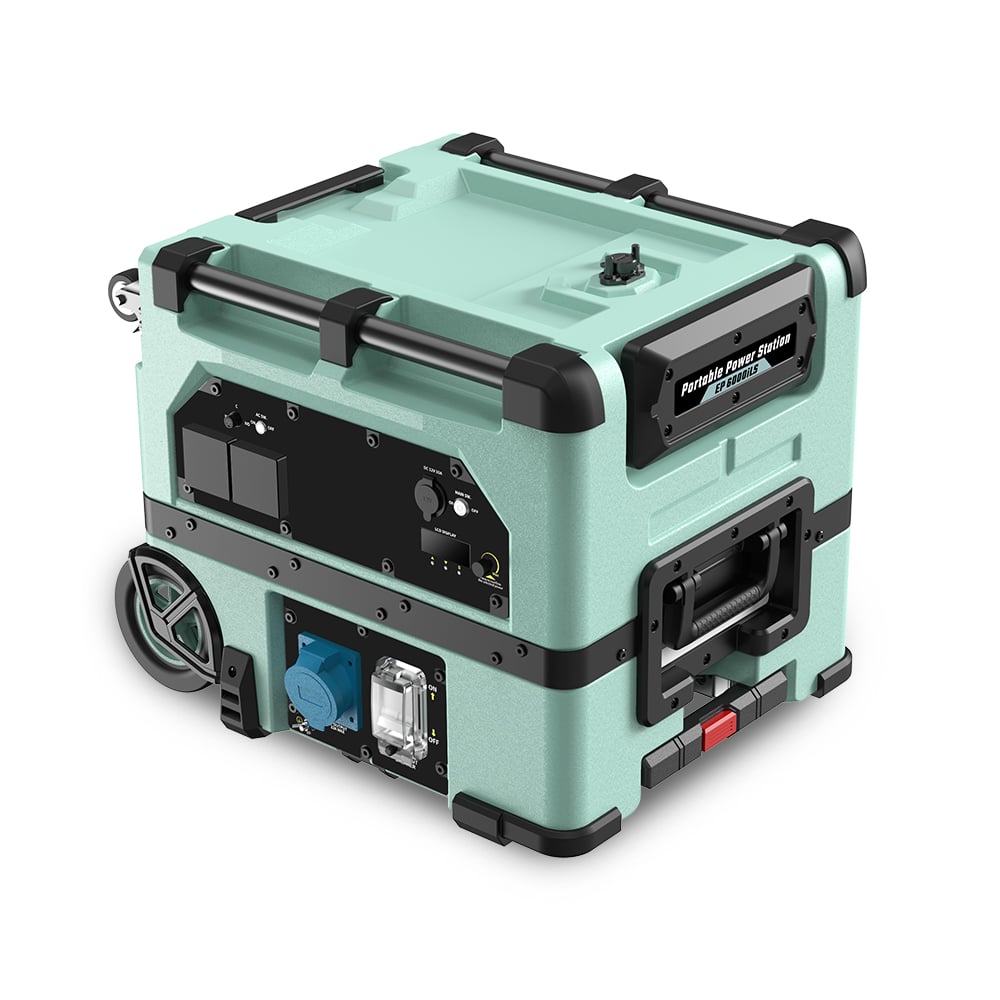
The middle tier adds headroom without jumping to three-phase hardware. The EP6000iLS is listed at 6,000VA rated and 12,000VA peak with 5,376Wh, reaching 90% charge in one hour through a dual-input at 16A/32A.
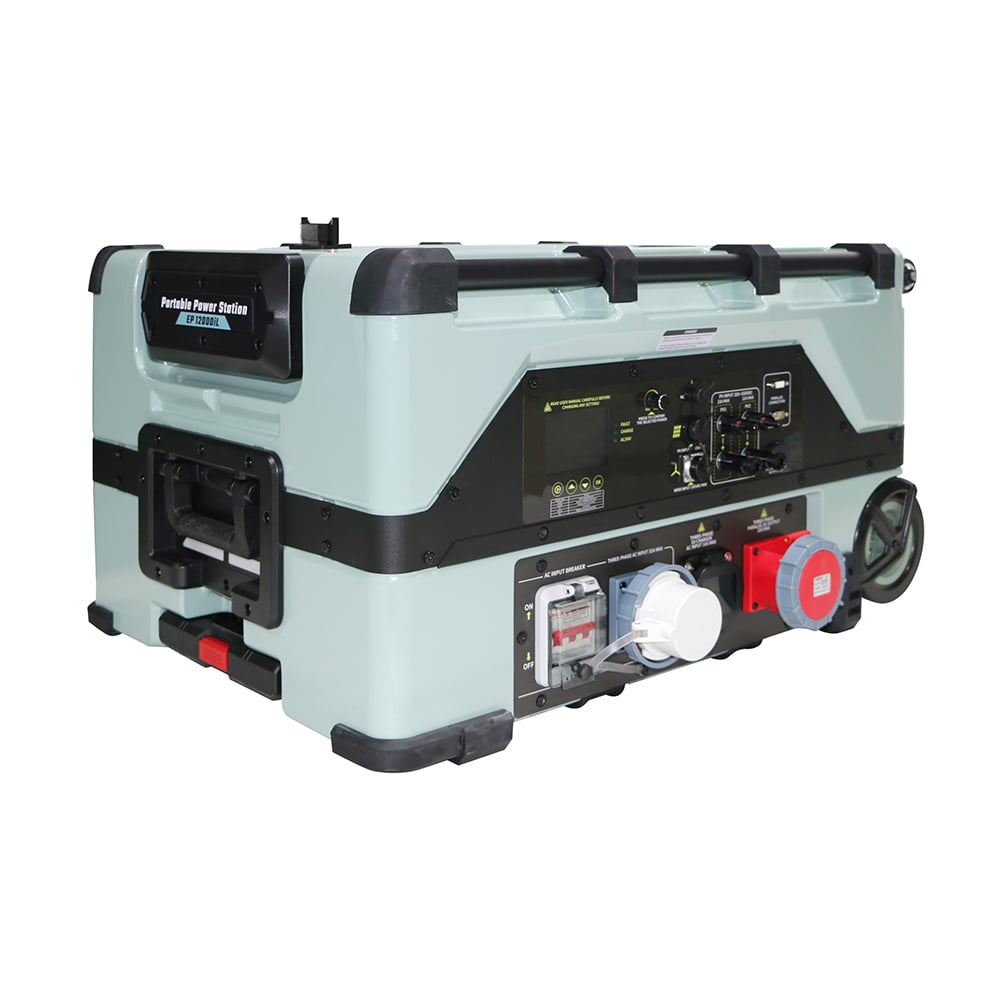
The top tier is where project buyers usually land. The EP12000iL is listed at 12kW continuous three-phase output, 7,680Wh capacity, expansion to 372kWh total, a 24kW maximum continuous output when two units are paralleled (a separate figure from the 24,000VA single-unit peak), a built-in 22kW EV charger and a full charge in 70 minutes. For comparison at the smaller end, the BP2400 carries 2,662Wh, 2,400W rated and 4,800W peak with a built-in 1,200W MPPT. It is a standalone portable power station in its own right rather than part of the three expansion tiers, and suits buyers who need a smaller self-contained unit inside a staged project.
Step five: the RFQ question checklist
The questions below are the ones that change a home battery backup quotation rather than decorate it. Where a DRIVELONG record answers the question, the answer is given so the buyer can compare replies from other suppliers against a known baseline.
Power and protection
- What do rated and peak power mean in your datasheet, and how long can peak output be sustained? Confirm the definition, not just the number. DRIVELONG lists 5,000W/10,000W for the EP5000iL and 12kW three-phase rated with 24,000VA single-unit peak for the EP12000iL, but does not publish a peak duration, so ask.
- What is the UPS transfer time, and which outputs does it cover? DRIVELONG lists 10ms or faster on the EP5000iL and under 10ms on the BP2400. Loads such as servers and medical equipment need this number before anything else.
Certification and market access
- Which certificates ship with each model, and can target-market certificates be supplied? DRIVELONG records list RoHS, CE and UN 38.3 on the EP5000iL and BP2400; ask for certificates that name the specific model and scope you are ordering, and request any additional certification your destination market requires.
- Are the voltage, frequency and plug standards configurable for the destination market? The EP5000iL list includes 50/60Hz and multiple single- and split-phase voltages, which is the sort of range an OEM conversation should start from.
Capacity, expansion and inputs
- How many expansion batteries can be connected, and are they the same part across models? DRIVELONG documents up to 31 extra batteries per base unit, with the EP3600B named on the EP5000iL tier; ask the supplier to confirm the pack part number for the other tiers.
- Does the system work without solar, and what inputs does it accept? This matters for any whole house battery backup without solar. Ask for the utility AC input rating, the solar MPPT voltage window and maximum input, and whether EV charging is built in. DRIVELONG lists a 12–150VDC, 1,600W MPPT maximum on the EP5000iL, 3,000W AC charging, and a 22kW built-in EV charger on the EP12000iL.
Commercial terms and after-sales
- What are the warranty terms, and what is excluded? DRIVELONG lists a 5-year warranty across the EP5000iL, EP3600iL, EP6000iLS, EP12000iL and BP2400.
- What OEM/ODM options exist — branding, enclosure, packaging, documentation? Ask for a written list rather than a general statement of flexibility.
- What are the MOQ, lead time and spare-parts arrangements? Include battery module availability in the answer, since expansion tiers depend on continued supply of the same pack.
For a distributor building a range, the EP3600iL is worth adding to the comparison: 3,600VA rated, 7,200VA peak, 3,430Wh, 80% charge in one hour and a four-wheel chassis for site mobility. Its rated and peak figures sit between the entry and middle tiers and give the range a second price point without a separate battery platform.
What a complete whole house battery backup enquiry contains
By the end of the sequence, the buyer should hold four documents: a load budget with durations, a capacity and power target with a stated peak-duration answer, a chosen expansion tier, and a written reply on certification, warranty and OEM terms. A whole house battery backup quotation that arrives without those four items cannot be compared with another supplier's, however similar the headline kWh figure looks. Whether the project is a whole house battery backup without solar or a solar-assisted hybrid, the sizing arithmetic stays the same, and the questions above are what turn two quotes into a decision.