
A practical three-step method for sizing a portable power station: list loads, estimate daily energy, add headroom. Then match the result to the DRIVELONG line, from the compact CP1200iL to the EP12000iL, and learn how to request an OEM/ODM quote.
Key takeaways: Size a portable power station by adding up your loads, converting to daily energy, then adding headroom for surge and future expansion. Rated power limits what runs continuously; peak power covers motor starts. Starting with a stackable base unit and adding batteries later can be the more economical route when expansion packs are priced favorably; compare quotes before deciding.
On this page:
The three-step capacity sizing method
Oversizing a portable power station wastes budget on capacity you never discharge. Undersizing is worse: loads trip, backup fails when it matters, and the unit gets returned. The fix is a repeatable calculation, not a guess based on brand or price.
Step 1: List every load with its wattage and run time
Write down each device you plan to run, its rated wattage, and how many hours per day it will operate. Include small loads like routers and phone chargers; they add up over a full day. For devices with a motor or compressor, note that startup surge separately—more on that in the next section.
Step 2: Estimate daily energy in watt-hours
Multiply watts by hours for each load, then sum the results. A 60 W fan running 8 hours uses 480 Wh. A 200 W projector running 3 hours uses 600 Wh. Together that is 1,080 Wh of daily energy demand. If you plan to run loads on only some days, size for the highest-demand day in the week you need coverage.
Step 3: Add headroom for surge and future loads
Take the daily energy total from Step 2, for example 1,080 Wh from the fan and projector above. Your chosen station should exceed that figure in usable capacity, because usable capacity is always lower than the nameplate number once efficiency losses and depth-of-discharge limits are considered. Second, check startup surge: read the starting power on the nameplate of each motor-driven device and compare it against the station's peak power rating, rather than assuming a fixed multiplier. Finally, add capacity for loads you expect to add later. The exact margin depends on your load profile—confirm the final number with the supplier before ordering.
Rated versus peak power: what the label means
Two numbers on a power station spec sheet decide what it can actually run. Rated power (sometimes shown in VA or W) is the continuous output the station can deliver for extended periods. Peak power is the short-term ceiling for surge loads, such as a refrigerator compressor starting or a circular saw spinning up.
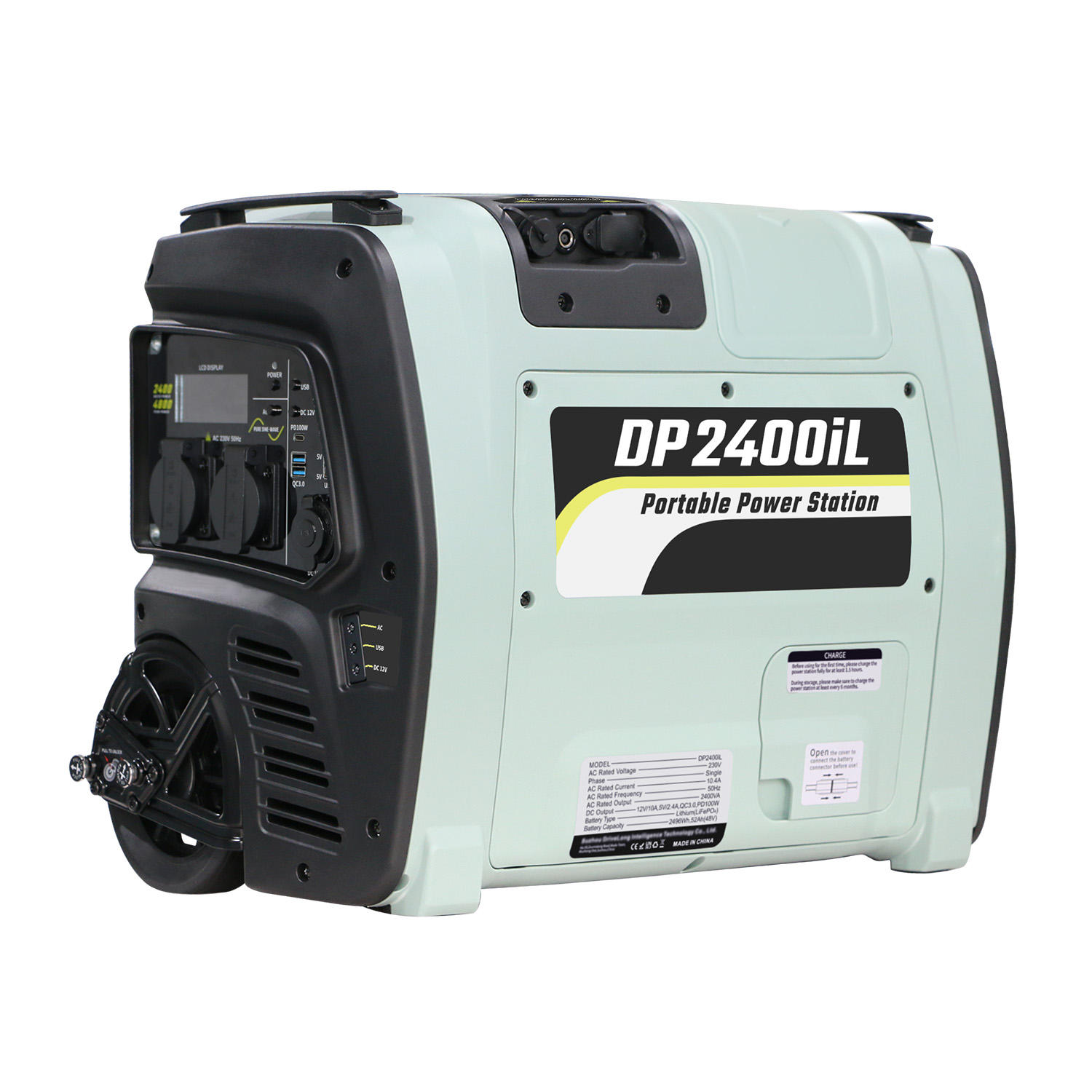
The DP2400iL illustrates the distinction: 2400VA rated and 4800VA peak, from a 2496Wh LiFePO4 battery. If your continuous loads sum to more than the rated figure, the unit will shut down even if peak looks sufficient. Use rated power for the running total, and check peak against the startup surge of any motor-driven device.
For a fuller explanation of how charging inputs and UPS transfer work, see the related topic on where to charge a portable power station.
Capacity ladder: match your number to a model tier
Once you have a daily energy figure and a rated power requirement, map them to a product tier. The table below groups the DRIVELONG line by base capacity class and typical loads. It is a starting map, not a substitute for the calculation: when your computed figure sits between two tiers, the expandable models in the higher tier are usually the safer choice. The twelve models listed in this guide all use LiFePO4 chemistry and carry a 5-year warranty; warranty scope and conditions are defined in the sales contract.
| Capacity class | Typical loads | Matching DRIVELONG models |
|---|---|---|
| Light portable (about 1–2 kWh) | Router, lights, laptop, phone charging; short-duration backup for small electronics | BP500 (1004.8Wh, 500W output), BP1000 (2010Wh, 1000W rated / 2000W peak) |
| Compact (about 2 kWh, ATS backup) | Same small loads, plus small refrigerator startup; the built-in ATS controller switches backup circuits automatically, so connected loads keep running through an outage | CP1200iL (2048Wh, 1200VA rated / 2400VA peak, built-in ATS controller) |
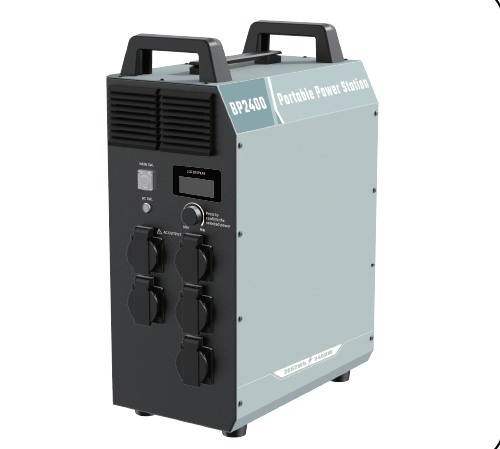
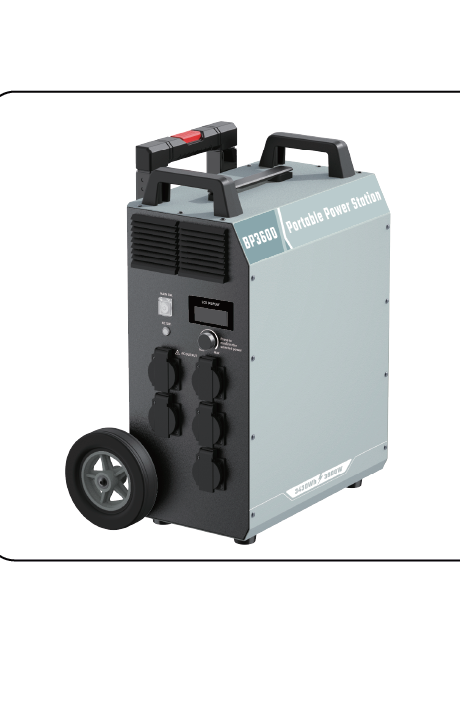
| Mid-range (about 2.6–3.4 kWh) | Refrigerator, microwave, multiple rooms of backup | BP2400 (2662Wh, 2400W rated / 4800W peak), BP3600 (3430Wh, 3600W rated / 7200W peak) |
| Stackable base (about 2.5–5.4 kWh, expandable) | Whole-home circuits, workshop, small event | DP2400iL (2496Wh, 2400VA rated / 4800VA peak, parallel function doubles output), DP3600iL (2662Wh, 3600VA rated / 7200VA peak), DP6000iL (5376Wh, 6000VA rated / 12000VA peak) |
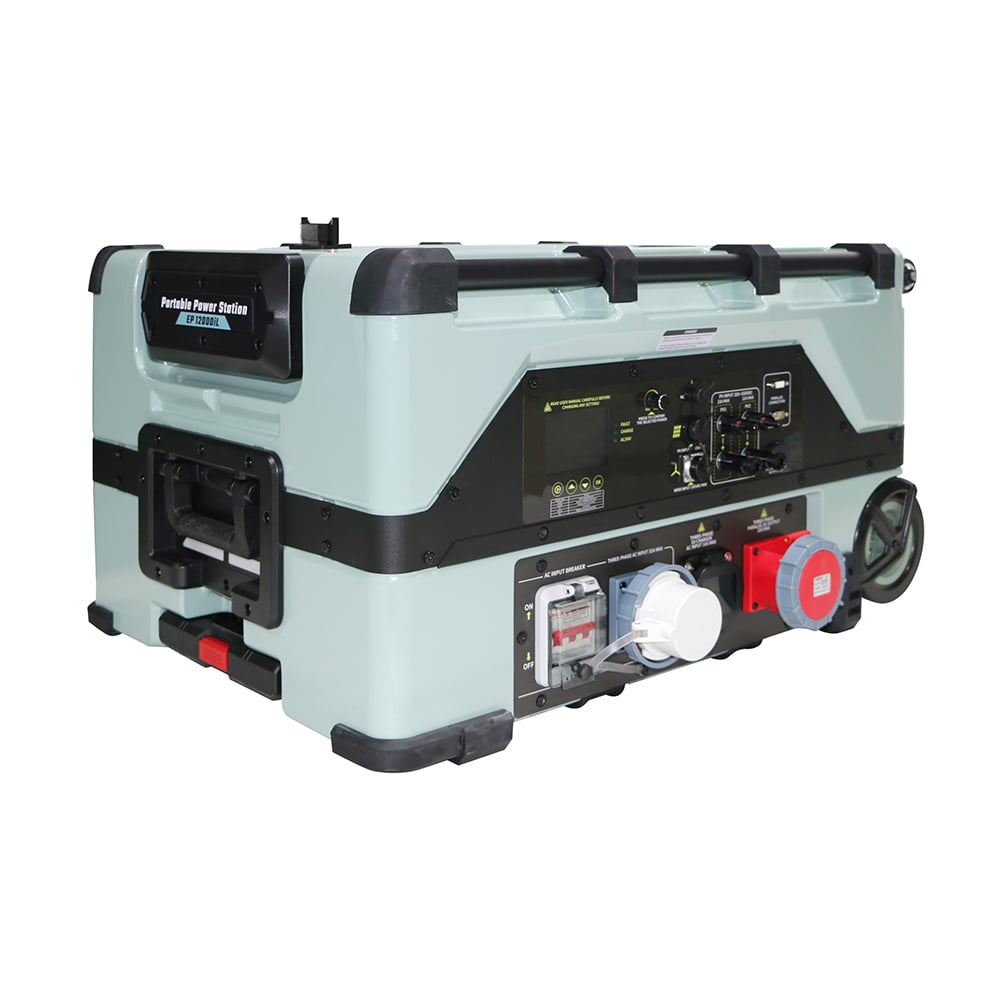
| High-power (about 3.4–7.7 kWh, expandable) | Large appliances, EV charging support, project power | EP3600iL (3430Wh, 3600VA rated / 7200VA peak, four-wheel chassis), EP5000iL (3430Wh, 5000W rated / 10000W peak), EP6000iLS (5376Wh, 6000VA rated / 12000VA peak, 90% charge in one hour), EP12000iL (7680Wh, 12000VA rated / 24000VA peak, expandable to a 372kWh system total) |
For buyers considering a 10000 Wh power station or larger, the stackable models are the practical route: a base unit plus extra batteries reaches higher capacity without a single heavy enclosure. The EP12000iL flagship supports stackable expansion to a 372kWh system total with up to 31 extra batteries, and offers 12kW three-phase / 11kW single-phase / 10kW split-phase output. Expansion totals and battery-pack counts are model-specific—the DP2400iL tops out at 109kWh while the EP12000iL reaches 372kWh—so confirm the exact stack count and resulting capacity for the model you select before budgeting storage space.
Expansion-first sizing: start small, grow later
The simplest way to avoid overbuying is to choose a base unit you can expand. DRIVELONG stackable models accept additional expansion batteries, so you can add capacity as loads grow or as project phases roll out; the maximum number of packs and the resulting system total depend on the model you choose. Two related topics explain the mechanics, including how packs connect and what changes when capacity grows:
- Stacked battery packs or paralleled units: two ways to grow portable power station capacity
- Extra battery pack expansion for portable power stations: capacity steps and what buyers confirm
Expansion-first sizing also simplifies logistics: one base unit plus batteries ships and stores more easily than a single very large enclosure. Whether it is the cheaper route depends on quoted pricing for the expansion packs, so compare a two-stage purchase against a single large unit before committing.
B2B sizing by market and OEM/ODM support
Distributors and project buyers often need different sizes for different markets. As a working rule: markets where outages last minutes to a few hours and recover quickly favor compact units with automatic transfer or UPS behavior, since loads restart fast and capacity needs stay low; markets where outages run a day or longer, or where power is needed off-grid on construction sites and at events, favor expandable base units and the EP series, where extra batteries cover multi-day runtime. Sizing by market means matching capacity class to typical outage duration and load profile, not simply stocking the largest model—verify actual grid conditions and load data for each destination before finalizing the mix.
One more B2B check before finalizing a portfolio: confirm the AC voltage, frequency and any market-specific compliance requirements for each destination with the supplier, because the same capacity class can be configured differently per market.
DRIVELONG supports OEM/ODM customization across the line, from capacity and output configuration to enclosure and interface options. The sales team can recommend a base model and an expansion path from your brief.
Ready to size your order? Send the DRIVELONG team the following and you will get back a model recommendation and an OEM/ODM quote:
- Target market and typical outage profile
- Load list with wattage and daily run time
- Required rated and peak power
- Daily energy estimate from the three-step method
- Expansion plans, if any
Request a quote: contact the DRIVELONG sales team with this brief.
FAQ
What size portable power station do I need for common loads?
Add up the continuous wattage of everything you want to run, then multiply by hours of use to get daily watt-hours. For a few small devices, a compact unit like the CP1200iL may be enough. For a refrigerator or multiple rooms, look at the mid-range or stackable tiers. Confirm the final number with the supplier based on your specific loads.
Is a bigger power station always better?
Not necessarily. A larger unit costs more, weighs more, and may sit mostly unused. If your loads are modest, a smaller station plus an expansion battery can cover growth without paying for unused capacity on day one.
Should I start small and expand later?
If you are unsure about future loads, an expansion-first approach is often practical. Choose a base unit that accepts extra batteries, then add capacity as needed. Check the maximum number of extra batteries and total capacity for the model you select—these differ across the line—and confirm the cost of expansion packs against a single larger unit.
How do I size a portable solar generator?
Use the same three-step method: list loads, estimate daily energy, add headroom. Solar input affects recharge time, not the capacity you need. For charging input comparisons, see the related topic on charging a portable power station.