
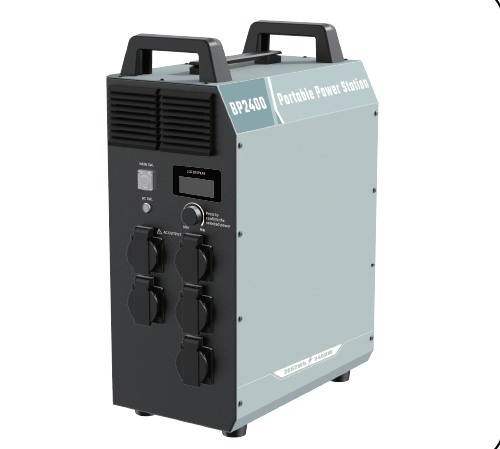
This article answers placement and building-condition questions for portable power stations across five siting options: indoor utility room, attached garage, detached shed, balcony or covered patio, and vehicle. It defines what makes each spot acceptable or disqualified, and draws the water-resistance boundary using IP53 and IP66 ratings.
What Actually Decides Whether a Spot Works
Store a portable power station where the ambient temperature stays inside the unit's operating band, the surface can carry its weight, vents and grilles remain unobstructed, and the enclosure rating suits the moisture exposure. The five locations below cover the practical choices on a property; each has clear accept and disqualify conditions, and they are not equally suitable.
- The whole unit's IP rating governs placement; a higher-rated internal battery pack does not upgrade a lower-rated enclosure.
- Ventilation, floor load, door width, and temperature stability decide more sites than any single product feature.
- A garage or shed can be acceptable if it stays dry and within the operating band; a vehicle is a transport space, not a permanent storage location.
Portable power station storage is a siting problem before it is a product problem. The question is rarely which unit to buy; it is whether a given wall, shelf, or corner can host the unit without violating its operating limits. The sections that follow treat each location on its own terms.
Five Locations and What Decides Each One
Indoor Utility or Storage Room
An indoor utility room is the most controllable of the five locations. Acceptable conditions: the room stays within the unit's operating temperature band, which for the BP2400 Smart Mobile Power Portable Power Station is minus 20°C to 50°C, with charging from 0°C to 45°C; the floor or shelf is rated for the unit's weight; and a socket on a suitable circuit is within reach of the charging cable. The room should be dry, with no standing water near the unit and no damp against the wall it sits against.
Disqualifiers include a room that overheats in summer or drops below the charging band in winter, a shelf that flexes under the load, and a corner where vents and grilles are pressed against a wall or covered by stored goods. The clearance in the unit's own manual governs how close it may sit to a surface; keep the intake and exhaust unobstructed rather than relying on a guessed distance. If the unit has wheels, such as the BP2400 at 36kg with wheels and handle, check the door width and threshold on the route in before delivery.
Attached Garage
An attached garage works when it is dry and temperature-stable. Acceptable: the garage stays within the operating band, the unit sits on a shelf or pallet off the concrete, and the charging socket is on a circuit that can carry the charger. For a unit like the BP2400, AC charging is up to 1800W, so the circuit and socket must be checked before the unit is plugged in; charging conditions for high-power charging are covered in the guide to charging a 6kW LiFePO4 power station from an EV Type 2 port.
Disqualifiers: a garage that floods, a spot under a leaking roof, a floor that cannot take the load, or a location where the unit blocks a walkway and could be struck. A garage that routinely falls below 0°C in winter will prevent charging, even if discharge is still within the operating band. If the unit is wheeled, the threshold at the garage door and any step between garage and house must be measured; a unit that must be lifted is a two-person job.
Detached Shed or Outbuilding
A detached shed is acceptable only when it is weather-tight and the temperature swing stays inside the unit's operating band. Acceptable: a dry shed with a solid floor, a shelf or pallet that keeps the unit off damp ground, and a socket on a circuit sized for the charger. The unit must be fixed so it cannot roll or tip, and vents must stay clear of stored items.
Disqualifiers: a shed with a damp floor, condensation on the walls, or a roof that leaks; a shed that reaches high temperatures in summer or low temperatures in winter beyond the charging band; and a location where the unit would sit in standing water after rain. A shed without power is a storage location only, not a charging location. Outdoor sheds are where the enclosure rating matters most, and the next section explains what IP53 and IP66 actually cover.
Semi-Outdoor Balcony or Covered Patio
A balcony or covered patio is the most exposed of the semi-outdoor options. Acceptable when the unit is under a roof or overhang, out of direct rain, and the ambient temperature stays within the operating band. The surface must take the load, the unit must be fixed against wind or accidental contact, and a socket must be available for charging without a cable crossing a wet floor.
Disqualifiers: direct rain, standing water, a spot where splashing reaches the unit, or a balcony that overheats. An IP53 unit is not designed for indefinite outdoor exposure, and a covered patio is not a substitute for an indoor location in persistent wet weather. If the unit must stay outside for a season, the enclosure rating becomes the deciding factor, not the battery pack rating.
Inside a Vehicle Such as a Trunk or Cargo Area
A vehicle is a transport location, not a permanent storage location. Acceptable for transport when the unit is fixed so it cannot slide or tip, the cargo area is dry, and the temperature inside the vehicle stays within the operating band during the journey. The BP1000 Portable Power Station at 18.5kg is a one-person lift for many users, while the BP2400 at 36kg with wheels and handle needs a ramp or a two-person lift into a trunk.
Disqualifiers: leaving the unit in a vehicle in direct sun or in freezing conditions for extended periods, because the cabin temperature can move outside the operating band even when the outside air is moderate. A trunk that takes on water, or a cargo area where the unit can slide into a passenger, also disqualifies the spot. Storing a portable power station in a car should be treated as a short-term arrangement with the unit removed to a controlled location afterward.
| Location | What makes it acceptable | What disqualifies it | What to check before delivery |
|---|---|---|---|
| Indoor utility or storage room | Stable temperature inside operating band, dry floor, socket on suitable circuit, vents clear | Overheating, damp walls, shelf that flexes, blocked grilles | Door width, threshold, floor load, socket position |
| Attached garage | Dry, temperature-stable, unit off concrete, charging circuit checked | Flooding, leaks, below charging band in winter, blocked walkway | Threshold at garage door, circuit capacity, lift plan |
| Detached shed or outbuilding | Weather-tight, solid floor, unit off damp ground, fixed against rolling | Damp floor, condensation, leaking roof, standing water, no power | Roof and floor condition, socket availability, temperature swing |
| Semi-outdoor balcony or covered patio | Under roof, out of direct rain, stable temperature, fixed against wind | Direct rain, splashing, standing water, overheating | Overhang coverage, drainage, cable route, fixing points |
| Vehicle trunk or cargo area | Dry, fixed against sliding, short-term transport within operating band | Extended sun or freezing, water ingress, unsecured load | Lift plan, ramp, tie-down points, expected duration |
A multi-unit installation changes the footprint and the floor load, so the standing area should be planned before delivery.
What IP53 and IP66 Actually Mean for Placement
The IP code has two digits. The first digit covers solids and the second covers water. IP53 means the enclosure is protected against dust ingress to a degree that does not interfere with operation, and against water sprayed at up to 60 degrees from the vertical. IP66 means the battery pack is dust-tight and protected against powerful water jets. These are separate ratings for separate parts of the product.
The operating rule follows from that: the whole unit's own rating governs where it may be placed. A higher-rated battery pack inside a lower-rated enclosure does not upgrade the unit. An IP53 metal enclosure with an IP66 battery pack, as on the BP2400 Smart Mobile Power Portable Power Station, is still an IP53 unit for placement purposes. Neither rating means the unit may be rained on indefinitely, sit in standing water, or be left permanently outdoors. The enclosure rating describes resistance to spray and dust, not a licence for long-term weather exposure.
For buyers writing installation guidance, the practical translation is that an IP53 unit belongs under cover. A balcony with a roof is acceptable; an open patio is not. A shed that stays dry is acceptable; a shed with a damp floor is not. The battery pack rating is relevant to the pack's own protection, not to the siting decision for the complete unit.
Planning the Moving Route
Weight and handling decide whether a location is practical before any electrical question. The route plan has four parts.
- Measure every doorway and threshold on the route, including the final door into the storage room. Note any step, lip, or raised threshold.
- Decide whether the unit rolls or must be lifted. The BP2400 has large rollers plus a handle and weighs 36kg with wheels and handle; the BP1000 weighs 18.5kg net and is a lift. For a unit without wheels, plan a two-person lift or a ramp.
- Decide where the unit will be unpacked. Unpacking in a garage or at the door keeps packaging out of the storage room and avoids carrying a boxed unit through a narrow opening.
- Agree who lifts what. Name the people and the lift points before delivery day, and confirm the route is clear of obstructions.
For a larger installation, such as a DP6000iL Portable Power Station with expansion up to 31 extra batteries for 172kWh total, the route and floor plan must be settled before the equipment arrives; the standing area and load path are part of the siting decision.
Frequently Asked Questions
Where should a portable power station be stored?
Store it indoors in a dry, temperature-stable room where vents stay clear, the floor or shelf can take the load, and a socket is available for charging. An attached garage or a weather-tight shed can work if it stays within the operating band. A vehicle is for transport, not permanent storage.
Can a portable power station be stored in a garage?
Yes, if the garage is dry, does not flood, and stays within the unit's operating and charging temperature bands. Keep the unit off the concrete on a shelf or pallet, confirm the charging circuit can carry the charger, and fix the unit so it cannot roll. A garage that drops below the charging band in winter will prevent charging even when discharge is still allowed.
Can a portable power station be kept in a car?
Only for transport. A trunk or cargo area can hold the unit during a journey if it is fixed against sliding and the cabin temperature stays within the operating band. Leaving it in a vehicle in direct sun or freezing conditions for long periods can push the temperature outside the band, so the unit should be moved to a controlled location afterward.
Is an IP53 unit safe for outdoor storage?
IP53 protects the enclosure against dust and water spray at up to 60 degrees from vertical; it does not make the unit suitable for indefinite outdoor exposure. An IP53 unit should be under cover, out of direct rain, and away from standing water. The IP66 battery pack rating inside does not upgrade the enclosure rating for placement.
How much room does a unit need around it?
Enough that vents and grilles stay unobstructed and the unit can be reached for charging and inspection. The clearance figure in the unit's own manual governs; do not rely on a guessed distance. Keep stored goods, walls, and shelving clear of the intake and exhaust, and leave space to roll or lift the unit without striking nearby objects.
Checklist for Buyers Drafting Installation Guidance
- Confirm the ambient temperature at the chosen spot stays inside the operating band and inside the narrower charging band.
- Check the floor or shelf load rating against the unit's weight.
- Verify door width and threshold on the full route, and decide roll versus lift.
- Confirm a socket and circuit are available for charging, and that the cable route is dry.
- Check for moisture, damp, and standing water at the spot.
- Confirm the unit can be fixed so it cannot roll or tip.
- For multi-unit installations, plan the standing area for the expanded footprint before delivery.
For selection, capacity, and product comparison questions, see how to choose a 5kW waterproof portable power station for camping and outdoor work. For storage state of charge and long-term degradation, defer to the manufacturer's manual. DRIVELONG of Suzhou manufactures portable power stations and energy storage as an OEM and ODM supplier serving Europe, North and South America, Australia, Singapore, Russia and the Middle East.
If you are drafting installation guidance for your customers, send your site conditions, including the intended location, temperature range, floor load, and door width, and we will review them against the unit's requirements.