
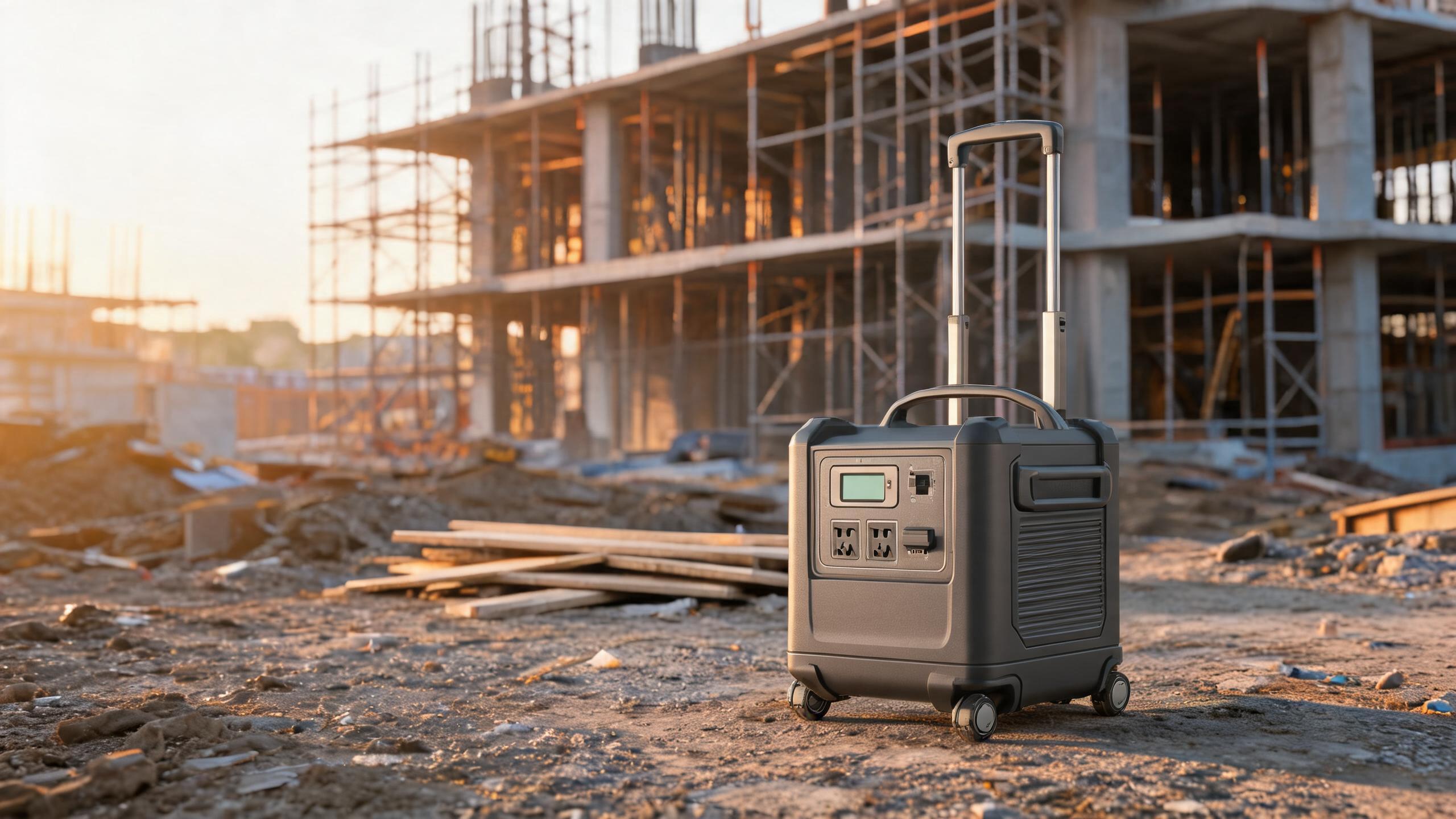
A practical buying guide for Australian importers, wholesalers and outdoor-work buyers. Covers power sizing, battery chemistry, IP waterproof/dustproof ratings, charging and expandability — with verified specs for the DRIVELONG EP5000iL.
Australian weather does not wait for a clear forecast. One afternoon a worksite is dry and dusty, the next it is hit by a coastal shower or a cold front rolling through the bush. For buyers selecting a 5kW-class portable power station for camping and outdoor field work, that variability is not a side note — it is the core specification. A unit that cannot handle moisture and dust will fail exactly when you need it most.
This guide gives Australian importers, wholesalers and outdoor-work buyers a practical framework for choosing a 5kW portable power station. It focuses on the decisions that matter: real power output, battery chemistry, waterproof and dustproof protection, charging speed, expandability and runtime. At the end, we show how the DRIVELONG EP5000iL meets these criteria with verified specifications.
Start with real power requirements, not peak marketing numbers
The first question is always: what will actually run off this unit? For a 5kW-class station, the rated output is the number that counts. A 5000W rated unit with 10000W peak output handles continuous loads up to 5kW and can start appliances with a brief surge — useful for motors, compressors and induction cooktops.
To size correctly, list the equipment you need to power simultaneously and add up their running watts. A refrigerator typically draws 100–200W running but can surge several times that on startup. Power tools for outdoor work vary widely: a circular saw might draw 1200–1800W, while a small compressor can exceed 2000W on startup. If your total running load approaches 5kW, a 5kW-class unit is the right starting point.
For buyers who need more than 5kW, check whether the station can be paralleled. The EP5000iL supports stacking two units for up to 10kW of combined output — a practical path if demand grows later.
Battery capacity and chemistry: the difference between a weekend and a work week
Output power determines what you can run; battery capacity determines how long. Capacity is measured in watt-hours (Wh). For a 5kW-class station, look for a battery that matches your intended runtime, not just the inverter rating.
The EP5000iL uses a 3430Wh LiFePO4 (lithium iron phosphate) battery. LiFePO4 is the chemistry of choice for this class because of its cycle life and thermal stability. The EP5000iL is rated for 5000+ cycles to 80% capacity — meaning after thousands of full charge-discharge cycles, it still retains most of its original capacity. For a business buying units for rental fleets, campsites or field crews, that longevity directly affects total cost of ownership.
To estimate runtime: divide battery capacity by your average load. A 3430Wh battery running a 300W average load (refrigerator plus lighting plus phone charging) gives roughly 11 hours. Running a 1000W load gives roughly 3.4 hours. These are simple estimates; real runtime depends on inverter efficiency and load profile.
IP rating is the deciding factor for Australian outdoor conditions
This is where many buyers make the wrong choice. A portable power station for camping and outdoor work in Australia must handle dust, sand, humidity and sudden rain. The IP (Ingress Protection) rating tells you exactly how well the unit is sealed.
- First digit (0–6): protection against solid objects and dust. 5 = dust-protected, 6 = dust-tight.
- Second digit (0–8): protection against water. 3 = spraying water, 4 = splashing water, 5 = water jets, 6 = powerful water jets.
For Australian field conditions, a whole-unit rating of at least IP53 is a reasonable baseline — it protects against dust and water spray from any direction. The EP5000iL goes further: the whole unit is rated IP53, while the battery pack itself is IP66 (dust-tight and protected against powerful water jets). This two-level protection means the core energy storage is sealed to a higher standard than the outer casing, which is a sensible design for a unit that may be transported, bumped and exposed to weather.
Buyer checklist: Confirm the IP rating for the whole unit, not just the battery. Ask for the rating in writing. A unit rated IP53 or higher for the whole enclosure is suitable for outdoor camping and worksite use in variable weather.
Charging options: solar, AC and more
How quickly a station recharges determines whether it fits your workflow. For camping and remote work, solar charging is often the priority; for crews moving between sites, AC fast charging matters more.
The EP5000iL offers three charging paths:
- Solar (MPPT): accepts 12–150VDC input up to 1600W. Full charge in approximately 2.5 hours under optimal solar conditions.
- AC: 3000W input, full charge in approximately 1.2 hours.
- Optional vehicle or wind charging: available for specific use cases.
For Australian buyers, the wide MPPT voltage range (12–150VDC) is important because it allows flexible solar panel configurations — from a single portable panel to a larger fixed array. The 1600W solar input is high for this class, which means you are not limited to slow trickle charging when the sun is out.
Expandability: plan for growth before you need it
A 5kW station is a significant investment. Before committing, check whether the unit can grow with your needs. Two forms of expansion matter:
- Parallel operation: linking two units for higher output. The EP5000iL stacks two units for up to 10kW.
- Battery expansion: adding external batteries for longer runtime. The EP5000iL supports up to 31 EP3600B expansion batteries, taking total capacity to 109kWh.
For a wholesaler stocking units for different customer profiles, expandability means one SKU can serve both a weekend camper and a semi-permanent off-grid worksite. It also protects the buyer from needing a second, larger unit later.
Runtime, UPS capability and practical features
Beyond the headline numbers, several features determine whether a station works well in real conditions:
- UPS switchover: The EP5000iL switches to battery power in ≤10ms if the mains supply drops. This protects sensitive equipment during outages.
- Output ports: Look for a mix of AC outlets and DC/USB ports. The EP5000iL includes Type-C PD140W, QC3.0 USB-A, cigarette lighter and XT90 ports — enough for phones, laptops, tools and 12V accessories.
- Operating temperature: The EP5000iL discharges from -20°C to 60°C, covering Australian conditions from alpine frost to outback heat.
- Monitoring: An LCD screen and APP smart monitoring let you check state of charge, input/output and system status remotely.
Comparison table: EP5000iL key specifications
| Specification | EP5000iL |
|---|---|
| Output power | 5000W rated / 10000W peak, pure sine wave |
| Battery capacity | 3430Wh LiFePO4 |
| Battery cycles | 5000+ cycles to 80% capacity |
| Waterproof / dustproof | Whole unit IP53; battery pack IP66 |
| Expandability | Stack 2 units to 10kW; up to 31 EP3600B batteries to 109kWh |
| Solar charging | MPPT 12–150VDC, up to 1600W (full charge ≈2.5h) |
| AC charging | 3000W (full charge ≈1.2h) |
| UPS switchover | ≤10ms |
| Output ports | Type-C PD140W, QC3.0 USB-A, cigarette lighter, XT90 |
| Discharge temperature | -20°C to 60°C |
| Weight / dimensions | 49kg; 555x430x420mm |
| Monitoring | LCD + APP smart monitoring |
| Certifications | CE, RoHS, UN 38.3 |
| Warranty | 5-year |
Practical selection checklist for Australian buyers
- Calculate your load. List all equipment and sum the running watts. Add 20% headroom for startup surges.
- Choose the battery chemistry. LiFePO4 is preferred for cycle life and safety in this class.
- Verify the IP rating. Whole-unit IP53 or higher for outdoor use. Confirm in writing.
- Check charging flexibility. Solar MPPT range should match your panel setup; AC fast charging is essential for quick turnaround.
- Plan for expansion. Confirm parallel and battery expansion options before you need them.
- Review certifications. CE, RoHS and UN 38.3 cover electrical safety, environmental compliance and transport safety.
- Compare warranty. A 5-year warranty signals manufacturer confidence in the battery and inverter.
Frequently asked questions
How do I choose a portable power station for camping?
Start with your load: list what you will run (fridge, lights, phones, small appliances), sum the running watts, then select a unit rated above that total. For camping, prioritize a quiet, emission-free unit with solar charging and a battery capacity that covers your typical trip duration. An IP rating of IP53 or higher protects against dust and spray.
What is the best camping power station?
There is no single best unit; the right choice depends on power needs, runtime and environmental conditions. For a 5kW-class station used in Australian outdoor conditions, look for LiFePO4 chemistry, a whole-unit IP53 rating (or better), solar MPPT input and a verified cycle life. The EP5000iL combines these features in a single unit.
How do I select the right size portable power station for my needs?
Size is determined by two numbers: rated output power (watts) and battery capacity (watt-hours). Output power must exceed your peak simultaneous load; capacity determines runtime. A 5kW rated station with 3430Wh capacity is a balanced choice for running a refrigerator, power tools and lighting simultaneously.
What is the largest portable power station?
In the 5kW class, expandability defines the ceiling. The EP5000iL can be stacked with a second unit for 10kW output and expanded with up to 31 EP3600B batteries to 109kWh total capacity — effectively scaling from a weekend unit to a semi-permanent off-grid power source.
How long does a portable power station last?
Two answers apply. Per charge, runtime = battery capacity ÷ average load. Over its lifetime, a LiFePO4 battery like the EP5000iL's is rated for 5000+ cycles to 80% capacity — that is more than 13 years of daily cycling, making it a long-term asset rather than a consumable.
What portable power station can run a refrigerator?
Any station with a rated output above the refrigerator's running wattage (typically 100–200W) and sufficient capacity for the desired runtime can run a fridge. A 5kW-class station like the EP5000iL runs a refrigerator easily, with ample headroom for other appliances and tools simultaneously.
The DRIVELONG EP5000iL: a complete solution for Australian conditions
The EP5000iL is designed specifically for buyers who need a 5kW-class station that survives real outdoor conditions. Its whole-unit IP53 rating and IP66 battery pack directly address Australia's variable weather. The 3430Wh LiFePO4 battery provides long cycle life, and the 5000W rated / 10000W peak output handles demanding tools and appliances.
For importers and wholesalers, the EP5000iL offers a single product that covers multiple customer profiles: campers needing reliable off-grid power, contractors running tools at remote sites, and businesses requiring backup power. The 5-year warranty and CE/RoHS/UN 38.3 certifications provide the compliance documentation that B2B buyers need.
DRIVELONG (Suzhou) manufactures portable power stations, inverters and industrial solar panels, and operates a B2B RFQ-driven model with OEM/ODM capabilities. Our target markets include Australia, and we work with importers and wholesalers to supply units that meet local conditions.
To discuss your requirements — whether you need a single unit for evaluation or wholesale quantities — request a quote through our RFQ channel. Provide your load profile, expected usage pattern and target volumes, and we will confirm specifications and terms for your project.