A component-level definition of solar battery storage for importers, distributors and project buyers: what the battery pack, inverter, MPPT controller and solar panel input each do, the specification that matters for each, how storage differs from a solar generator and from battery backup, and a verification checklist to run before placing an order.
Solar battery storage is the part of a photovoltaic installation that stores surplus DC electricity as chemical energy in a battery pack and releases it later through an inverter as usable AC power. For an importer or project buyer, the practical question is not the definition but the build: a storage system is a set of components whose ratings must match each other, the load, and the solar array in front of it. This page breaks the system down component by component, then gives the checks to complete before you place an order.
- A storage system has four functional parts: battery pack, inverter, MPPT solar charge controller, and the solar panel input path that feeds it.
- Capacity (kWh) and output (W) are separate specifications. A system rated for a larger load does not automatically hold more energy.
- Expansion is an architecture question: confirm whether extra battery packs connect internally, in parallel at the unit, or only through an accessory.
- Checklist items that change the purchase decision are cycle-life test conditions, certification scope, and what OEM/ODM changes are technically feasible rather than only branding.
- What solar battery storage means in a B2B context
- The four components of a storage system
- How storage relates to a solar generator and to battery backup
- The B2B purchase checklist
- Where to go next
What solar battery storage means in a B2B context
When a buyer asks "what is solar battery storage," the useful answer is a description of the hardware, not an application narrative. Storage is the link between generation and consumption: panels produce during daylight, the battery pack holds part of that energy, and the inverter delivers it when the load needs it. Everything in between — charge control, voltage conversion, protection, thermal management, and the communications between the battery management system and the inverter — determines whether the system will actually behave as the datasheet suggests.
That is why this page treats storage as a system rather than a single product. Two suppliers can quote identical kWh figures and deliver very different experiences if their inverter is undersized for surge loads, their MPPT window does not match the panel string voltage, or their expansion design requires an extra parallel cable kit the buyer did not budget for. The sections below explain each component and the specification that carries the most purchase weight.
The four components of a storage system
The battery pack
The battery pack is the energy reservoir. In the products profiled on this site, the chemistry is LiFePO4 (lithium iron phosphate), which is relevant to buyers because the rated cycle life is quoted against a defined end-of-life threshold — typically the number of cycles before capacity falls to 80 percent of the original figure. Confirm the test conditions behind any cycle claim: depth of discharge, charge and discharge rate, ambient temperature, and whether the figure comes from a cell-level test or a full pack test. A pack rating is the number to use for procurement, so treat any cell-level figure as a starting point and ask the supplier for the pack-level result.
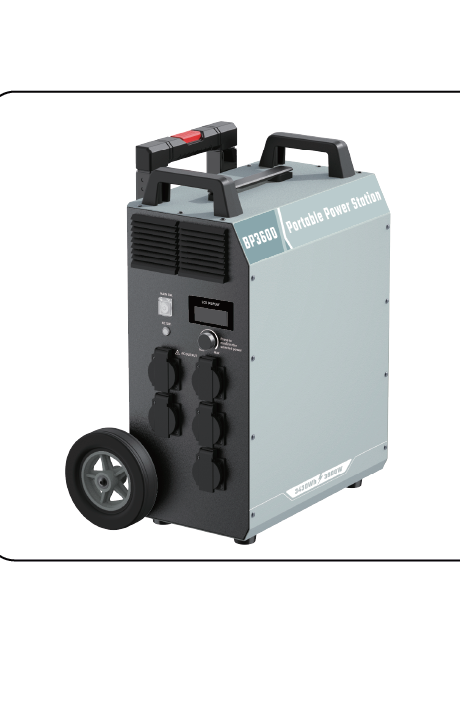
The specification that matters most here is usable capacity in kWh, together with the pack's own ingress protection and its mechanical interface to the host unit. On the BP3600, for example, the pack carries IP66 protection while the outer unit is IP53 — a difference worth noting when you are specifying where the equipment will sit.
The inverter
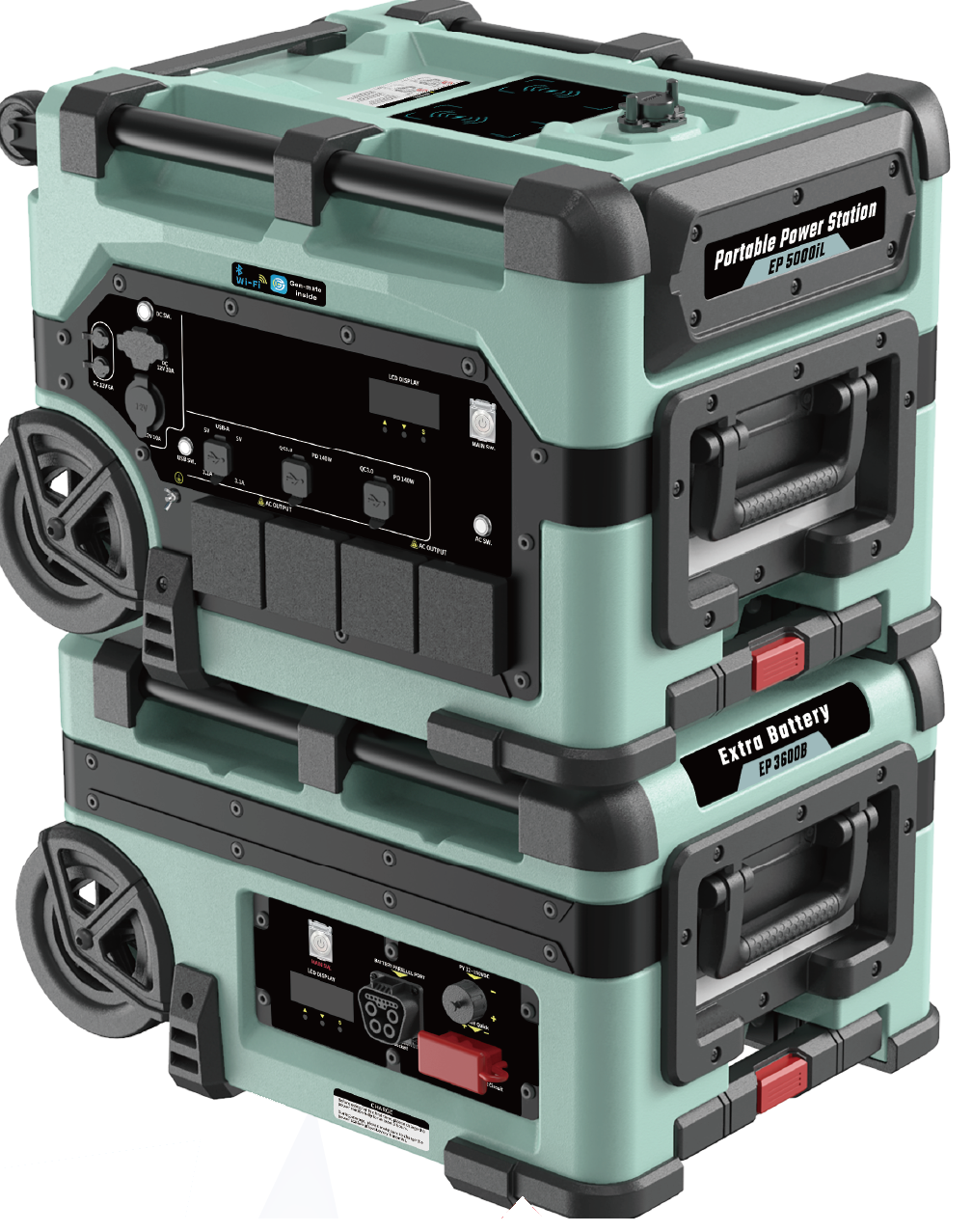
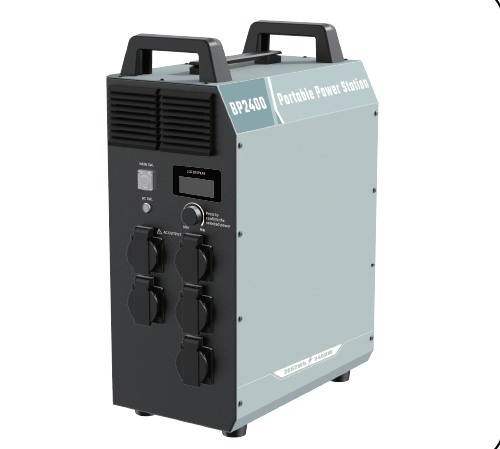
The inverter converts stored DC into the AC waveform your load expects. Two numbers govern the choice: rated output and peak output. Rated output is the continuous figure the unit is designed to hold; peak output covers inductive or motor-starting loads for a short interval. A system with 2400W rated and 4800W peak (the BP2400) behaves very differently on a compressor load from one rated at 5000W with a 10000W peak, such as the EP5000iL.
For buyers distributing into markets with sensitive equipment, confirm that the output is pure sine wave, and ask for the transfer time if the unit is specified to run as an inline UPS. The EP5000iL, BP3600 and BP2400 records each list a transfer time of 10ms or less; the BP1000 record does not list a UPS function, so confirm availability and the tested transfer time per model rather than assuming the whole range offers it.
The MPPT solar charge controller
The maximum power point tracking controller sits between the solar panels and the battery. It continuously adjusts the operating point of the array to extract the most power available under current irradiance, then converts that to a voltage the battery can accept. Three specifications matter: the input voltage window, the maximum current or wattage the controller will accept, and the resulting full-charge time under the stated solar input.
Voltage window is the constraint that most often surprises buyers. A controller with a 12 to 150VDC window accepts a wide range of series and parallel panel configurations; one with a 12 to 105VDC window is narrower, which limits how many panels you can string in series. Match the window to the panel strings your customers will actually install, not to a single reference panel. The BP1000 carries a built-in 500W MPPT controller and a 2010Wh LiFePO4 battery whose cells are rated for 8000 cycles — a cell-level figure, so confirm the pack-level cycle rating with the supplier before using it in cross-supplier comparisons.
The solar panel input
The solar input is the physical and electrical interface to the array: connector type, polarity protection, and the maximum input the system will draw. This is where system-level thinking pays off. If the controller accepts up to 1600W and the buyer's typical array is larger, the surplus within the controller's stated voltage and current limits is simply not harvested — the system will not fail, but the return on the panel investment is lower than expected. Anything beyond those maximum input limits is a different matter: the compatible panel configuration must be confirmed with the supplier rather than assumed. State your target array size and expected daily harvest in the RFQ, and ask the supplier to confirm the compatible panel configuration in writing.
How storage relates to a solar generator and to battery backup
The terms overlap, but they describe different things. A solar generator is a portable all-in-one product: battery, inverter, charge controller and outlets in one enclosure, sized to be moved and used as a self-contained power source. Storage is the underlying function; a solar generator is one packaged form of it. If you need a definition of the portable product category itself, the existing article on LiFePO4 solar generators and how to configure one covers that ground.
Battery backup, by contrast, is an application of storage rather than a product class. Any storage system can serve a backup role if its output, transfer time and capacity suit the load being protected. Storage systems themselves range from compact single-unit products to stackable configurations where extra battery packs extend total capacity — the EP5000iL accepts up to 31 EP3600B packs for a stated 109kWh total, and two units can be stacked in parallel for a maximum parallel AC output listed at 10kW without a separate parallel kit. Confirm how that parallel figure splits between rated and peak output when you request the quotation, so the paired configuration matches the load you are planning for. Whole-house backup sizing is a separate subject with its own constraints; treat it as an application decision layered on top of the storage specification.
The B2B purchase checklist
The table below is ordered by how often a gap in that row becomes a commercial problem after delivery. Work through it with the supplier before confirming a purchase order, and record the answers in writing as part of the specification.
| Checkpoint | What to Confirm | Why It Matters |
|---|---|---|
| Capacity in kWh | Nominal versus usable capacity, at what discharge depth, and measured under which conditions. | Usable energy is what the end user experiences; nominal figures can overstate runtime. |
| Expansion steps | How extra packs connect — internal bus, unit-level parallel cable, or dedicated accessory — and the resulting maximum total capacity and output. | Determines whether the buyer can upsell capacity later without new hardware, and what the landed cost of expansion actually is. |
| Output configuration | Rated versus peak output, waveform, socket types and voltage for the destination market, transfer time if UPS operation is claimed, and the rated versus peak split of any parallel configuration. | Socket and voltage mismatches are a frequent reason a shipment cannot be sold in the target country. |
| Cycle life ratings | The end-of-life threshold (for example, cycles to 80 percent capacity), test depth of discharge, rate and temperature, and whether the figure is cell-level or pack-level. | A cycle count without its test conditions cannot be compared across suppliers. |
| Certifications | Which certificates apply to this exact model, which markets they cover, and whether the certificate names the manufacturing entity that will produce your order. | A certificate for a related model or a different production site does not cover your shipment. |
| Protection ratings | Ingress protection of the outer unit separately from the battery pack, and the intended installation environment. | Buyers often assume one rating covers the whole unit; the pack and enclosure can differ. |
| OEM/ODM scope | Which of these are technically feasible: capacity, output configuration, casing, branding, and certification for target markets — and which are not. | Some changes require re-testing; knowing the boundary early prevents late-stage redesign cost. |
| Warranty terms | Duration, what is covered, and the process for a claim in the destination market. | Warranty handling is a distributor cost centre, not a datasheet line. |
Certification and warranty terms differ by model, so quote them per unit rather than per range. In the product records referenced here, the EP5000iL, BP3600 and BP2400 each list RoHS, CE and UN 38.3 certification together with a five-year warranty, while the BP1000 record lists a five-year warranty and does not currently list certifications — confirm the certificate documents for the exact model and production entity on your order before contracting. For the OEM/ODM scope, ask for the feasibility list in writing rather than assuming a requested change is available.
Where to go next
If you are sourcing storage systems for distribution or a project, start from the products that match your target capacity band: the EP5000iL for high-output stackable configurations, the BP3600 and BP2400 for mid-range units with built-in MPPT control, and the BP1000 for compact low-voltage applications. Send an RFQ stating your destination market, target capacity and output, expansion expectation, and the OEM/ODM changes you need — the reply should address each checklist row above so you can compare offers on the same basis.
Specifications quoted in this article are as listed for the referenced models. Verify current datasheets, certificate scope and parallel-output details with the supplier before contracting.