
A practical method for RV dealers and buyers to budget a 30A/120V shore-power load against a solar-charged battery power station's rated output, size surge headroom, balance recharge with daily consumption, and confirm the right details with a supplier before ordering.
A 30A/120V RV connection is a fixed electrical limit, and a solar-charged battery power station either meets it or it does not. This article sets out a load-budget method you can run from the actual nameplate ratings of the customer's appliances, then lists the questions to put to a supplier before an order is placed. It does not repeat general sizing or pricing guidance: for that, see how to select the right size portable power station and what determines the price and how to budget for bulk orders.
Key takeaways
- A 30A/120V shore-power style connection implies a maximum continuous draw the buyer must calculate and compare against the unit's rated output, not its peak.
- Build the budget from the nameplate watts of the specific appliances, not from assumptions.
- Motor loads and other start-up surges consume peak headroom; peak rating and surge duration both matter.
- Recharge balance decides whether the system can repeat the load daily.
- A 50A RV connection is a different hardware case and must be confirmed with the supplier.
What a 30A connection actually means for the load budget
The RV's 30A inlet and the shore-power cord are rated for a current, and the connected voltage defines the power ceiling. A buyer who intends to replace or supplement the shore connection with a solar generator for rv 30 amp use must therefore start from the current and voltage limit of that circuit, not from a round comfort figure. The solar generator's continuous output must sit at or above the continuous draw the RV presents, with margin left for surges. The load budget is how you prove that.
Step one: build the budget from nameplate watts
Use the label on each appliance. Do not substitute remembered averages or catalogue folklore. Where a label is missing or unreadable, confirm the nameplate rating with the supplier of that appliance before the budget is finalised.
- List every load the customer expects to run at the same time on the solar generator: refrigeration, water pump, lighting, electronics, ventilation, small kitchen appliances.
- Record the nameplate watts for each item, plus the volts and amps printed beside it.
- Separate continuous loads from intermittent loads. Only simultaneous continuous loads should be summed into the baseline figure.
- Note which loads contain motors or compressors, because those draw a start-up surge above their running figure. The surge magnitude comes from the appliance data, not from the generator's own peak number.
The result is two numbers: a continuous sum (the items that will run together) and an expected surge (the largest single start-up event, plus whatever continuous load is already running at that moment). Everything downstream compares against those two figures.
Step two: compare against rated output, then against peak
A 30 amp solar generator for rv application is judged first on continuous rating. Surge headroom is judged second. The two ratings must be read separately on the datasheet.
| Check | What to compare | Why |
|---|---|---|
| Continuous | Budgeted continuous sum vs. unit rated output | The rated figure governs sustained operation; the peak figure must not be used here. |
| Surge | Budgeted start-up surge vs. unit peak rating | Motors and compressors exceed their running draw briefly on start. |
| Surge duration | Appliance start profile vs. the unit's stated surge window | A peak rating without a duration is incomplete information. |
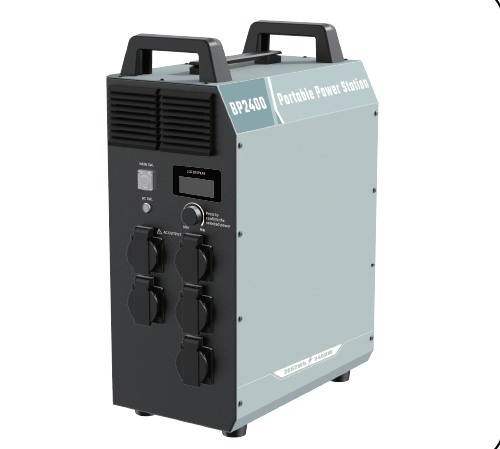
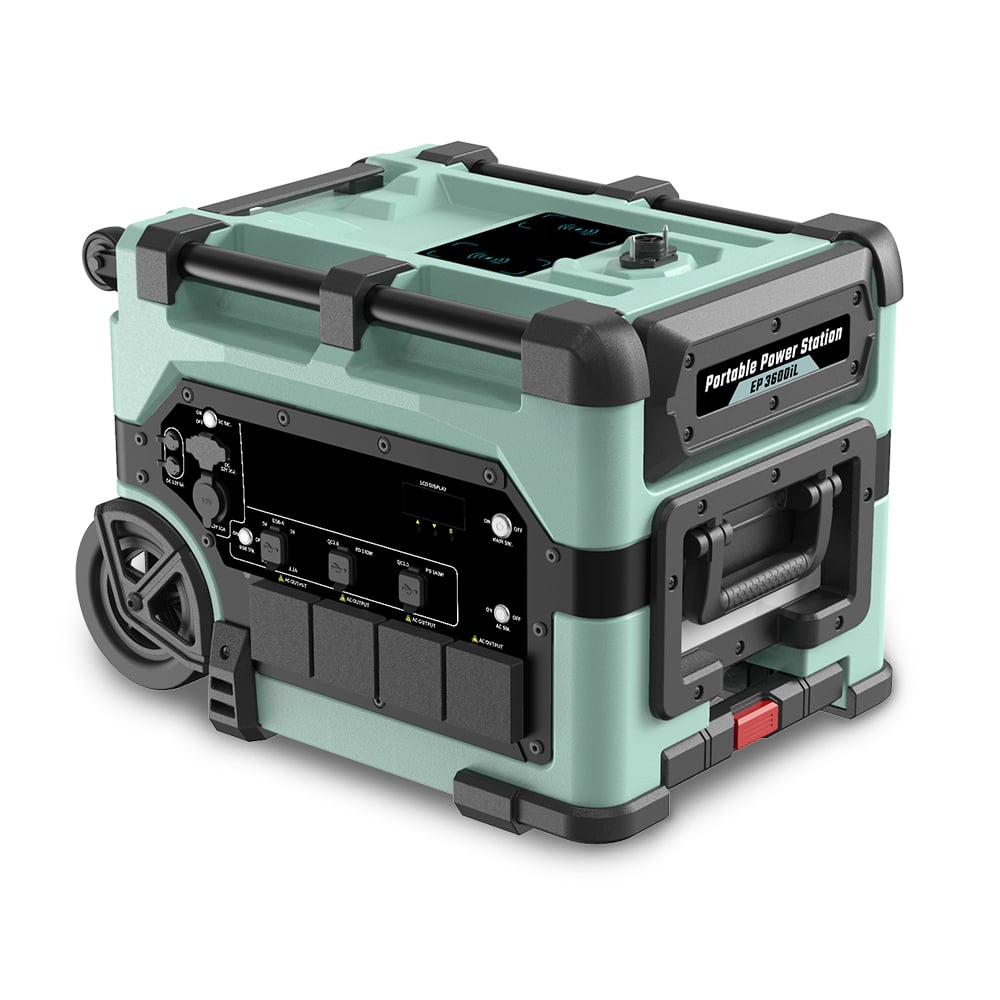
Reference points from published product records: the BP2400 Smart Mobile Power is rated at 2400W continuous with a 4800W peak, pure sine wave, and 2662Wh of LiFePO4 capacity. The EP3600iL High Power Mobile Power Station is rated 3600VA continuous with 7200VA peak and 3430Wh, and accepts up to 31 extra batteries for a total of 109kWh. The EP5000iL Smart Mobile Power Station is rated 5000W continuous with 10000W peak and 3430Wh capacity. Put the budget figures beside the appropriate rating and the fit is either demonstrated or it is not.
Step three: recharge balance between daily consumption and solar input
A unit that meets the load once is not yet a solar powered generator for rv solution. It has to recover. Convert the daily consumption to watt-hours from the same nameplate and duty cycle data, then compare that against what the solar array can deliver in a realistic charging day.
Published examples: the BP2400 carries a built-in 1200W MPPT with a 12–105VDC input window and 25A maximum, and reaches full solar charge in 2.5 hours at 1200W of solar. The EP5000iL advertises a solar MPPT window of 12–150VDC at a maximum of 1600W. Panel options include the DS100F 100W flexible panel and the DSF600A 600W foldable panel. Match the array's series/parallel voltage into the MPPT window the supplier confirms, and size the array from the daily watt-hour figure rather than from roof space alone.
Outlet, transfer and certification: the RFQ checklist
These are the items where an order can fail after the load budget has already passed. Put them to the supplier in writing.
| Question | What a good answer contains |
|---|---|
| Continuous versus peak output, and surge duration | Separate figures in watts or VA, plus the length of the peak window. |
| 30A outlet or adapter availability | Whether a solar generator with 30 amp rv outlet configuration is offered as standard or as an adapter, with its rating. |
| UPS transfer time | The stated switchover time. The BP2400 quotes under 10ms. |
| Solar MPPT input window | Voltage range and maximum input wattage, so the array design can be confirmed. |
| Certification set | Which certifications apply to the shipped model and which market they cover. |
| Warranty and spare parts | Warranty term, and what spare parts and service support are available for the model. The BP2400 carries a 5-year warranty. |
| Ingress protection | The IP rating as shipped; the BP2400 is listed as IP53/IP66. |
If any of these is not stated on the datasheet, ask for it in the quotation rather than assuming a value.
Do not treat a 50A connection as the same problem
A 50 amp solar generator for rv requirement is a different hardware case. The current and connector standard differ, so a unit built for a 30A arrangement cannot simply be re-labelled. Confirm with the supplier whether the platform supports the 50A configuration, what adapter or distribution hardware is required, and whether the continuous rating still covers the budgeted load under that arrangement. Where the answer is not documented, treat the 50A case as unresolved until it is.
OEM and ODM orders: what the load budget should travel with
For dealer and distributor programmes, the load budget belongs in the RFQ pack. Send the nameplate list, the continuous sum, the largest surge event and the daily watt-hour requirement. That lets the supplier propose a platform from published data: for example, a BP2400-class unit at 2400W rated where the continuous sum sits below that figure, an EP3600iL where the continuous sum or daily energy needs the larger platform or battery expansion, and an EP5000iL where the continuous figure is higher again. Ask for the OEM/ODM options, the certification set that applies to the destination market, and the warranty and spare-parts terms for the configured model.
Frequently asked questions
Can a solar generator replace a 30A shore-power connection on an RV?
Only if the budgeted continuous load sits within the unit's rated continuous output and the largest start-up surge sits within the peak rating and its stated duration. Whether it can serve the full 30A circuit depends on the appliances actually fitted, so the nameplate budget decides it.
Which rating do I compare the load to?
Continuous loads against the rated output; start-up surges against the peak rating and its surge window. Mixing the two is the most common budgeting error.
Is a 600W panel enough?
Panel count follows the daily watt-hour figure and the confirmed MPPT window, not the panel size alone. Confirm the MPPT voltage range and maximum input with the supplier before fixing the array.
What should dealers send with an RFQ?
The appliance nameplate list, continuous and surge figures, daily watt-hour requirement, the required outlet configuration (30A or 50A), the destination market for certification purposes, and the expected OEM or ODM scope.
To work from verified specifications, review the BP2400, EP3600iL and EP5000iL platforms with their associated solar panels, and send your load budget with the RFQ so the supplier can confirm the match.