A commercial-terms checklist for buyers evaluating a portable power station wholesale supplier before a bulk order. It covers what to pin down on MOQ tiers and mixed-model batches, payment structure and currency, Incoterm responsibilities for lithium-battery cargo, transport documentation prerequisites, and volume-order warranty and RMA terms.
The price per unit is the number every buyer looks at first. On a bulk order of lithium portable power stations it is rarely the term that causes the problem. The terms that cause problems are the ones left implicit: what the minimum order quantity really covers, who pays which leg of the freight, and who is responsible for a failed unit in year three. This checklist sets out what to get in writing from a portable power station wholesale supplier before you commit.
It is written for distributors, importers and project buyers who have already settled on what they want and are now negotiating how the deal is structured. Supplier qualification itself is a separate exercise; if you are still at the first inquiry stage, our guide on choosing a portable power station supplier from first inquiry to first order covers that sequence.
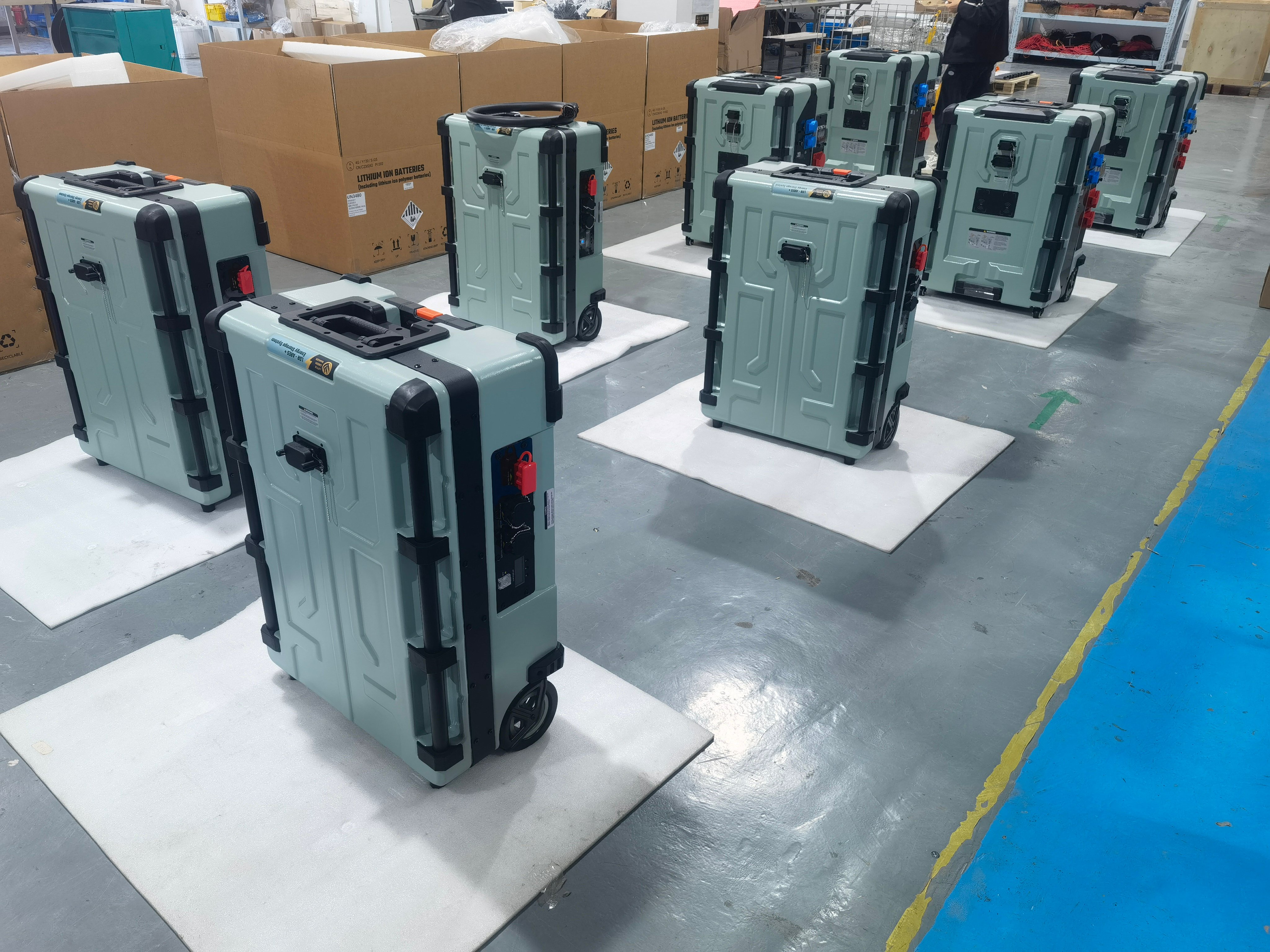
- MOQ tiers: sample orders, first production batches, mixed models, repeat orders
- Payment options and safeguards
- Incoterms and lithium-battery transport documents
- Volume-order warranty and after-sales
- The pre-commitment checklist
1. MOQ terms to clarify before you ask for a price
“MOQ” is used loosely in trade correspondence. It can mean the smallest quantity the factory will quote, the smallest quantity that unlocks a lower unit price, the smallest quantity per model, or the smallest quantity per shipment. Each of those is a different constraint, and a quotation that states one number without saying which one it refers to will cause an argument later.
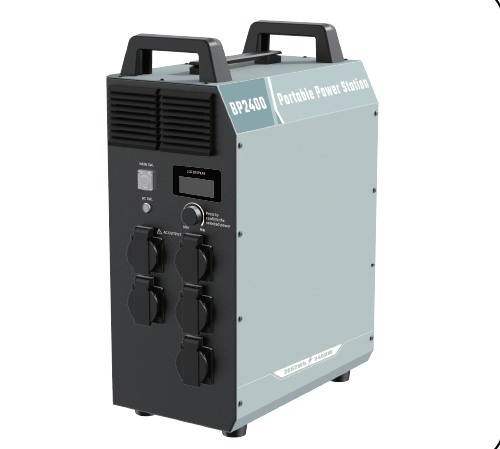
DRIVELONG's product records list a minimum order of 1 for the BP2400 Smart Mobile Power Portable Power Station, which supports single-unit or sample ordering. That resolves the sample question for that model. It does not tell you where volume pricing begins, or how a mixed-model container is counted, so those points still belong on your written list.
Questions that need a written answer
- Sample order versus first production batch. Is a sample supplied at the same price as a production unit, and is it drawn from current stock or built to order? A sample that is hand-built is not a reliable indicator of what serial production will look like.
- Tier pricing thresholds. At what quantities does the unit price step down, and does the threshold apply per model or per total order value? A per-model threshold punishes a buyer who needs a mixed range.
- Mixed-model flexibility. Can one purchase order combine several models, and does the combined quantity count toward a single threshold? For a distributor building a catalogue, this is the term that decides whether a first order is viable at all.
- Repeat-order MOQ. Does the MOQ reset on each reorder, or does an initial qualifying order lower the bar for replenishment? Distributors who run thin stock depend on this.
- What counts as a unit. Is a station with an extra battery pack one line item or two? Is a bundled accessory set counted separately?
The reason to push on this is structural. Your landed cost per unit is set by the order quantity, the freight mode it makes possible, and the duty treatment of the shipment — not by the unit price alone. A threshold that forces you into a larger order than your sell-through supports is a worse deal than a higher unit price at a quantity you can move.
2. Payment options and safeguards
Payment structure is where a purchase order's risk actually sits, and it is the section most often settled by habit rather than by negotiation. On a bulk order the split between deposit and balance determines how much capital you have committed before you have seen the goods, so the exact wording matters as much as the percentages.
- Methods offered. Ask explicitly which instruments the supplier accepts — bank transfer, documentary collection, letter of credit, or an escrow-style arrangement — and whether each carries a surcharge. A method that is available in principle but priced as an afterthought is not really an option.
- Deposit and balance structure. Get the split, the trigger for the balance payment (production start, inspection sign-off, bill of lading date, or arrival), and the documents released against each payment. Do not rely on a figure quoted verbally in a meeting.
- Currency and settlement. Confirm the invoicing currency, whether the rate is fixed at order or at payment, and which party bears conversion costs. On a large order, an unhedged currency clause is a real cost line.
- When ownership transfers. This is separate from when risk transfers. Under some Incoterms the two happen at different points, and a damage or loss event can land between them. Confirm in writing which document marks the transfer and what your insurance position is at each stage.
- Amendment and cancellation. Ask how a change to quantity or model mix after deposit is priced, and what portion of the deposit is recoverable at each production stage.
Rule for this section
Do not sign on the basis of a payment structure that appears only in an email thread. Ask for it as a clause in the proforma invoice or the supply agreement, with the trigger for each payment stated as an event rather than a date.
3. Incoterms: who does what with a lithium-battery cargo
A portable power station is dangerous goods for transport purposes because of the lithium cells inside. That changes the Incoterm picture: the term you choose allocates cost and risk between you and the supplier, but it does not allocate the legal duty to produce transport documents correctly. Those obligations attach to the shipment whatever term is agreed.
| Term | Supplier's typical responsibility | Buyer's typical responsibility | What to confirm in writing |
|---|---|---|---|
| EXW | Makes goods available at a named place | Export clearance, main carriage, import clearance, delivery | Whether the supplier will assist with export documentation at all, and at what charge |
| FOB | Delivers goods on board at the named port of shipment; handles export clearance | Main carriage, insurance, import clearance, inland delivery | The exact named port, and who books and pays for the dangerous-goods declaration |
| CIF | Freight to the named destination port plus minimum marine insurance | Import clearance, inland delivery, any insurance above the minimum | The insurance cover level and whether lithium-battery cargo is within it |
| DDP | Delivers to the named place with import duty paid | Unloading at destination | Whether the supplier is actually able to clear lithium-battery goods in your country, and who is importer of record |
FOB and CIF are the terms most freight forwarders will quote against for this product category, but the choice is yours to make, not a default to accept. DDP deserves scrutiny: it transfers a great deal of obligation to the supplier, and the clause is only as good as the supplier's ability to complete import clearance for a regulated battery product in your jurisdiction.
Shipment prerequisites regardless of term
These documents are needed before a lithium-battery shipment moves, under any Incoterm. Ask for them at quotation stage, not after the deposit is paid.
- UN 38.3 test report. The transport-test summary for the cell or battery type being shipped. Confirm the report matches the actual model and cell configuration on your order.
- MSDS / safety data sheet. Ask for the version applicable to the shipped configuration.
- CE conformity evidence for EU destinations. A declaration or certificate, checked against the model on the invoice — not a generic company certificate.
- Dangerous goods declaration and packing documentation prepared by whoever books the carriage.
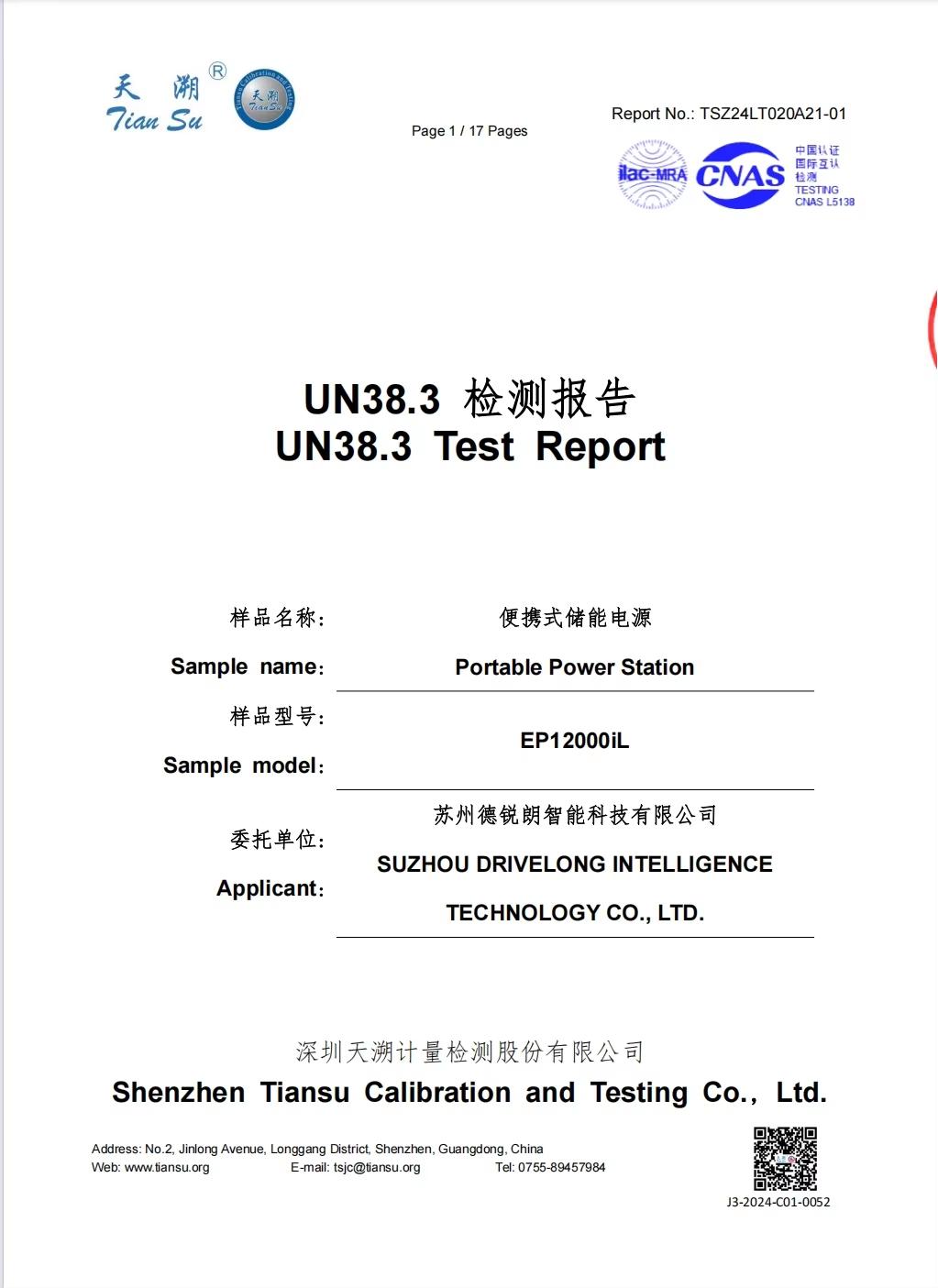
DRIVELONG holds a UN 38.3 test report for sample model EP12000iL, issued by Shenzhen Tiansu Calibration and Testing Co., Ltd. with CNAS-marked report status. It is a useful reference point: a transport report names one model and one applicant, and a buyer should check the report on file for the model they are actually ordering rather than assume one report covers a range.
4. Volume-order warranty and after-sales terms
A warranty is a promise with a scope, a duration, a claimant and a process. Bulk buyers usually get the duration in writing and nothing else, which is why warranty disputes tend to surface at the worst possible moment — when a distributor is holding a customer complaint and has no agreed procedure to fall back on.
Warranty terms to pin down
- Duration per model. Warranty length is model-specific, not company-wide. DRIVELONG's records list a 5-year warranty for the BP2400 Smart Mobile Power Portable Power Station, the BP1000 Portable Power Station and the EP5000iL Smart Mobile Power Station. Confirm the figure for each model line on your purchase order; do not carry one model's warranty across to another.
- What is covered. Cells, BMS, inverter board, enclosure, and accessories are different assemblies with different failure modes. Establish which are inside the warranty and which are consumable or excluded.
- What voids it. Water ingress beyond the stated IP rating, unauthorised repair, use outside the rated load, or resale outside the agreed territory. The BP2400 is rated IP53 for the unit and IP66 for the battery pack; a warranty clause should say what happens when those ratings are exceeded.
- Remedy type. Repair, replacement unit, or replacement part — and who decides. A clause that leaves the decision entirely with the supplier gives you little to plan around.
- Spare parts availability. Ask how long parts for the models you stock will remain available, and whether you can hold a stocking set. The EP5000iL can be expanded with up to 31 EP3600B extra batteries for a system total of 109kWh, so battery-pack compatibility across the product life matters to your customers.
- RMA process. Who diagnoses first, who pays freight in each direction, what evidence you must supply, and what turnaround you can expect. Get the steps and the cost allocation written down.
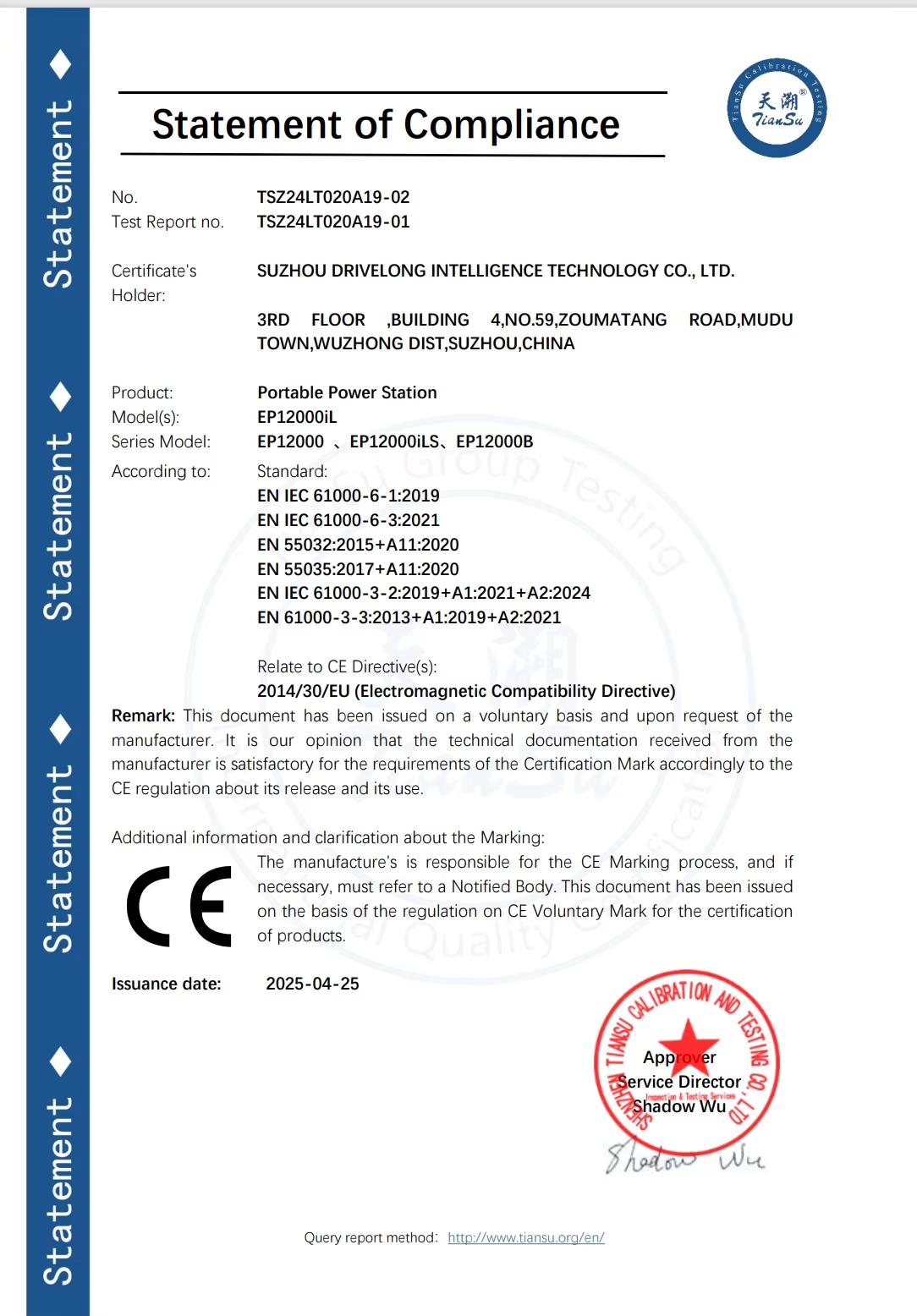
- Documentation to retain. Keep the purchase order, the proforma invoice, the model-specific warranty statement, and the conformity documents for each shipment. For EU-bound goods, a Statement of Compliance for sample model EP12000iL under EMC Directive 2014/30/EU, issued 2025-04-25 to Suzhou Drivelong Intelligence Technology Co., Ltd., illustrates the form this evidence takes — and why it should be filed per model and per shipment rather than collected once.
5. The pre-commitment checklist
Before a purchase order is signed, each of the following should have a documented answer — in a clause, a proforma invoice line, or an attachment to the agreement. An answer given only in conversation has not been confirmed.
- State whether the MOQ applies per model, per order, or per shipment, and confirm what a sample order looks like for the specific model.
- Confirm the tier thresholds and ask whether a mixed-model order counts toward them as a combined quantity.
- Confirm whether the MOQ resets on reorder or whether the first qualifying order sets the level for replenishment.
- Get the accepted payment methods and any surcharge for each, in writing.
- Get the deposit and balance split with the trigger event for each payment, not just a date.
- Confirm the invoicing currency and which party carries the conversion cost.
- Confirm the point at which ownership transfers, and separately the point at which risk transfers.
- Choose the Incoterm deliberately and name the port or place precisely.
- Confirm who prepares the dangerous goods declaration and books the carriage under that term.
- Obtain the UN 38.3 test report, MSDS and applicable CE conformity documentation for the exact models on the order, and check the model names against the invoice.
- Record the warranty duration for each model you are buying, and what the warranty covers and excludes.
- Agree the spare-parts position and the RMA steps, including who pays freight each way.
- Set a document-retention routine for warranty statements, conformity evidence and shipping documents, filed per shipment.
Questions buyers ask at this stage
Does the choice of Incoterm change the certification requirements?
No. The conformity and transport documents needed for the product — UN 38.3, MSDS, CE evidence for EU destinations — are required whatever term is used. The Incoterm allocates cost, risk and clearance duties between the parties; it does not change what the product itself must carry. That is why the document request belongs at quotation stage, before the term is finalised.
Is a portable power station wholesale order always cheaper than ordering samples first?
Not automatically. The unit price falls with volume, but freight mode, insurance, duty and the cost of holding unsold stock move with it. A buyer should compare the landed cost per unit at the quantities they can genuinely sell through, and treat a lower unit price at an unsellable quantity as a cost rather than a saving.
How should a buyer verify warranty terms across several models?
Ask for the warranty statement model by model and check it against the purchase order line items. Lengths and coverage can differ between product lines; a single company-level statement in a brochure is not a substitute. If the order mixes models, note which warranty applies to which line.
Next step. Bring this list to the quotation request rather than to the negotiation. Suppliers who answer documentary questions precisely at quotation stage are easier to hold to those answers later. Suzhou Drivelong Intelligence Technology Co., Ltd., founded in Suzhou in 2015 and an OEM/ODM provider, exports to Europe, North America, South America, Australia, Singapore, Russia and the Middle East; requests for model-specific documentation and warranty statements can be raised through its RFQ channel.