A B2B roadmap for importers and brand owners vetting a portable power station supplier in China — defining requirements, screening manufacturers, verifying capability, agreeing commercial terms, and scaling from a first sample order to repeat volume.
B2B Procurement Guide
The first question a buyer usually sends a portable power station supplier is simple: can you make what my market needs, at terms I can build a margin on, and repeat it order after order? Everything that follows answers that question in order — requirement definition, supplier screening, capability verification, commercial terms, and then the first order itself.
- Write your requirements down as a specification, not a wishlist: output, capacity, application, destination market.
- Screen suppliers on three axes that are easy to compare across candidates: product range depth, OEM/ODM capability, and export market fit.
- Verify before you commit — audits and sample testing separate a supplier that lists a product from one that can ship it consistently.
- Treat MOQ, lead time and pricing as commercial variables to be agreed, not as product facts to be assumed.
- Place a sample or pilot order first, then scale; the pilot is where your packaging, labeling and documentation assumptions get tested.
Start with a written requirement, not a search
Buyers who start by browsing supplier catalogs end up comparing unrelated products. Begin instead with a one-page requirement document that the supplier can quote against. Four fields carry most of the weight.
Output power. Continuous output separates a small entry unit from a heavy-load system. The useful range runs from 500W-class units for displays, trades and light backup, through 1kW and 2.4kW models for event and small-business work, to 3.6kW and 5kW units, and on to three-phase flagship systems around 12kW for commercial and industrial sites. If your application involves three-phase equipment, split-phase distribution or vehicle charging, say so at the outset — that single line removes most wrong candidates.
Capacity and expandability. A 1000Wh unit, a 3.4kWh unit and a stackable system that reaches hundreds of kWh serve different buyers. Decide whether your customer needs a fixed pack size or the ability to add battery modules later; it determines whether you should be sourcing a standalone model or a modular platform.
Application and duty cycle. Field broadcasting, construction sites, outdoor events, retail backup and off-grid residential use put different demands on the same specification sheet. Note the load profile, whether unattended operation is required, and whether the equipment will live outdoors — outdoor deployment makes enclosure ratings a requirement rather than a nicety.
Target market. The destination market determines documentation, language of manuals and marking, and electrical configuration. Write it into the requirement document so quotes are comparable and you are not comparing an EU-bound proposal with a proposal intended for another region.
Screen suppliers by depth, capability and market fit
With a requirement in hand, you can screen a shortlist of portable power station manufacturers on three axes that stay legible across candidates.
Product range depth. A supplier whose catalog stops at one or two entry models has limits as your customer base grows. Range depth — from 500W portable units through 1kW and 2.4kW models up to 5kW and 12kW mobile systems — tells you whether the same relationship can supply your complete product ladder without re-sourcing each tier separately. Where you need a defensible method for ranking candidates on published specifications, see how to rank OEM and ODM suppliers using published specs and platform tiers.
OEM and ODM capability. If you sell under your own brand, the question is not whether a supplier offers custom branding but what that offer reaches: enclosure marks, packaging, manuals, app or interface naming, and whether the platform itself can be adapted. This is where quotes diverge most between suppliers, and where you need specifics rather than a promise. The cluster page on custom branding and private label sets out what the capability actually covers.
Export market fit. Suppliers differ in which regions they already ship to and document for. If your buyers are in Europe, Australia or the Gulf, that should shape your shortlist at the screening stage rather than after the sample arrives. Use the export market coverage comparison to judge factories by destination rather than by reputation.
Verify capability before you commit
At this stage you are testing two different things: whether the product meets your requirement, and whether the organization can repeat it. Samples address the first. A factory audit addresses the second — assembly, testing, packaging and traceability, seen rather than described. The two are not interchangeable, and a strong sample does not substitute for an audit.
Structure your audit around what matters for this product category: how incoming cells and BMS boards are received and traced, how units are tested before packing, how firmware or parameter changes are controlled, and how finished goods are checked for accessories and documentation before sealing. Our dedicated guide on auditing a portable power station manufacturer before an OEM order covers the criteria and the trade-offs of audit depth, so this page does not repeat that checklist.
Sample testing should follow your requirement document, not the supplier's demo script. Put the representative load profile on the unit, check the interface and documentation in your target language, and record what you observed. A test records the result under your conditions; it does not establish a warranty outcome, but it does tell you whether the delivered configuration matches the quote.
Agree the commercial terms in principle
Most early disputes trace back to commercial terms that were discussed but never put in writing. Three variables deserve explicit agreement before you talk about a schedule: minimum order quantity, lead time, and price structure.
MOQ. MOQs vary with model, configuration and customization. Do not assume a published figure applies to your configuration, and do not treat a low MOQ as a proxy for flexibility — ask how the MOQ changes when the enclosure, packaging or battery configuration changes. Our cluster page on wholesale MOQ and lead time explains how to compare suppliers on these terms without guessing.
Lead time. Ask for the lead time attached to a specific quantity and a specific configuration, and ask what the supplier counts from — order confirmation, deposit, or approval of artwork. A lead-time figure without a start point is not a commitment you can plan against.
Price structure. Separate the unit price from tooling, packaging, artwork, labeling and sample charges so you can compare total first-order cost across candidates, not just the headline unit figure. Where you bundle solar panels with the power station, compare panel quotes on the same terms using the guide on comparing solar panel quotes and samples before an RFQ.
Warranty. Warranty terms belong in the commercial discussion, written with the model name and the covered conditions. On the BP and EP series models listed on this page, the product records state a 5-year warranty; any model outside that list needs its warranty confirmed separately in writing. Confirm how the policy is documented for your market and what the claim process looks like before you sign.
| Commercial term | What to pin down | Where to go deeper |
|---|---|---|
| MOQ | MOQ for your exact configuration; how it shifts with customization | MOQ and lead time comparison |
| Lead time | Lead time for the agreed quantity and the event it counts from | MOQ and lead time comparison |
| Price structure | Unit price versus tooling, packaging, labeling and sample charges | Quote and sample comparison |
| Certification and marking | Which documents apply to your destination market and who holds them | EU import certification requirements |
| Warranty | Covered models, covered conditions, claim process | Confirm with the supplier in writing |
Certification discussion belongs in this section too, framed by your role as importer. Which documents you need depends on the market and on who is placing the product on it, so the question is not "what certifications do you have" but "which of these applies to my import, and which entity holds them." The evidence-ranked guide on certifications for EU import walks through that by importer role. For reference, the BP2400, BP3600 and EP5000iL product records list CE, RoHS and UN 38.3 certification — check that the scope matches the model and market you are importing into. The product records for the other models on this page do not list these certifications, so request each model's certification documents separately in the RFQ.
Place the first order, then scale
A pilot order is a test of the whole transaction, not just the product: artwork inside the packaging, the manual in your language, the labels, the accessories in the box, and the shipping documents. Place a sample or small pilot first, inspect the delivered goods against your requirement document, and record what you had to correct. That correction list is the most useful input to a volume order.
Scale in steps. Raise quantity only after the pilot has shown that packaging, labeling and documentation land as specified, and re-confirm lead time against the new quantity rather than extrapolating from the pilot. Keep one requirement document across the whole ramp so each order is checked against the same baseline.
A supplier range that spans entry units to three-phase systems
DRIVELONG is a portable power station manufacturer based in Suzhou, China, serving B2B buyers across Europe, North America, South America, Australia, Singapore, Russia and Dubai with OEM and ODM services. The product range runs from entry units to three-phase flagship systems, which matters at the screening stage: one relationship can cover your product ladder.
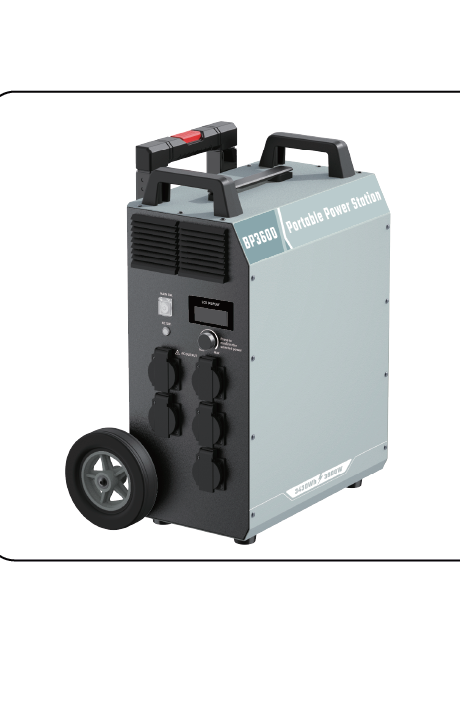
The BP series starts with the BP500 — 500W continuous output, 1004.8Wh LiFePO4 capacity, 8000-cycle cells, a built-in 350W MPPT and 10kg weight — and steps up through the BP1000 at 1000W and 2010Wh with a 500W MPPT and 18.5kg, and the BP2400 at 2400W rated and 4800W peak, 2662Wh, with UPS transfer under 10ms and an IP53 unit paired with an IP66 battery pack. The BP3600 moves to 3600W rated and 7200W peak, 3430Wh, and a 2400W MPPT with the same IP53/IP66 enclosure ratings.
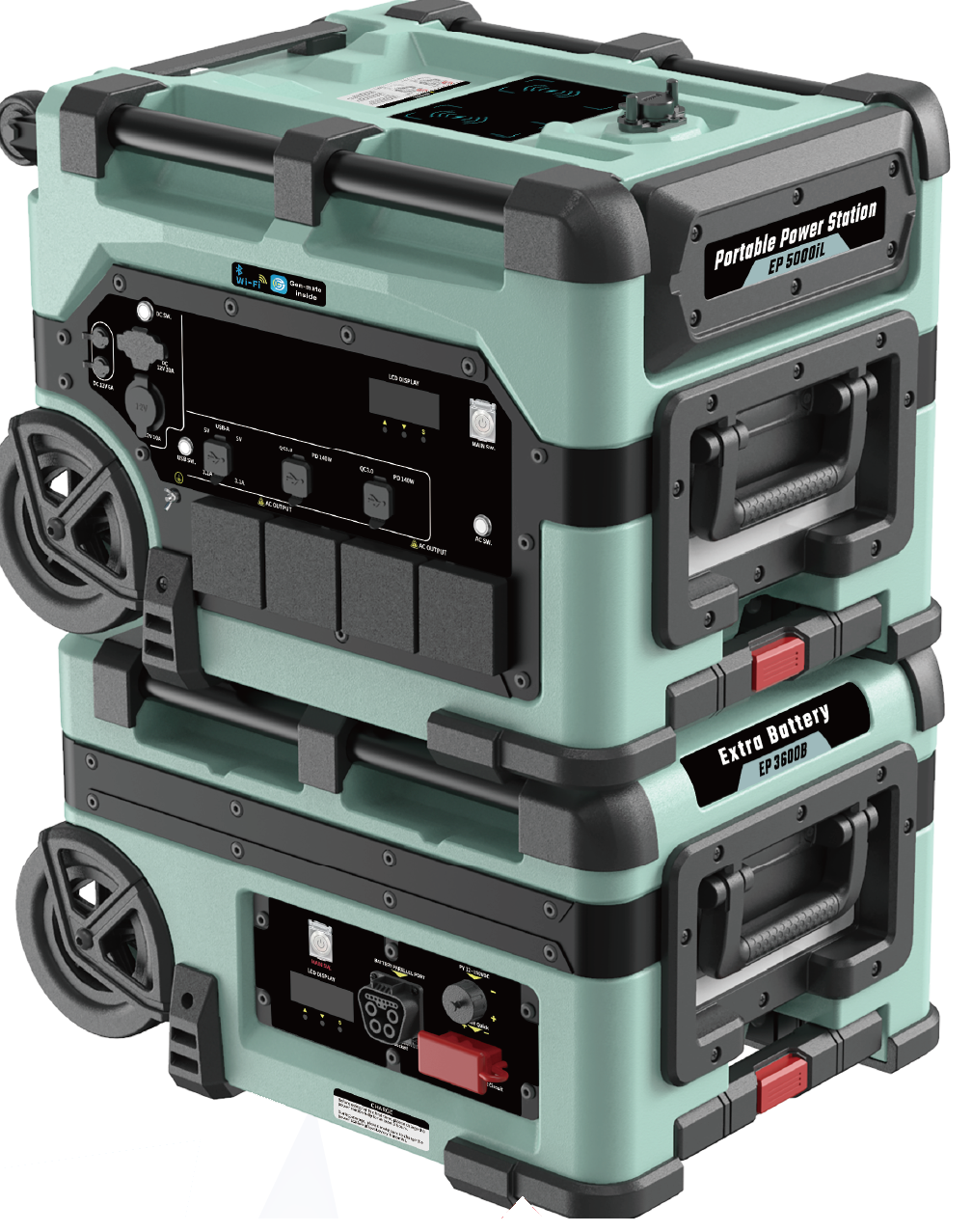
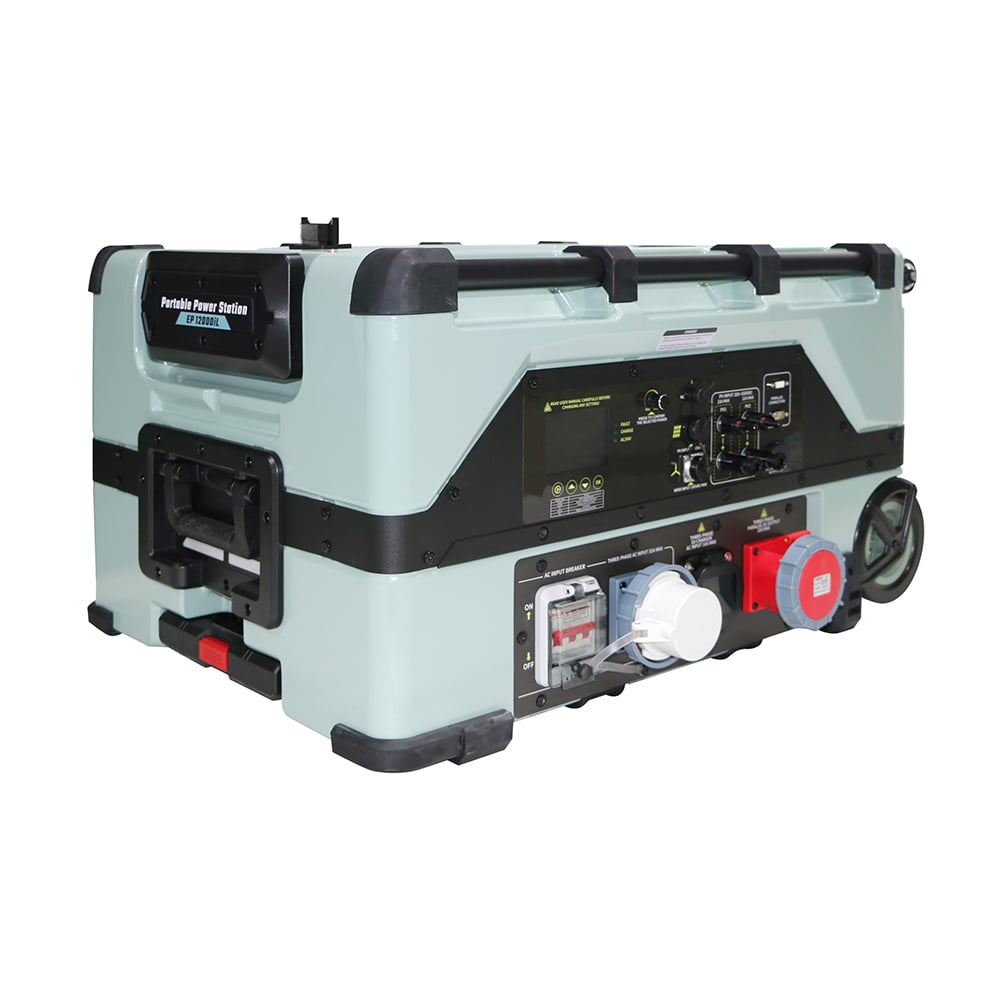
For larger sites, the EP5000iL delivers 5000W rated and 10000W peak, 3430Wh, and stacks with up to 31 extra battery packs to reach 109kWh; two units in parallel reach 10kW output. The flagship EP12000iL is a 12000VA rated, 24000VA peak system with 7680Wh, 12kW three-phase, 11kW single-phase and 10kW split-phase output, stackable to 372kWh, with a built-in 22kW EV charger; its product record states a full charge in 70 minutes.
The BP and EP series models listed on this page carry a 5-year warranty in their product records, with CE, RoHS and UN 38.3 listed on the BP2400, BP3600 and EP5000iL records. Buyers can start at manufacturing or at the portable power station manufacturer overview, and bring a written requirement to the first conversation.
Buyer questions that come up at the first-order stage
How do I compare two suppliers that look equally capable?
Compare them against the same requirement document rather than against each other's catalogs. Ask each supplier for a quote on your exact configuration — model, enclosure rating, packaging, manual language and destination market — and compare total first-order cost, not just unit price. Then check the sample against the load profile you wrote down.
Is a small trial order possible before a volume commitment?
This is a commercial question to raise with each supplier, and the answer depends on model, configuration and customization. Ask directly how the MOQ changes between a standard configuration and a customized one; the reply tells you how a first order would actually be structured.
What documents should I request with a quote?
Request the specification sheet for the exact model being quoted, the certification documents relevant to your destination market and confirming which entity holds them, the warranty terms in writing, and a packaging and labeling layout approval step. If solar panels are bundled, request their specification sheets on the same basis.
How much does the destination market affect the choice?
Significantly. Destination market determines documentation, marking, manual language and electrical configuration, and suppliers differ in which regions they already serve. Raising it at the screening stage removes candidates early instead of after a sample shipment.