Before you send an RFQ for portable power stations, you need to know whether you are talking to a genuine factory or a trading company. This guide compares the two source types on pricing structure, MOQ, customization depth, technical answers, after-sales responsibility and RFQ behavior, then gives a focused verification sequence to confirm the source's identity and ownership of product models.
You are ready to send an RFQ for portable power stations. The quote you receive will be shaped by who answers it. A genuine factory and a trading company can offer similar-looking product photos, but they differ in pricing structure, customization depth, technical response and who is accountable after delivery. Before you share your specs and volumes, confirm which type of source you are dealing with. This guide compares the two on the same conditions and gives a short verification sequence you can complete before the RFQ goes out.
Two source types, one quotation
A portable power station factory designs or manufactures the unit, or at least controls the assembly, battery pack integration and final testing. A trading company sources finished units from one or more factories and sells them under its own commercial terms. Neither label is automatically better. The point is that the quote, MOQ, lead time and after-sales path are not the same, and a buyer who assumes factory-direct while talking to a trader will misjudge the room for negotiation and customization.
How factory-direct and trading companies differ
The comparison below holds the product requirement constant: the same capacity range, certification needs and packaging expectations. Differences show up in how the supplier responds and what it can commit to.
| Dimension | Factory-direct source | Trading company |
|---|---|---|
| Pricing structure | Quote built from cell, BMS, inverter and enclosure costs plus assembly. Fewer commercial layers. | Quote usually includes the factory price plus the trader's margin and logistics handling. Ask what is included. |
| MOQ | Often tied to production runs or component order quantities. Flexibility varies by model. | Can be lower because stock or mixed orders are possible, but unit price may reflect smaller batches. |
| Customization depth | Can discuss enclosure changes, output configurations, firmware and branding at the design level. | Usually limited to branding, packaging and accessories unless the factory agrees to a special run. |
| Technical answers | Answers come from people who build the unit: battery chemistry, MPPT rating, UPS transfer time, IP rating. | Answers may be relayed from the factory. Follow-up questions can take longer or come back less specific. |
| After-sales responsibility | The factory carries warranty and spare-parts responsibility directly. | The trader is your contractual contact and may route claims to the factory. Clarify who decides and who ships parts. |
| RFQ behavior | Asks specific questions about load profiles, certification markets and volume before quoting. | May quote quickly from a catalog and ask fewer technical questions. |
None of these rows means a trading company cannot serve your order. For small trial volumes, mixed-model containers or markets where the trader holds inventory, a trading company can be a practical channel. The risk is mispricing your negotiation position or expecting design changes that the source cannot make.
What to verify before the RFQ
Verification should confirm who you are actually talking to and whether they own the product model they are quoting. Keep it focused; this is not a full factory audit. Five checks are enough to reset your expectations before pricing starts.
Company registration and business scope
Ask for the legal company name and registration details, then check that the business scope covers manufacturing or assembly of the product category, not only trade or import/export. A registration document shows legal existence; it does not by itself prove production capability. Note any mismatch between the registered name and the name on the quotation.
Production footprint evidence
Request evidence that matches the claimed role: assembly lines, battery pack integration, testing stations or warehouse photos with the same company name visible. A trading company may not have these, which is fine — but it should say so. Ask directly: “Do you manufacture this model, or source it?” The answer should be consistent with the documents you receive.
Product-model ownership
Model numbers, user manuals and certification records should point to the same manufacturer. If the model is listed under a different company than the one quoting you, ask about the relationship. Ownership of the model matters for spare parts, firmware updates and warranty handling later.
Sample-to-spec consistency
Before a full RFQ, request a sample or a pre-production unit and compare it to the datasheet you were given: rated versus peak output, battery chemistry, MPPT rating, UPS transfer time, IP rating and warranty terms. A sample that does not match the stated specification is a signal to clarify the quotation basis before volumes are discussed.
Certification scope
For portable power stations, CE, RoHS and UN 38.3 are common documentation points. Check that the certificate or report names the model you are buying and the manufacturer entity. A certificate for a sibling model or a different company does not automatically cover your order. Confirm with the supplier which documents will be supplied with the shipment.
If you also want to compare buying channels more broadly, see Where Can I Buy a Portable Power Station? Buying Channels Compared.
What the source type looks like in a real product line
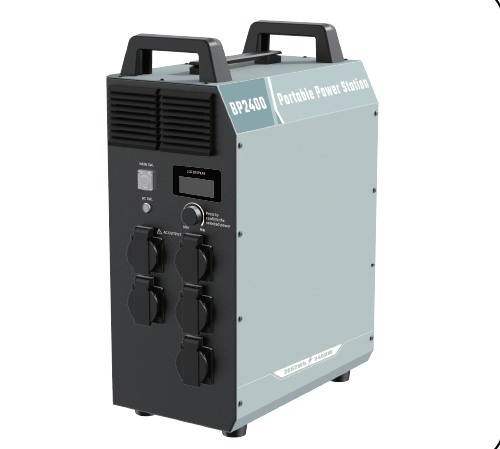
Product depth is one of the clearest signals. A source that owns its models can usually explain the design choices behind a specification. Consider the BP2400: 2662Wh LiFePO4, 2400W rated / 4800W peak pure sine wave output, built-in 1200W MPPT, UPS transfer under 10ms, IP53 unit / IP66 battery pack, 5-year warranty, CE/RoHS/UN 38.3, with wheels and handle. A source that can discuss why the MPPT is rated at 1200W, how the IP53/IP66 split is achieved, and what the 5-year warranty covers is more likely to be close to the design.
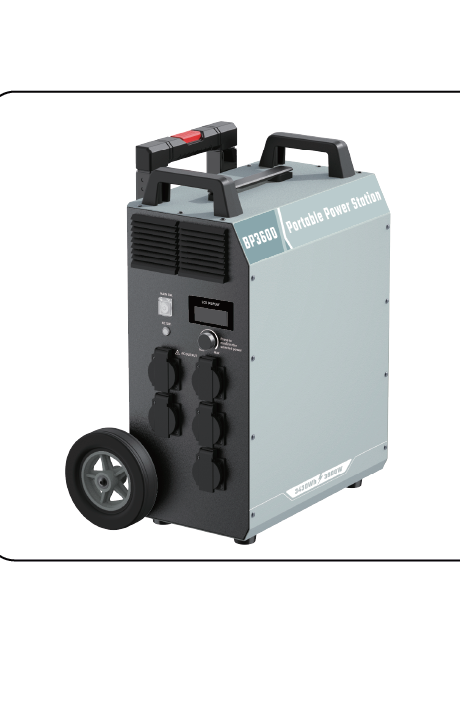
The BP3600 adds a different operating profile: 3430Wh LiFePO4, 3600W rated / 7200W peak, built-in 2400W MPPT, charges to 80% in one hour via AC power, solar panels or a smart generator input (figure quoted from the product record; test conditions on the product page), UPS transfer ≤10ms, IP53/IP66, 5-year warranty. Ask a potential source to explain the charging path and thermal design behind that one-hour claim. A specific, internally consistent answer is a useful signal; a catalog restatement is not.
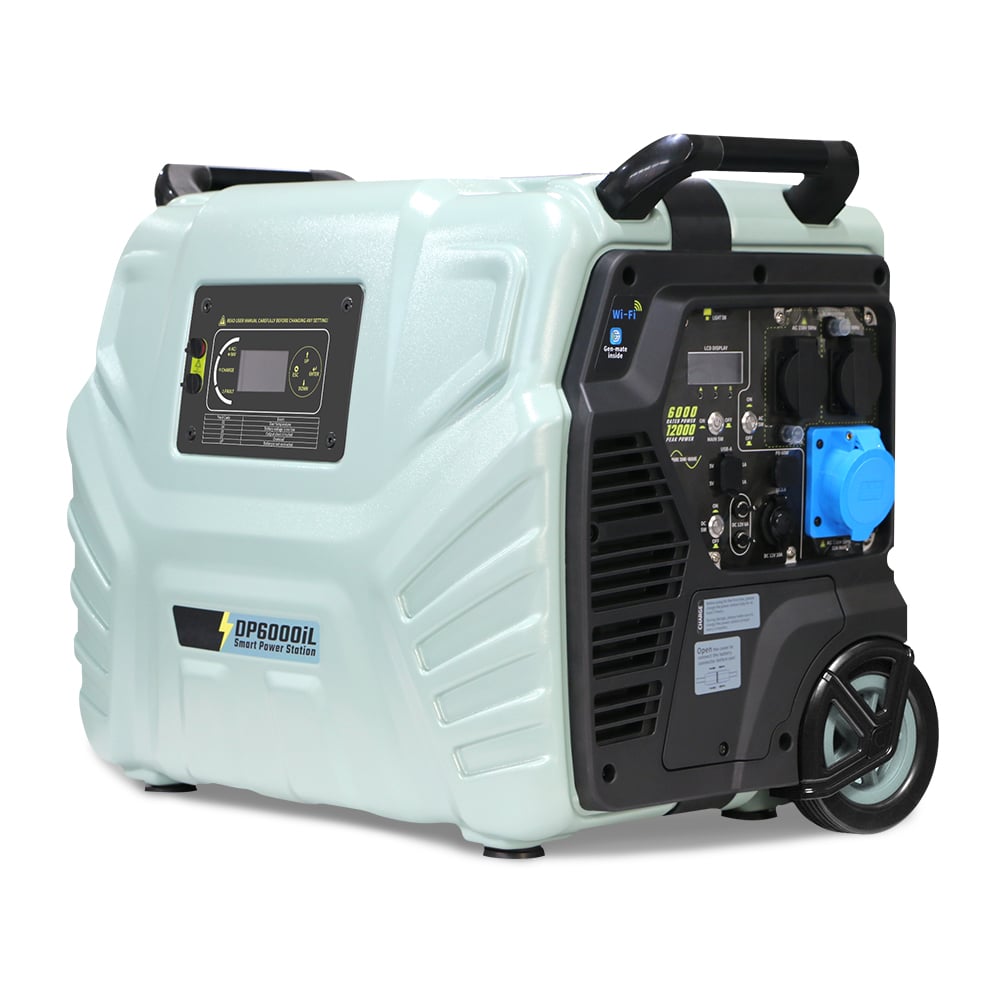
For larger projects, the DP6000iL shows how expansion changes the sourcing question: 5376Wh LiFePO4, 6000VA rated / 12000VA peak, EV charging supported, expandable up to 31 extra batteries to 172kWh total, 5-year warranty. Expansion at that scale involves battery pack compatibility and system-level responsibility. Confirm whether the source you are talking to owns that system design or is reselling it.
RFQ behavior: what a useful response looks like
Send the same RFQ to every candidate and compare responses on content, not speed alone. A response that asks about your target market, certification needs, expected load profile and annual volume before quoting is doing commercial and technical work. A response that only fills in a price table may still be valid, but it gives you less to evaluate.
Include in your RFQ: the model or specification you need, the destination market and required documents (for example CE, RoHS, UN 38.3), packaging and labeling requirements, expected order quantity and whether you need customization. Ask each candidate to state clearly whether they manufacture the model or source it, and who handles warranty claims.
Useful background on the inquiry-to-order path is in Choosing a Portable Power Station Supplier: From First Inquiry to First Order.
Frequently asked: portable power supply factory vs trading company
Is a “portable power supply factory” the same as a portable power station factory? The terms are used interchangeably for the same product category. When a supplier describes itself as a portable power supply factory, apply the same verification: registration and business scope, production evidence, model ownership, sample-to-spec consistency and certification scope.
Can a trading company give a lower price? Sometimes, especially for small or mixed orders where stock is available. Compare on the same conditions — same model, same certification documents, same packaging and delivery terms — before deciding. A lower unit price with unclear warranty responsibility is not equivalent.
Should I skip the sample if the factory seems genuine? A sample or pre-production unit compared against the datasheet is the most direct check of sample-to-spec consistency. If time is tight, at minimum ask for the exact model's certification records and a written warranty statement before placing a volume order.
Decision framework before you send the RFQ
- Define your priority: lowest landed cost at volume, design-level customization, or fast small-batch supply.
- Complete the five verification checks — registration, production footprint, model ownership, sample consistency, certification scope — and record the answers.
- Ask each candidate directly whether they manufacture or source the model, and who owns warranty and spare parts.
- Send an identical RFQ to all candidates, including market, documents, volume and customization needs.
- Compare responses on the same conditions; use technical depth and consistency, not just price, to decide who moves to the next stage.
The source type is a starting condition, not a verdict. The verification sequence tells you which commercial terms and customization depth are realistic, so your RFQ reaches the right party with the right questions.