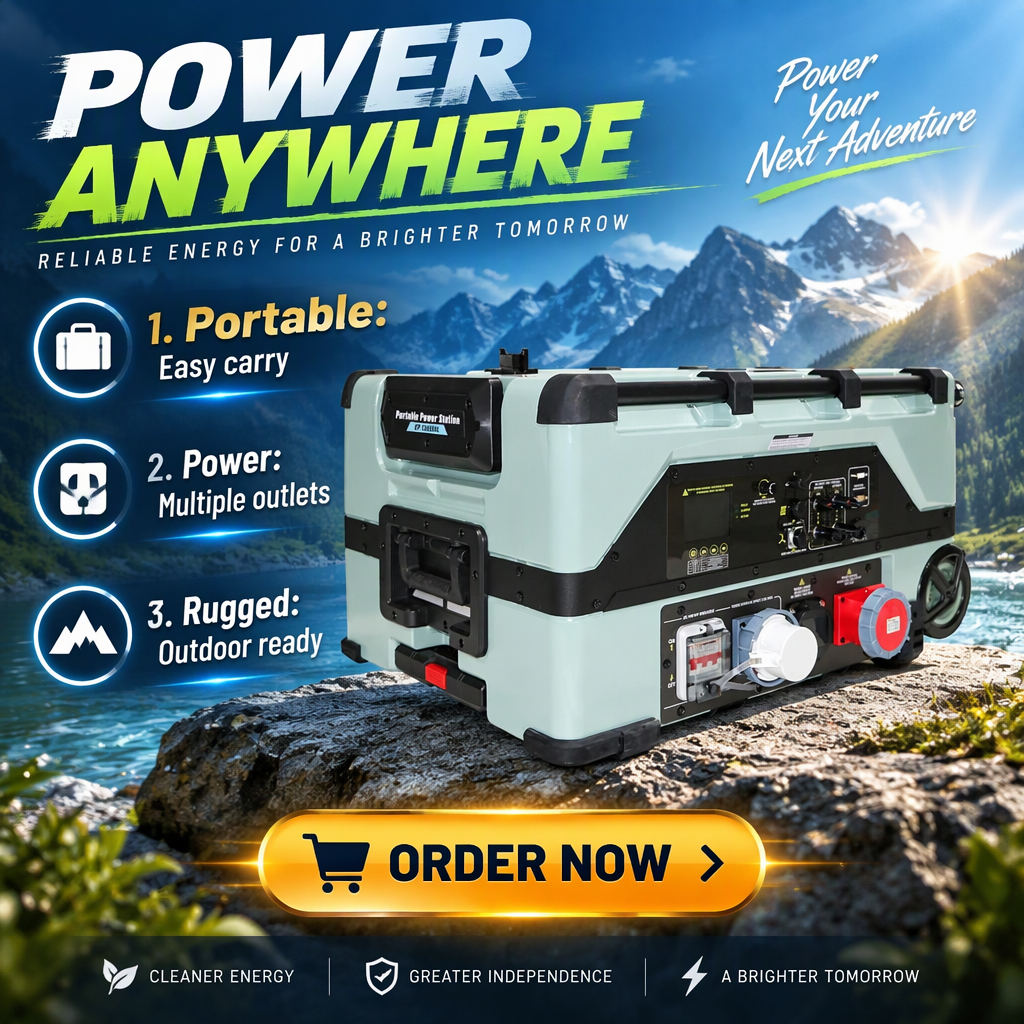
When grid and solar are both connected, DRIVELONG mobile power stations charge solar-first and draw utility power only to fill the gap; a dedicated high-power AC input with an on-unit breaker keeps the total draw within limits and stops nuisance trips. EP5000iL and EP12000iL specs included.
A recurring field question from distributors and installers of portable energy systems: the end customer connects a mobile power station to both the solar array and the wall outlet, and the charging logic behaves as if the panels were not there — it pulls grid power even when solar input is plentiful. In other installations, taking both inputs at once pushes the combined draw past the upstream breaker and trips it mid-charge. Either way, the distributor gets the support ticket, and a straightforward sale turns into a callback that is hard to close.
What Goes Wrong in Fixed Charging Designs
In designs that treat the grid as the default source, the controller draws utility power whenever the battery is below its charging target — regardless of what the array is producing at that moment. The solar input is bypassed while charging continues on purchased electricity, so the customer pays for energy the panels were already delivering. The second failure mode appears when both inputs are accepted without a managed limit: solar charging and AC charging stack on top of each other, the combined draw exceeds the rating of the upstream circuit, and the breaker trips. Both problems share one root — the charging path was designed around a single default source instead of managing two inputs against a defined ceiling.
The DRIVELONG Charging Strategy: Solar First, Utility to Fill the Gap
When a DRIVELONG mobile power station is connected to solar and utility power at the same time, charging does not default to the grid. The unit draws what the solar input can deliver first, and utility power comes in only to fill the gap when solar falls short of the charging target. The battery still reaches a full charge on schedule, the available solar energy is consumed instead of bypassed, and the grid is used as a supplement — not as a substitute.
Managed dual input. The unit does not stack uncontrolled charging paths. Utility power supplements the solar input; it does not run on top of it, which is the condition that pushes a shared circuit past its breaker rating.
A defined input ceiling. Charging enters through a dedicated high-power AC input sized to each model's charging rating (detailed below), so the draw stays on a path engineered for it.
The exact switch-over thresholds — how large a solar shortfall triggers utility supplementation, and at what level the unit limits its combined draw — are engineering settings, not figures published on a spec sheet. We confirm them for your project at the RFQ stage rather than quoting numbers the product records do not state.
The Dedicated High-Power AC Input, and Why the Breaker Holds
The second half of the answer is hardware. Charging enters through a dedicated high-power AC input port rather than sharing a general-purpose circuit, and the input path is sized to the model's charging rating — up to 3000 W single-phase on the EP5000iL. On the EP12000iL, the AC input sits behind its own on-unit input breaker, so the charging current is drawn on a protected path of its own instead of stacking onto other loads. For the installer, the practical result is direct: the unit charges at full speed without asking the site's wiring to carry more than its rated input — precisely the condition that produces nuisance trips when both inputs are left unmanaged.
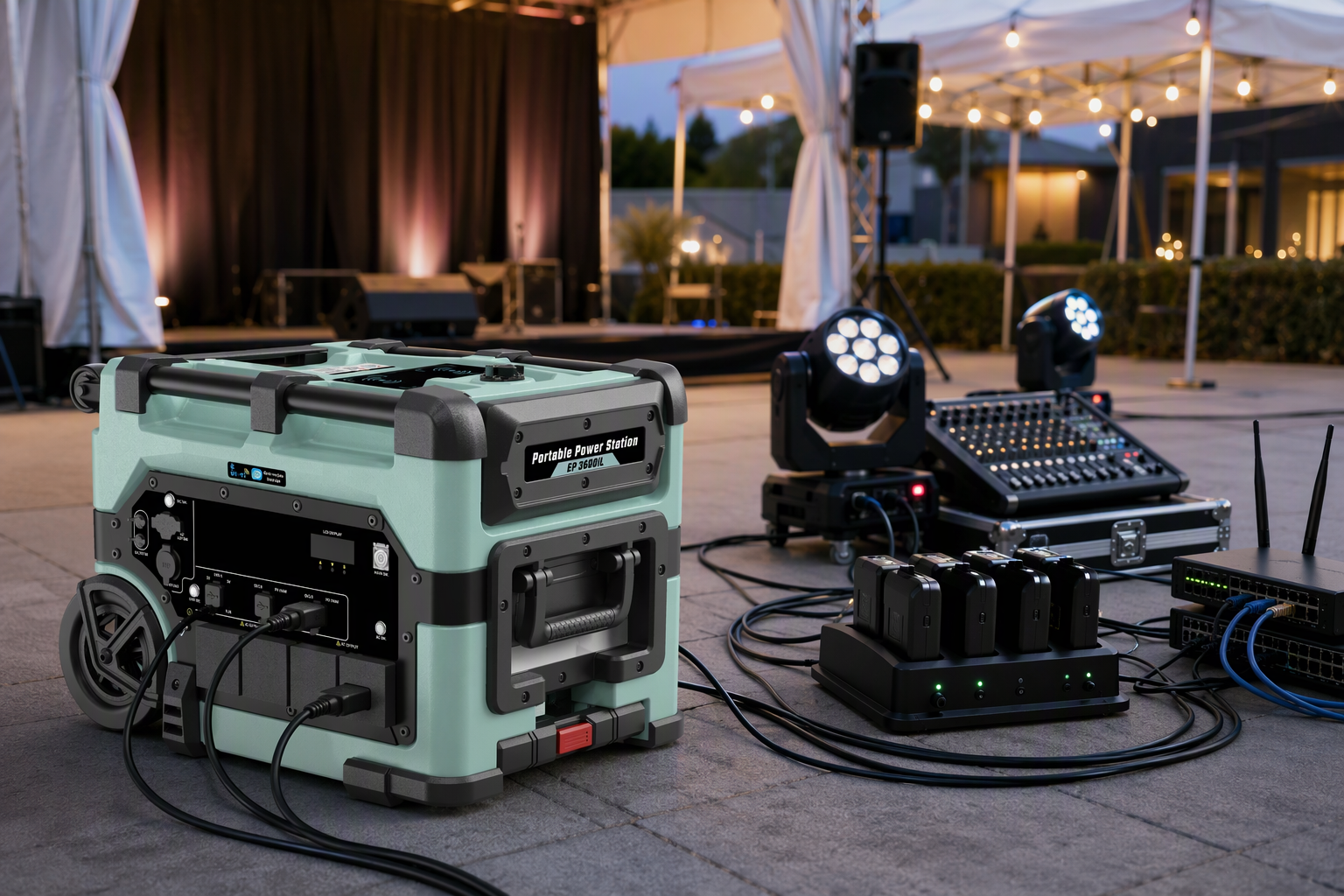
What we do not publish — and what your RFQ should ask for in writing — is the exact input limit and trip behavior under your site's supply conditions.
The Product Line Behind the Strategy
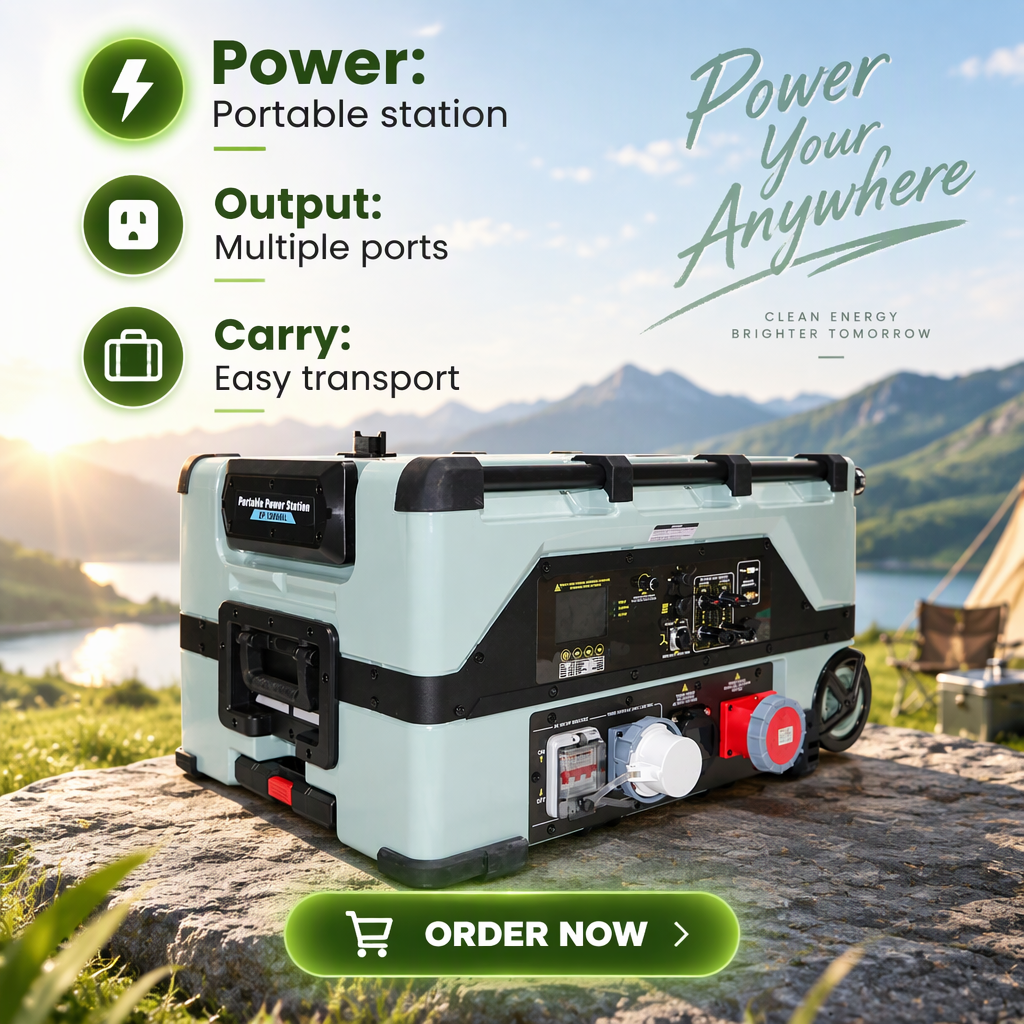
For most residential and light-commercial installations, the EP5000iL Smart Mobile Power Station carries this strategy:
Battery | LiFePO4, 3430 Wh (51.2 V, 67 Ah), 5000+ cycles to 80% capacity |
Rated AC output | 5000 W (10000 W peak), pure sine wave, THD < 3% |
AC charging input | Max. 3000 W single-phase, fully charged in about 1.2 hours (split-phase max. 1700 W, about 2 hours) |
Solar charging input | MPPT 12–150 VDC, max. 1600 W, fully charged in about 2.5 hours |
Capacity expansion | Up to 31 × EP3600B extra batteries, 109 kWh total |
Parallel output | 10 kW max with two stacked units, no parallel kit needed |
UPS transfer | ≤ 10 ms |
Protection | IP53 (unit) / IP66 (battery pack) |
Certifications | RoHS, CE, UN 38.3 |
Warranty | 5 years |
For larger loads, the EP12000iL Flagship High-Power Mobile Power Station applies the same dual-input strategy at a different scale: 12000 VA rated and 24000 VA peak output from a 7680 Wh LiFePO4 battery, continuous output of 12 kW three-phase, 11 kW single-phase or 10 kW split-phase, and charging inputs covering utility power and both high-voltage and low-voltage solar. A full charge takes about 70 minutes. Expansion reaches 372 kWh with up to 31 extra battery packs, and two units in parallel deliver 24 kW of continuous output. The EP12000iL's solar input window and maximum PV charging power are not stated in the product records, so confirm them against your array design when you request a quotation.
Spec It Right: Five Checks Before You Commit
Match the solar input window to your array. The EP5000iL accepts MPPT input from 12–150 VDC at up to 1600 W; the EP12000iL supports both high-voltage and low-voltage solar — request its exact input window for your panel configuration.
Match the AC input rating to the site. Check the unit's AC charging rating (3000 W single-phase on the EP5000iL) against the upstream breaker and cable gauge at the installation site.
Confirm the switch-over logic in writing. Ask for the utility-supplementation threshold and the combined-draw limit as part of the order specification, not as an assumption.
Size the expansion path now. 109 kWh on the EP5000iL and 372 kWh on the EP12000iL set the ceiling for multi-day or growing loads; ordering the extra battery plan with the first unit avoids a second procurement cycle.
Ask for the certification set for your market. The EP5000iL is recorded with RoHS, CE and UN 38.3; request the document set per model and destination before shipment.
Request a Quotation
If you import or distribute portable energy systems and your customers keep running into the two-input problem, the conversation starts with your numbers: tell us your market, your typical array configuration and your destination port. View the EP5000iL and EP12000iL product pages and submit an inquiry for the dual-input charging configuration confirmed for your order — input limits, switch-over logic, solar input windows — together with an FOB quotation and sample-order terms.