A working guide for importers and distributors on what a solar powered generator is, how the category splits into capacity tiers, how to size continuous output and runtime for a target market, and which facts to settle with the factory before an RFQ goes out.
Category and sourcing guide
A solar powered generator is a battery bank, an inverter and a solar charging input packaged as one unit. Importers ask about it in two tones: one is product definition, the other is whether the factory can ship a configuration their market will accept. This guide covers both — the three tiers that make up the category, how to size a unit against a real load list, and the information to settle before a quotation is issued.
Key takeaways
- The category term solar powered generator describes solar-rechargeable battery storage, not a fuel-driven machine; the solar panel is an input, not the energy source at the point of use.
- Product tiers split by portability and expansion ceiling: compact units, wheeled high-power stations, and multi-unit expandable systems.
- Continuous output, not peak, sets the usable appliance list; capacity only tells you runtime once you fix the load and depth of discharge.
- OEM and ODM differ mainly in who controls the enclosure, interface and certification file — that decision drives the RFQ, not the price line.
What a solar powered generator actually is
The term covers three functional blocks. A battery stores DC energy. An inverter converts it to AC at a stated rated output and a separate peak output. A charging input accepts DC from photovoltaic panels, usually through an MPPT controller, and many units also accept AC charging from a wall outlet or an external charging input.
The confusion is terminological. Buyers searching for what is solar generator are often looking at the same hardware sold as a portable battery generator or a portable power station. In practice the difference is in how the package is sold: a solar powered generator listing typically pairs a power station with panel compatibility, while a power station sold alone may leave panels as an option. The hardware overlap is close enough that spec sheets should be compared field by field rather than by product name.
Two specification conventions are worth fixing at the start. Rated output (VA or W) is the continuous figure; peak output is a short-duration figure and should not be used to size a load list. And capacity in Wh is a nominal figure from the record — runtime is a derived number, never a listed one.
The three tiers of the category
Tier 1: compact portable units
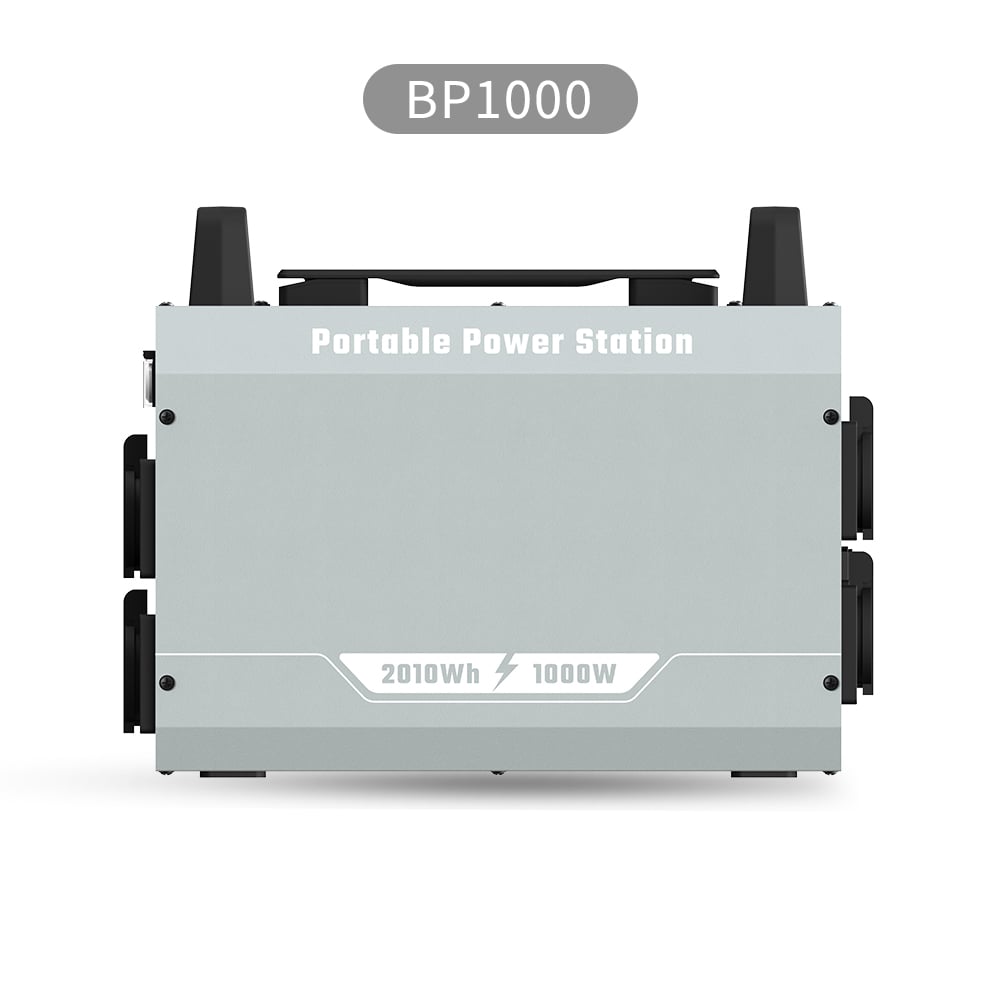
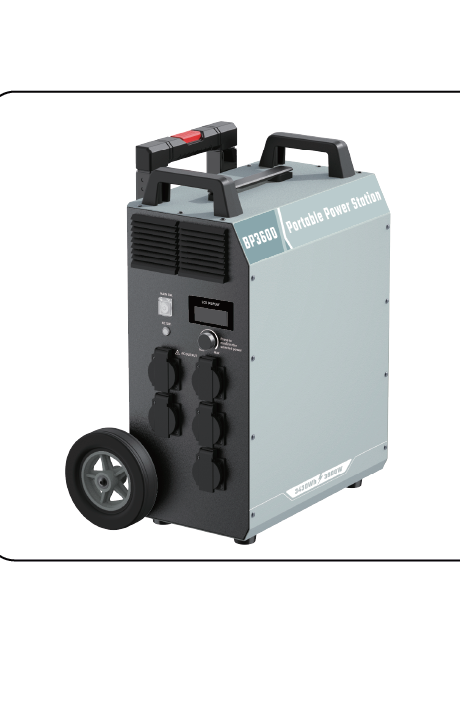
This tier is built for retail and light commercial resale where the buyer's customer wants one person to be able to move it. It runs from the 2kWh class upward to wheeled-portable designs. A reference configuration is the BP1000 portable power station: 1000W rated, 2000W peak, 2010Wh ultra-low-voltage LiFePO4, an 8000-cycle cell life figure in the record, a built-in 500W MPPT, 18.5kg net weight and a 5-year warranty. A second reference is the BP3600 portable power station at 3600W rated and 7200W peak with 3430Wh, a built-in 2400W MPPT accepting 12 to 150VDC solar at 25A maximum, solar full charge in 1.5h, and a UPS transfer time of 10ms or less. The transfer-time figure matters when the unit sits behind sensitive equipment rather than in a campsite. Both reference units carry a 5-year warranty in their records.
The BP3600 record lists IP53 for the unit and IP66 for the battery pack, with wheels and a telescopic handle.
Tier 2: wheeled high-power mobile stations
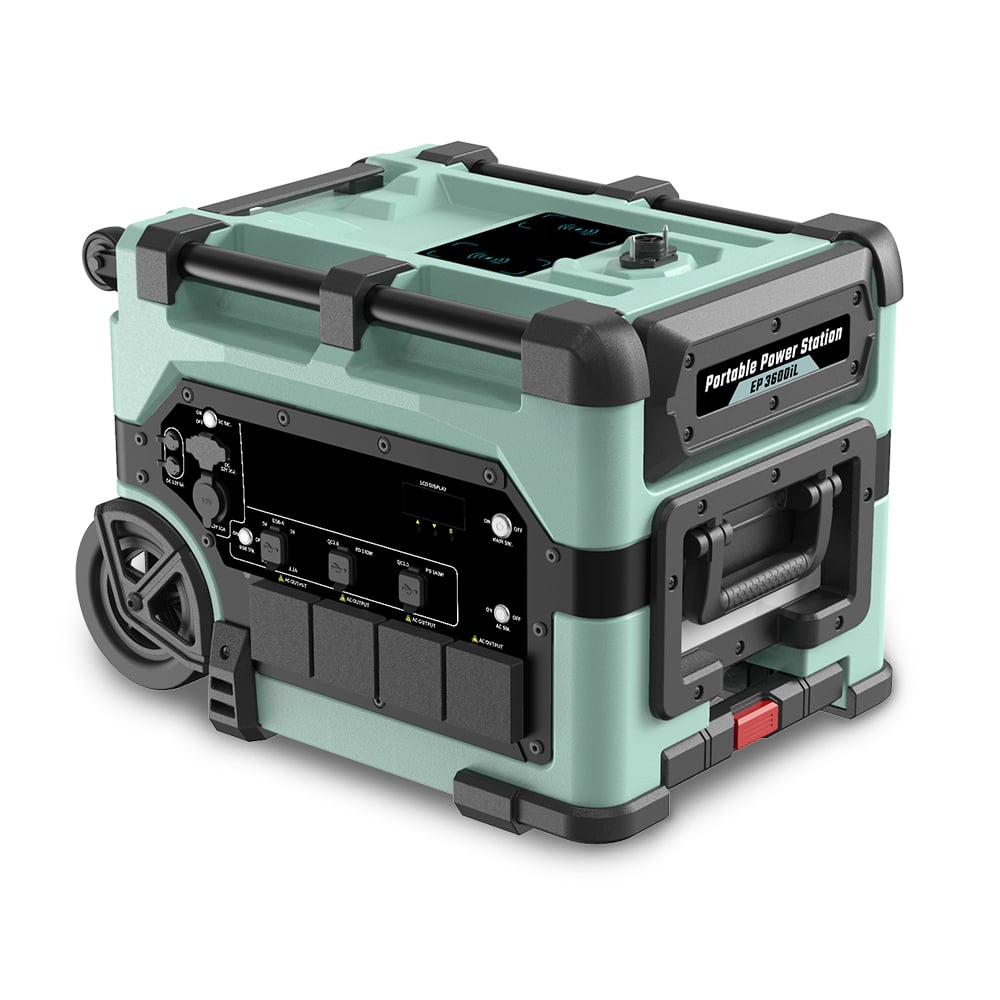
Once output passes a few kilowatts, the chassis stops being a convenience and becomes a specification. The EP3600iL high-power mobile power station lists 3600VA rated and 7200VA peak with 3430Wh, up to 31 extra batteries reaching 109kWh, 80% charge in 1 hour, and a four-wheel chassis that switches to two-wheel mode. Step up to the EP6000iLS high-power mobile power station and the record shows 6000VA rated, 12000VA peak, 5376Wh, up to 31 extra batteries reaching 172kWh, and 90% charge in 1 hour through a built-in 16A/32A dual input that accepts utility, solar and ATS generator charging. Both carry a 5-year warranty.
Tier 3: expandable multi-unit systems
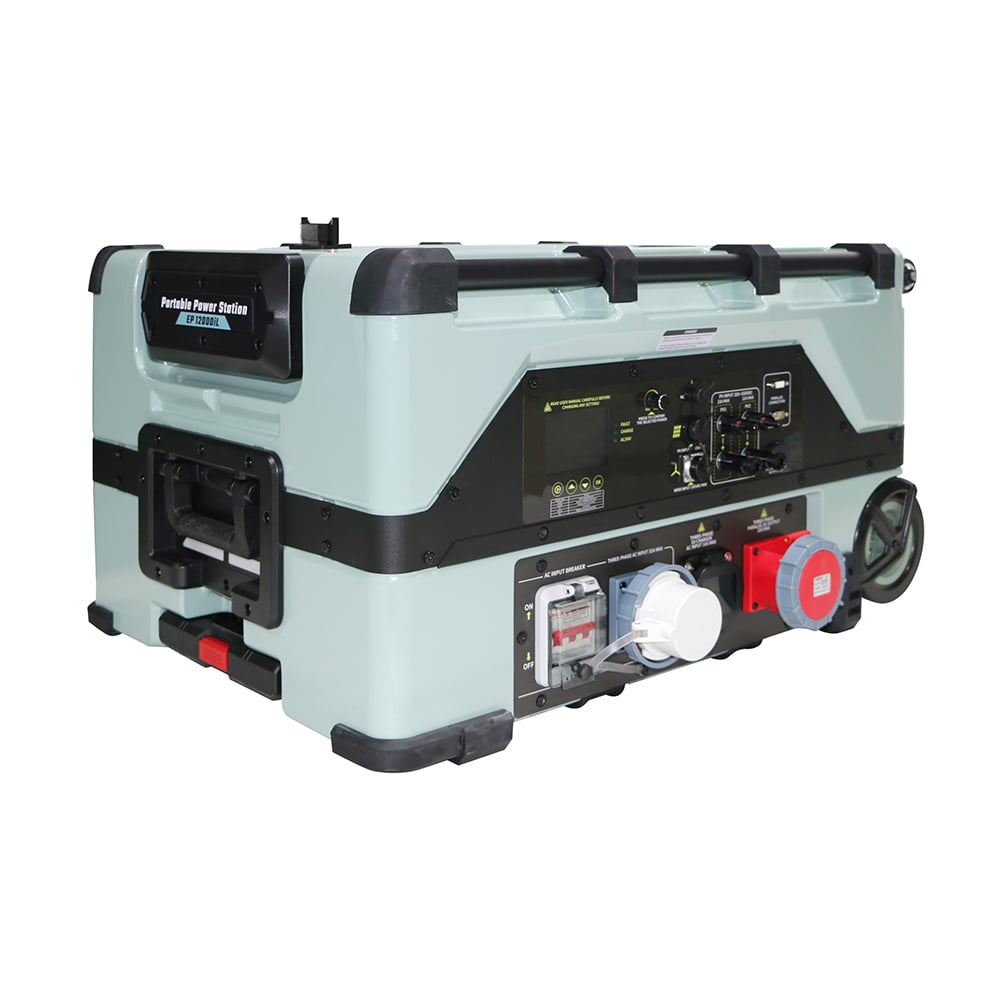
The top of the category is defined less by the box than by the expansion ceiling. The EP12000iL flagship high-power mobile power station lists 12000VA rated and 24000VA peak with 7680Wh, continuous output of 12kW three-phase, 11kW single-phase and 10kW split-phase, support for up to 31 extra batteries reaching 372kWh, 24kW parallel output, a built-in 22kW EV charger and full charge in 70 minutes. It carries a 5-year warranty.
| Tier | Model | Rated / peak output | Capacity | Expansion ceiling |
|---|---|---|---|---|
| Compact | BP1000 | 1000W / 2000W | 2010Wh | Not listed — confirm with the factory |
| Compact | BP3600 | 3600W / 7200W | 3430Wh | Not listed — confirm with the factory |
| Wheeled | EP3600iL | 3600VA / 7200VA | 3430Wh | 31 extra batteries, 109kWh |
| Wheeled | EP6000iLS | 6000VA / 12000VA | 5376Wh | 31 extra batteries, 172kWh |
| Expandable | EP12000iL | 12000VA / 24000VA | 7680Wh | 31 extra batteries, 372kWh |
Sizing logic before you request a quote
Sizing is a subtraction exercise, not a lookup. Work through five fields in order; each one narrows the model list before price is discussed.
Continuous output versus peak demand
Build the load list with running watts for each appliance and total it against the rated output. Then check which loads start with an inrush — compressors are the usual case — and whether the summed starting load sits under the peak figure. A model that passes the continuous test but fails the simultaneous-start test is the wrong model for that market, regardless of capacity.
Capacity versus intended runtime
Runtime is capacity in Wh divided by the average load in W, adjusted for the usable depth of discharge and inverter losses. The product records carry nominal capacity, not a runtime curve. State the intended load and duration to the factory and ask for the figure under its own test conditions; a runtime that is assumed rather than sourced is a warranty dispute waiting to happen.
Solar input window and recharge time
Panel voltage range, maximum input current and MPPT rating decide which panels can be bundled. The BP3600 entry gives a working example: 12 to 150VDC at 25A maximum into a 2400W MPPT, with a 1.5h solar full-charge figure. On larger models, check whether the record states a solar recharge time at all — where it does not, treat the value as open and ask. Local peak-sun hours and shading determine the real recharge window, and that window, not the panel wattage on the label, defines how the product will be used in-country.
Expansion ceiling
Expansion is the difference between a one-box SKU and a system you can sell twice. The EP-series records all support up to 31 extra batteries, reaching 109kWh, 172kWh and 372kWh respectively. If your market includes rental fleets, telecom backup or small events work, the ceiling on day one determines whether the customer comes back for batteries later.
Certification and shipping paperwork
Battery-in products move under dangerous goods rules. The BP3600 record lists UN38.3 alongside RoHS and CE. Do not assume those declarations transfer to another model: certificate scope, model number and the issuing entity all need to match the SKU you order, and many destination markets add their own registration on top. Ask for the file per model, and confirm what the factory provides versus what your entity must lodge locally.
The sourcing path: OEM, ODM and the RFQ
There are two production routes, and they change a different set of fields.
ODM starts from a platform the factory already produces and has documented. What changes for you is the cosmetic and interface layer — branding, enclosure colour, language on the display and label set — plus the market-specific certification and packaging. The underlying electrical architecture is fixed, which shortens the engineering side and usually makes the specification conversation faster.
OEM starts from your specification. Output rating, capacity, inverter topology, charging inputs, enclosure and display are open to definition, and each change moves the certification file, the tooling and the validation work. This route rewards a buyer who arrives with a frozen requirement and punishes one who revises the load profile halfway through tooling.
Before sending an RFQ, settle the following and put the answers in the request document.
- Target market and the certification regime you must satisfy, per SKU.
- Continuous output, peak output and the inrush loads the unit must start simultaneously.
- Required runtime at a stated load, and the assumed depth of discharge behind that figure.
- Panel voltage and current range, and whether panels ship in the box or separately.
- Expansion requirement over the product's selling life, not just at launch.
- Enclosure ingress rating and chassis format — the BP3600 uses wheels and a telescopic handle, the EP6000iLS and EP3600iL a four-wheel chassis with a two-wheel mode on the latter.
- Branding scope, label languages and packaging format for each destination.
- Warranty terms by SKU; the five-year figure appears on the records cited above, and should be confirmed as applying to the configuration you order.
Where a record does not state a value — depth of discharge, cycle life on a given model, solar recharge time on the largest units — write the selection principle into the RFQ and ask for the exact value with its test condition. An omitted number is not a zero.
FAQ
- What is a solar generator, in plain terms?
- A battery bank with an inverter and a solar charging input. It stores DC energy, delivers AC at a rated and a peak output, and recharges from photovoltaic panels through an MPPT controller, often with an AC charging option as well. It does not generate electricity from fuel.
- How does it differ from a portable power station bought with panels?
- Functionally, the hardware overlaps; the difference is packaging and marketing. A solar powered generator listing normally pairs the unit with panel compatibility as a complete solution, while a power station bought separately leaves the solar side optional. Compare the MPPT rating, solar voltage window and recharge time, not the product name.
- Which specifications should be confirmed with the factory before a quotation?
- The continuous and peak output against your load list, runtime at a stated load with the depth of discharge behind it, the solar input voltage range and maximum current, the expansion ceiling and the battery interface, the certification file per model and destination, the chassis and ingress rating, and the warranty terms for the exact configuration.
Next step
DRIVELONG (Suzhou Drivelong Intelligence Technology Co., Ltd.) builds portable power stations and solar powered generators for export markets across Europe, the Americas and Australia, with 19 years of power generation experience and OEM/ODM programs driven by the RFQ. If you are evaluating a product line, send the load list, target market, certification requirement and expansion expectation — an RFQ with those four fields filled in is enough to open the specification conversation.