A procurement specification guide for distributors, importers and project buyers of LiFePO4 battery backup units. Explains the runtime budget method from watt-hours, the switchover confirmation items to settle before an RFQ, standby self-consumption questions, expansion mechanics from DRIVELONG product records, and a compact RFQ checklist.
Procurement specification guide
Most RFQs for a LiFePO4 battery backup power station arrive with the main specification already listed: capacity in watt-hours, rated output in watts, peak output in VA or watts. The three values that decide whether the delivered unit actually performs in an outage are usually left open: how long the load runs, how the unit behaves at the moment grid power drops, and what the unit consumes while waiting weeks for an outage that may not come. Those three questions are the subject of this guide.
It is written for distributors, importers and project buyers ordering quantities of backup units, not for a single household. The product figures used below are DRIVELONG published product-record values; a product record means the published specification record behind each model's product page on this site. They describe the catalog configuration and are used as worked inputs for the method; they are not runtime guarantees, because real runtime depends on load behavior, temperature, battery age and how deeply the unit is cycled.
What this guide covers
- Runtime budgeting from watt-hours
- Switchover and transfer-time confirmation
- Standby self-consumption questions
- Expansion mechanics and compatibility
- RFQ checklist
- How UPS/EPS switchover works (procurement note)
Budget runtime from watt-hours, not from marketing hours
The usable method is a short calculation, and a buyer can run it before writing the RFQ. The supplier's role is then to confirm whether the given model supports the result.
- List only the loads that must keep running during an outage. For a home backup project this is usually refrigeration, lighting, network equipment and a phone or laptop charger; for a commercial project it may be a security panel, PoE switch, access control and a small server. Everything else is optional and should be listed separately.
- Note the rated watts for each load from the nameplate, not from the model name.
- Sum the watts to get the continuous load in watts.
- Multiply the sum by the outage hours you are designing for. The result is the required watt-hours at the load.
- Add headroom. Inverter efficiency is below 100%, so the battery has to supply more than the load draws, and motor-driven loads draw a surge at startup that must fit within the unit's peak rating rather than its rated rating. There is no universal margin percentage; treat the headroom as a supplier confirmation item rather than a rule of thumb.
A worked input using product-record capacities
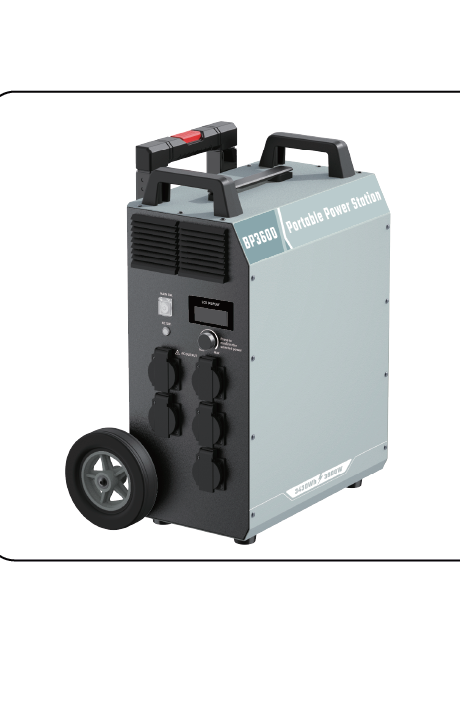
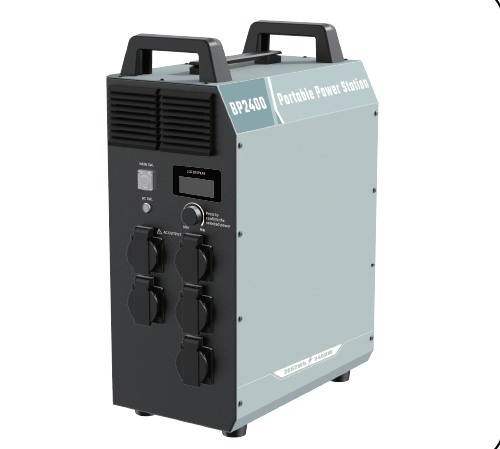
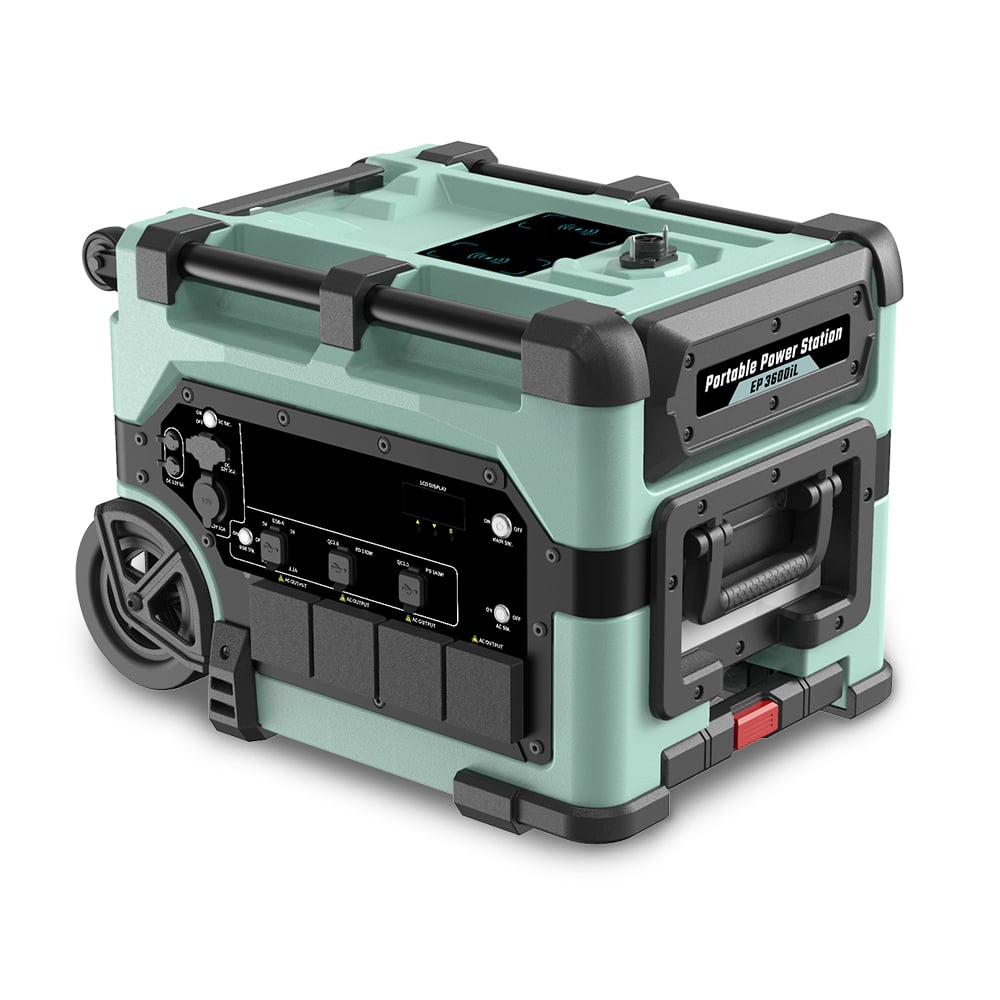
Using published DRIVELONG records as inputs: the BP2400 is listed at 2662Wh, and the BP3600 and EP3600iL are listed at 3430Wh. These are battery capacities, not deliverable energy at the socket.
Assume a hypothetical backup load of a 150W refrigerator plus 40W of network equipment, giving 190W continuous. For a four-hour design outage the arithmetic at the load is 190W × 4h = 760Wh. That figure is the required output energy. Because the inverter adds its own losses, the battery-side draw is higher; how much higher depends on the inverter efficiency, which is a supplier confirmation item, not a fixed catalog number. A buyer should therefore compare the required watt-hours against the listed battery capacity with a margin, and ask the supplier to state the inverter efficiency figure and the derating assumption used for the quotation.
The peak rating matters as soon as a compressor or pump is on the list. The BP2400 record lists 2400W rated and 4800W peak; BP3600 lists 3600W rated and 7200W peak; EP5000iL lists 5000W rated and 10000W peak. Check the startup draw of each motor load against the peak figure, and confirm with the supplier what duration the peak rating is specified for.
Confirm switchover behavior before the RFQ is sent
Transfer time is the gap between grid loss and inverter takeover. Buyers of backup units need it stated in the specification sheet, and they need to know whether it is standard or an option, because the answer changes the model and the price line in the RFQ.
- Mode availability. Confirm whether UPS or EPS mode is standard on the quoted model or an optional configuration. DRIVELONG records state the BP2400 UPS function as standard with transfer time under 10ms, BP3600 as UPS with transfer time of 10ms or less, and EP5000iL as UPS with transfer time of 10ms or less. For DP2400iL and EP3600iL, no transfer time is recorded in the product data; treat the transfer figure as an open item and ask the supplier to state it in writing.
- Load tolerance. Desktop computers, servers, NAS units and managed network switches tolerate a short interruption differently from motors and heaters. If the project includes IT equipment, put the load type in the RFQ and ask the supplier to confirm that the stated transfer time suits it.
- Switchover at low state of charge. Behavior at low charge is a separate case from behavior at full charge. Near empty, the inverter can shut down on low-voltage protection before the outage ends, so the shutdown point and the restart behavior both need written confirmation. Ask how the unit switches when the battery is near empty, what state of charge triggers shutdown, and whether the output drops cleanly or restarts.
Standby self-consumption: ask before you commit
A backup unit spends most of its life idle. If it is installed and left connected to the grid for weeks, its own electronics draw a small continuous current that slowly reduces the stored charge. Over a long standby period, that drain decides whether the unit is still able to carry the load when the outage finally happens. No standby figures are recorded in the published DRIVELONG product data, so the following are supplier confirmation items, not catalog values.
- The measured standby consumption figure, and the conditions under which it was measured.
- Whether the unit has an automatic shutdown threshold, and what wakes it back up.
- The low-battery protection settings, including the shutdown point and any restart requirement.
- Whether the quoted model maintains a float or standby charge while connected, and what the supplier recommends for months of unattended standby.
Expansion mechanics: compare the recorded paths
Expansion differs between models in the DRIVELONG records, and the two mechanisms should not be treated as interchangeable when writing the RFQ.
| Model | Recorded capacity | Rated / peak output | Expansion as recorded | Environmental rating | Warranty |
|---|---|---|---|---|---|
| DP2400iL | 2496Wh | 2400VA / 4800VA | Up to 31 extra batteries, 109kWh total | Not recorded; confirm with the supplier | 5 years |
| EP3600iL | 3430Wh | 3600VA / 7200VA | Up to 31 extra batteries, 109kWh total | Not recorded; confirm with the supplier | 5 years |
| EP5000iL | 3430Wh | 5000W / 10000W | Up to 31 EP3600B extra batteries, 109kWh total; two-unit parallel output 10kW | Unit IP53 / battery pack IP66 | 5 years |
| BP2400 | 2662Wh | 2400W / 4800W | No external battery expansion recorded | Unit IP53 / battery pack IP66 | 5 years |
| BP3600 | 3430Wh | 3600W / 7200W | No external battery expansion recorded | Unit IP53 / battery pack IP66 | 5 years |
Output ratings follow each model's product record as written: DP2400iL and EP3600iL are listed in VA, while BP2400, BP3600 and EP5000iL are listed in W. VA and W are not interchangeable when the power factor is below 1, so copy the unit from the model's own record into the RFQ and ask the supplier to confirm the rating basis and any power factor assumption.
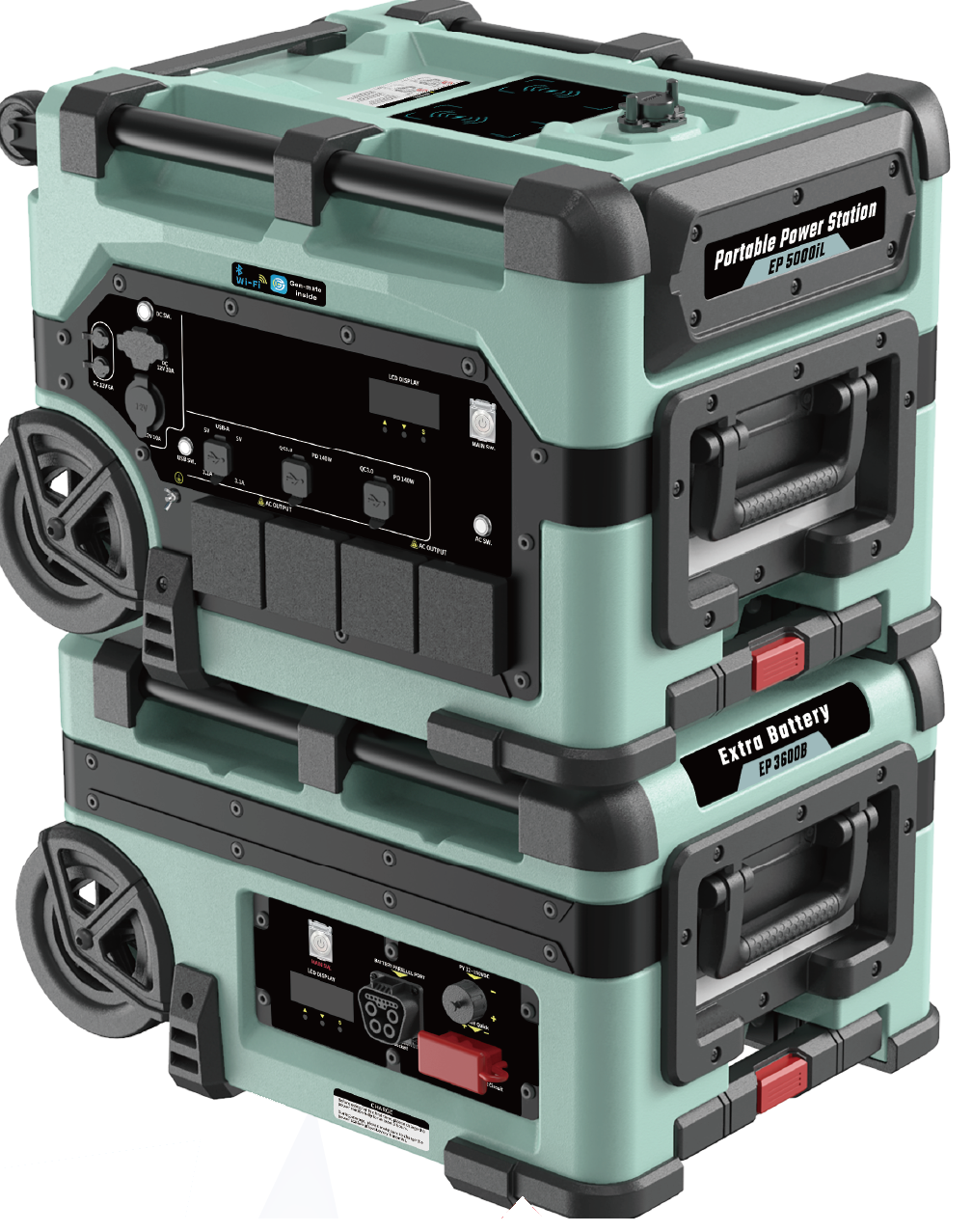
Capacity steps matter for projects that may grow in phases. A buyer who expects to add storage later should ask three questions: which battery pack is compatible with the quoted model, how the packs are cabled and whether the connection is user-serviceable, and whether adding packs changes switchover behavior or the unit's output configuration. The EP5000iL record lists a two-unit parallel output of 10kW; if the project uses parallel operation, confirm how the parallel pair handles a grid loss together.
RFQ specification checklist
Put the following into the RFQ document so the supplier quotes against the actual requirement, not against a generic unit.
- Required continuous load in watts and the list of loads it covers, marked as must-run or optional.
- Design outage duration in hours, and required watt-hours at the load.
- Peak startup draw of any motor load and its duration.
- Required mode: UPS or EPS, and whether it is standard on the quoted model.
- Transfer time in milliseconds, requested as a written figure in the specification sheet.
- Load type for sensitive equipment, and the supplier's confirmation that the transfer time suits it.
- Standby consumption figure and low-battery protection settings.
- Expansion requirement now and in later phases, with the compatible battery pack model named.
- Charging inputs required on site: AC mains, solar input. Omit inputs the project will not use.
- Environmental rating and warranty term as listed for the quoted model.
- Quantity, destination and required documentation.
How UPS/EPS switchover works in these units
The inverter in a LiFePO4 battery backup power station is bidirectional: it charges the battery from the grid and it produces AC output from the battery, on the same internal bus. When grid power is present, the loads sit on that bus and the inverter keeps them supplied. When the grid drops, the inverter continues supplying from the battery, and the transfer time is the interval required to make that change without disturbing the load. For procurement, this mechanism matters because it explains why the transfer figure belongs in the specification sheet and why the mode must be confirmed as standard or optional, rather than inferred from the capacity rating.
FAQ
What size LiFePO4 battery backup do I need for back up power for home use?
Start from the loads you must keep running, add their rated watts, multiply by the outage hours you are designing for, then add headroom for inverter losses and motor startup. That gives the required watt-hours. Compare it against listed capacities such as 2496Wh, 2662Wh or 3430Wh in the current DRIVELONG records, and ask the supplier for the inverter efficiency figure before finalizing.
Is a LiFePO4 battery backup a true UPS?
It can be, if UPS mode is part of the quoted configuration. BP2400, BP3600 and EP5000iL are recorded with UPS function and transfer times of 10ms or less. For DP2400iL and EP3600iL, ask the supplier for the transfer time in writing, because the published record does not state one, and also confirm whether the mode suits sensitive IT loads on the quoted model.
Can I expand the backup power station later?
DP2400iL, EP3600iL and EP5000iL are recorded as accepting up to 31 extra batteries for a 109kWh total; EP5000iL uses EP3600B packs and also supports a two-unit parallel output of 10kW. The BP2400 and BP3600 records do not list external battery expansion, so confirm the compatible pack model before planning a phased project.
What should I check about standby drain before ordering?
Ask for the standby consumption figure, the auto-shutdown threshold and the low-battery protection settings. These are not recorded in the published product data, so they should be confirmed by the supplier for the exact model in your RFQ.