
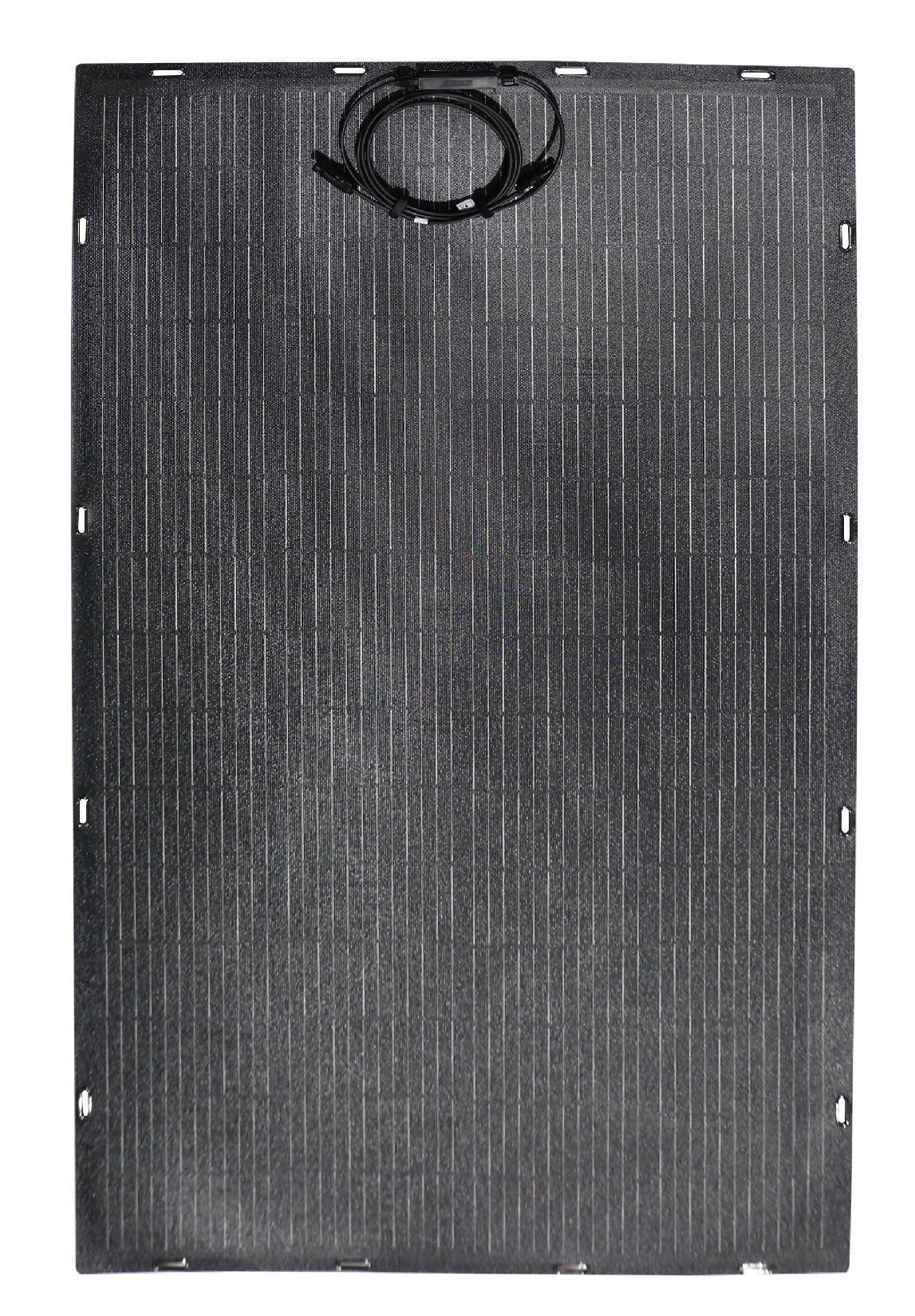
A procurement-grade comparison of flexible glued-on roof solar panels and foldable suitcase panels for RV wholesale buyers, distributors and OEM project teams, with a factory inspection checklist covering cell grade, junction box sealing, connector options, palletization and sample testing before batch production.
Wholesale sourcing guide
Flexible solar panels for RV projects and foldable suitcase panels solve two different problems on the same vehicle. Buyers who compare them on wattage alone end up with the wrong mix on the pallet. This guide compares both formats under identical procurement conditions and lists what to verify at the factory before a bulk order.
Key takeaways
- Flexible panels bond to the roof and are specified for the build; foldable panels are portable and are specified for the retail box.
- The bendable DS100F, DS170F and DS300F use A-grade 5 busbar mono cells and a junction box fully filled with glue for rain sealing.
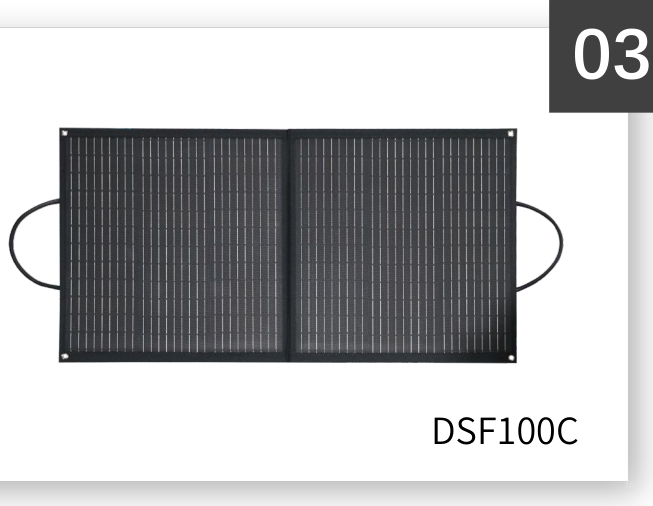
- The foldable DSF series spans 30W to 600W with USB, TYPE-C, DC 5521 18V and MC4 connector options; the DSF100C is tagged IP66 waterproof.
- Inspection should focus on cell grade and busbar count, junction box sealing method, connector and cable options, packing and palletization, and sample testing before the batch.
Two formats, two buying jobs
Flexible panels are installed, not carried. A 100W DS100F or a 170W DS170F is bonded to a curved RV or yacht roof, and the DS300F covers larger curved surfaces where the roof line is not flat. The panel becomes part of the vehicle build, so the buyer is specifying a component that will live on the roof for the life of the unit.
Foldable panels are handled by the end user. The DSF series runs from 30W to 600W; the charging area increases sharply when the panel is opened, and each unit folds into a compact package for storage. Eyelets allow it to be hung at a campsite, and connector options include USB output, TYPE-C, DC 5521 18V and MC4. The DSF100C carries an IP66 waterproof tag.
That difference drives everything downstream: how the panel is mounted, how it ships, what the retailer expects in the box, and what the OEM must guarantee in the manual.
Comparison under identical conditions
The table below holds the use case constant and compares the two formats across the criteria that show up in a purchase order and a damage claim.
| Procurement criterion | Flexible glued-on panels | Foldable suitcase panels |
|---|---|---|
| Mounting | Bonded to a curved roof or deck; eyelets available for installation. Roof shape and surface prep matter. | Free-standing or hung by eyelets; no roof penetration required. The user sets it up each time. |
| Portability | Not portable once installed; it is part of the vehicle. | Compact when folded; carried and stored inside the vehicle. |
| Weather sealing | Junction box fully filled with glue for rain sealing. | DSF100C is tagged IP66 waterproof; confirm the rating for each other model in the series with the supplier. |
| Connector options | Specified at order for the vehicle's system architecture. | USB output, TYPE-C, DC 5521 18V and MC4, per model and configuration. |
| Shipping volume | Flat pack; the panel ships as a panel, so carton size and pallet stacking follow the roof dimensions of the model. | Folded pack is smaller than the open charging area; carton count per pallet is higher, but confirm final carton dimensions and pallet quantity with the supplier. |
| Warranty exposure | Adhesive failure and roof interface are the main claim sources; confirm the installation method the supplier supports. | Hinge, handle and cable wear are the main claim sources; confirm the folding and connector durability test the supplier runs. |
| Best fit for | OEM RV and yacht builds, rental fleets, fixed roof installs. | Retail distribution, accessories channel, rental fleet hand-out kits. |
Wattage, connector names, cell grade and IP rating are as stated in the product records. Dimensions, weight, thickness and carton quantities are not fixed in this comparison and should be requested from the supplier for each model.
Which format fits which sales channel
OEM and dealer-fit builds
When the panel is installed at the factory or by a dealer, the flexible format wins on integration. The DS100F, DS170F and DS300F can follow a curved roof line, and the glue-filled junction box is designed for rain exposure on a horizontal or near-horizontal surface. The buyer's job is to lock the model, the connector, and the adhesive method into the build sheet, and to confirm how the panel is tested before it leaves the factory.
For a system-level view of how the panel output lines up with a portable power station, see solar panel and MPPT matching for a portable power station, which covers the voltage window, wattage ceiling and fill time. That article handles the electrical match; this one handles the sourcing decision.
Retail and accessories distribution
Foldable panels are a boxed product. The buyer is comparing shelf presence, connector variety and the folded package against a retail planogram. The DSF30C through DSF600A span a wide range, so a distributor can stock several points without changing supplier. The connector mix matters here: USB and TYPE-C outputs appeal to the end user charging small devices, while MC4 suits users tying into a larger array.
Mixed fleet orders
Many RV wholesalers buy both. The flexible panel goes into the build; the foldable panel goes into the accessory pack sold with the unit. In that case, the factory audit covers two production lines or two workflows, and the sample test should cover one of each.
Wholesale factory inspection checklist
These are the points where a bulk order is won or lost. Each item should be verified on a sample and then confirmed as a batch control, not just described in a brochure.
Cell grade and busbar count
- Confirm the cell grade in writing. The flexible DS100F, DS170F and DS300F are specified with A-grade 5 busbar mono cells; check that the same grade applies to the batch you are ordering.
- Ask how the factory separates cell grades on incoming inspection, and whether the grade is recorded on the batch file.
- For the foldable series, confirm the cell type and busbar count for each wattage, since the DSF30C to DSF600A range may not use identical cell formats across every model.
- Inspect a laminated sample for busbar alignment and for cell cracking after the lamination cycle.
Junction box sealing method
- The flexible panel junction box is fully filled with glue for rain sealing. Ask to see a cut-away or a production sample and confirm the fill method is applied on the line, not just on samples.
- Confirm how the box is bonded to the backsheet and whether the cable exit is strain-relieved.
- For foldable models, confirm the IP rating per model; the DSF100C is tagged IP66 waterproof, and the other models in the DSF series should be confirmed with the supplier rather than assumed.
- Ask what the factory's water-exposure check is after assembly, and whether results are logged per batch.
Connector and cable options
- Lock the connector configuration into the order. Flexible panels are usually specified with one output for the vehicle system; foldable panels may offer USB output, TYPE-C, DC 5521 18V and MC4.
- Confirm cable length, gauge and connector brand for each SKU, and whether the same connector is used across the range or varies by wattage.
- For OEM builds, confirm whether the connector can be changed to match the customer's system, and what the minimum order is for that change.
- Check that the connector type on the carton label matches the unit inside; mislabeled connectors are a common retail return cause.
Packing and palletization
- Request the carton dimensions and pallet quantity for each model; these are not fixed in the product records and must come from the supplier.
- For flexible panels, confirm how the panel is protected against bending or edge damage in the carton, and how cartons are stacked on the pallet.
- For foldable panels, confirm the folded pack is protected at the hinge and handle, and that the carton survives the stacking load of a full pallet.
- Ask for a photo or a sample of the shipping carton, including any retail-ready printing for the foldable range.
Sample testing before batch production
- Order samples of each model you intend to stock; for a mixed order, take one flexible and one foldable unit at minimum.
- Test the flexible panel's junction box sealing and the roof-side adhesive method the supplier supports.
- Cycle the foldable panel open and closed, and test each connector option on the unit.
- Confirm the flash-test or output record that ships with the sample, and ask whether the same record is kept per unit or per batch.
- Agree in writing what happens if the batch does not match the approved sample.
Product references for the quote
Flexible, glued-on roof panels: DS100F 100W, DS170F 170W, DS300F 300W.
Foldable panels: DSF30C 30W, DSF50C 50W, DSF100C 100W, DSF200 / DSF300, DSF200C / DSF300C, DSF600A / DSF600.
For system pairing on the retail side, the BP2400 smart mobile power portable power station is the matching reference unit.
Questions buyers ask before a bulk order
Are flexible panels suitable for a flat roof as well as a curved one?
The bendable format is specified for curved RV and yacht roofs, and the installation method the supplier supports should be confirmed before you commit a build sheet. Flat-roof mounting and the adhesive system are not fixed in the product records.
Can the same order mix flexible and foldable models?
Yes, the two ranges are separate product families and can be quoted together. Ask the supplier to confirm the sample and batch control for each family independently.
Is the IP66 rating valid across the whole foldable range?
The DSF100C is tagged IP66 waterproof. The rating for the other DSF models should be confirmed with the supplier rather than assumed from the series.
What should be in the purchase order beyond wattage?
Model, connector configuration, carton and pallet quantity, cell grade confirmation, and the approved sample reference. Wattage alone does not define what arrives on the pallet.
Next step
Take the checklist above into the sample stage. If you are comparing flexible and foldable configurations for an RV build or a distribution line, send the target models, wattages, connector types and channel so the supplier can quote against the correct configuration rather than a single wattage number.