A solar generator captures sunlight, stores it in a battery and delivers clean AC power. Learn how it works, how it compares with fuel generators, and how to source one for your market.
What Is a Solar Generator and How Does It Work?
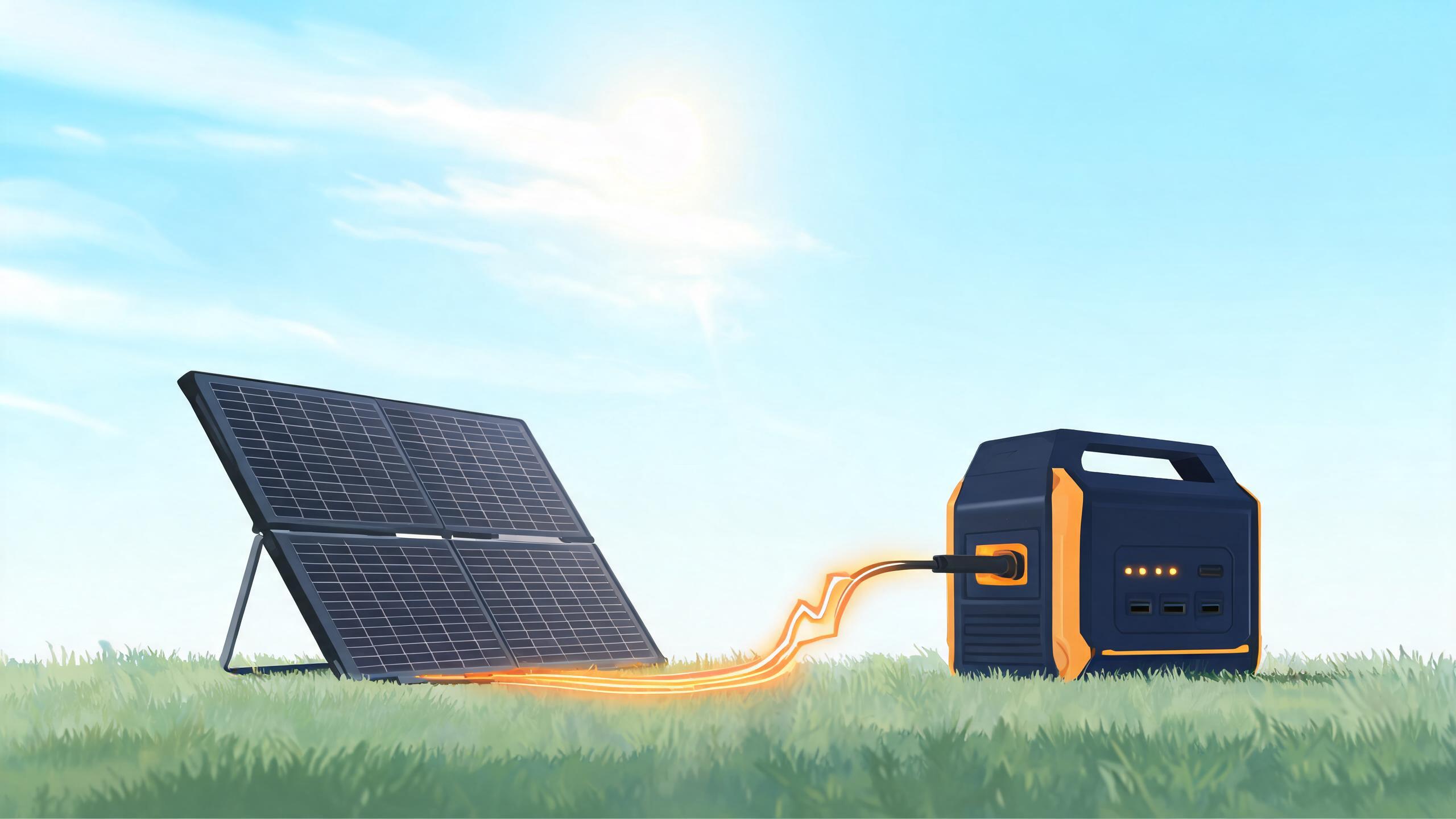
A solar generator is a complete portable energy system that captures sunlight through solar panels, stores the electricity in a built-in battery, and delivers it through an inverter as usable AC and DC power. Unlike fuel-based machines, a solar power generator runs silently, produces no exhaust, and can recharge itself every day for free — which is exactly why distributors and outdoor brands across Europe, North America and Australia are adding solar generator lines to their catalogs.
The system has three core components. Photovoltaic panels convert sunlight into DC electricity. A charge controller — usually MPPT technology — regulates that energy into the battery safely and efficiently. Finally, an inverter converts the stored DC power into pure sine wave AC that appliances, tools and electronics can use. Everything is packaged into portable, stackable units that end customers can set up in minutes.
How a Solar Generator Works, Step by Step
- Step 1 — Solar capture: foldable or flexible panels absorb sunlight and generate DC power; output depends on panel wattage, sun angle and weather.
- Step 2 — MPPT charging: the controller tracks the maximum power point, squeezing the most energy from the panels into the battery.
- Step 3 — Storage: lithium iron phosphate (LiFePO4) battery cells store the energy; quality cells support thousands of charge cycles.
- Step 4 — Power delivery: the inverter supplies AC outlets, USB ports and DC outputs simultaneously, with battery management systems protecting against overload, short circuit and overheating.
Is Solar Better Than Generator Power?
Buyers often ask is solar better than generator technology for their market. The honest answer is that they solve different problems. A fuel generator delivers high continuous wattage regardless of weather, which suits construction sites and extended cloudy periods. A solar generator wins on silence, zero emissions, near-zero running cost, indoor safety and minimal maintenance. For camping, RV travel, home backup of essential loads and off-grid retail products, solar is usually the better customer experience; for heavy job-site loads, fuel or hybrid systems still make sense. Many brands now sell hybrid setups — a portable power station plus panels, with an optional small generator as backup — to cover both scenarios.
How to Choose a Solar Generator for Your Product Line
When planning how to choose a solar generator for resale, work through these procurement criteria:
- Capacity (Wh): match battery capacity to your customers' typical loads — a weekend camping kit may need 500–1,000 Wh, while home backup for a refrigerator and lights needs 2,000 Wh or more.
- Inverter output (W): check rated and peak wattage against the appliances your market will run, including motor start-up surges.
- Battery chemistry and cycle life: LiFePO4 cells with 3,000–5,000 cycles to 80% capacity justify a higher retail price and lower warranty risk.
- Charging flexibility: solar input, AC wall charging and car charging give end users redundancy; high MPPT input wattage shortens recharge time.
- Certification: confirm CE, RoHS and UN 38.3 transport compliance for your destination markets before ordering.
How Long Do Solar Generators Last?
A frequent buyer question is how long do solar generators last. The battery is the lifespan driver: quality LiFePO4 packs commonly retain 80% capacity after several thousand cycles, which translates to roughly a decade of regular use. Panels typically carry 20-year-plus performance warranties, and inverters are solid-state components with long service lives. Ask suppliers for cycle-life test data, battery cell brand traceability and warranty terms — these three documents reveal more about long-term reliability than any brochure.
Solar Generator for Home Backup: A Growing Segment
Demand for a solar generator for home use is expanding fastest in markets with rising electricity prices and grid instability. End users pair a 2,000–6,000 Wh unit with panels to keep refrigerators, routers, lighting and medical devices running through outages, then recharge from the sun the next day. For B2B sellers this segment supports premium pricing, accessory upsells (extra panels, expansion batteries, transfer switches) and strong review-driven repeat demand.
What to Verify Before You Place an Order
Before committing to a supplier, request: full specification sheets with cycle-life and THD data; sample units for field testing in your climate; factory audit or video tour evidence; OEM/ODM capability for housing design, color, packaging and app branding; and after-sales parts support. A manufacturer that designs its own battery packs, inverters and MPPT controllers — rather than assembling bought-in modules — will respond faster to customization requests and quality issues.
Conclusion
A solar generator turns free sunlight into silent, clean, portable electricity through panels, MPPT charging, battery storage and pure sine wave inversion. For B2B buyers, the category offers strong margins and growing end-market demand across camping, RV, and home-backup segments. Evaluate capacity, output, battery chemistry, cycle life and certification carefully, and partner with a manufacturer that can support OEM/ODM customization as your brand scales.