A buyer's guide to motor inrush: why portable power stations trip on well pumps and air conditioners, how to size continuous and peak output, and how DRIVELONG's EP series — rated-continuous output, 2x peak power, high-current BMS, up to 12kW continuous — addresses it.
A pattern we hear about regularly from overseas distributors and installation contractors: a 3kW-class portable power station runs a refrigerator, lights and a laptop all day without complaint, then shuts down the moment a well pump or an air-conditioner compressor kicks in. The end user reads it as a defect. In most cases the unit is simply not built for motor starting — or its peak rating does not hold up when the inrush arrives. This article explains what happens electrically, how to size a unit against it, and where the DRIVELONG EP series stands.
Why a Motor Trips a Unit That Handles Everything Else
Resistive loads are easy. A heater or an LED driver draws essentially the same current at switch-on as it does afterwards. Motors and compressors are different. At the moment of starting, the rotor is stationary, no back-EMF is generated, and the only thing limiting current is winding resistance. The machine draws a locked-rotor inrush — typically several times its running current for a fraction of a second up to a couple of seconds, depending on the motor and what it starts against: static head on a deep-well pump, or non-equalized refrigerant pressure on a compressor. Equipment nameplates list this value as LRA (locked-rotor amps), next to the running rating.
The inverter protects itself with overcurrent protection. If the instantaneous demand crosses the protection threshold, the output stage is cut and the unit trips. That protection is doing its job. The trip happens for one of two reasons: the unit is genuinely undersized for the start, or the advertised peak output was never backed by the inverter stage and the battery discharge path in the first place.
Size Against Two Numbers, Not One
Two figures decide whether a power station survives motor loads, and buyers should check both against their own equipment instead of trusting a single headline wattage:
Continuous output must cover the sum of running wattage of everything that runs at the same time.
Peak output must cover the worst startup case: all loads running, plus the inrush of the largest motor starting on top of them.
Here is an illustrative worked example — use the nameplate values of your own equipment for a real decision:
| Load | Running draw | Startup draw (illustrative) |
|---|---|---|
| Well pump, 1 HP class | 1,000W | about 4,000W (4x running) |
| Air-conditioner compressor | 1,200W | about 4,800W (4x running) |
| Refrigerator, lights, electronics | 500W | 500W |
Continuous requirement: 1,000 + 1,200 + 500 = 2,700W. Worst startup case: the pump starts while everything else runs, so 1,700W of running load plus 4,000W of inrush gives 5,700W for the starting interval. A unit sold as "3,000W, 3,300W peak" holds continuously but trips on every pump start. A 3,600VA continuous / 7,200VA peak unit clears both numbers with headroom, and 5,000W / 10,000W leaves more margin for larger pumps or a second compressor.
One practical habit worth passing on to end customers: stagger the starts. Let the pump come up to speed before the compressor restarts, and the peak requirement drops to the largest single inrush instead of the sum. Hard-start kits on the compressor side reduce inrush as well.
Four Questions to Put to Any Supplier
When you evaluate power stations for motor-heavy applications, these four questions separate the units that hold up from the units that generate warranty claims:
First: is the rated figure the continuous output the inverter sustains, or a marketing number? Second: how many times the rated power is the peak? Third: how long is that peak sustainable — milliseconds or seconds? Fourth: what limits the discharge path — is the BMS protection board rated for the current the inverter can actually demand?
Units that fail the first or fourth question trip below their advertised figures. Units that fail the third clear the inrush only long enough for the electronics to time out.
How the DRIVELONG EP Series Is Built for Motor Loads
The EP series is our high-power mobile power station range, and it is specified around exactly these points:
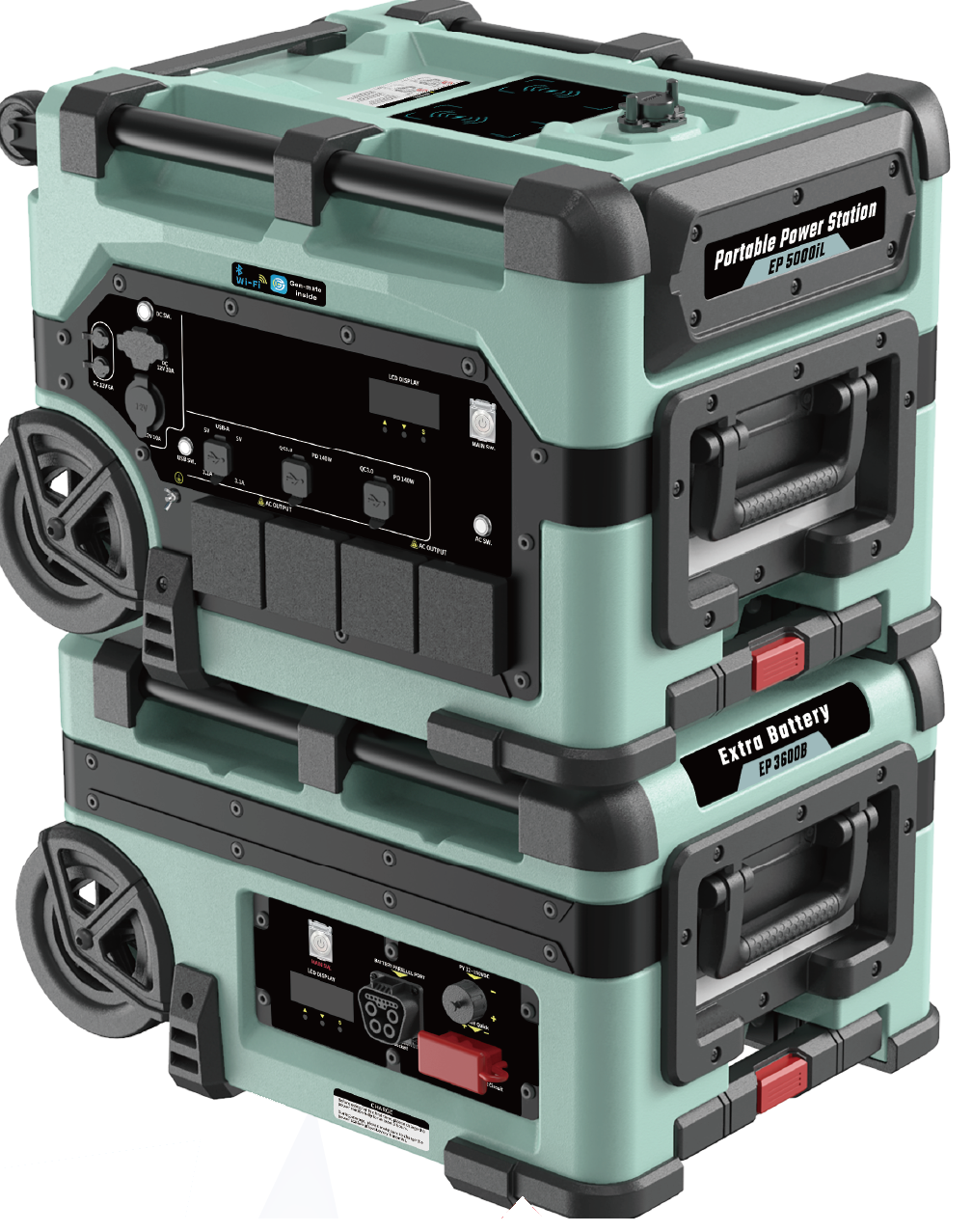
Rated power is continuous power, not inflated. Each model's published rated output is the continuous AC output the bidirectional inverter sustains — when the EP5000iL says 5,000W, that is 5,000W continuous.
Every model carries a 2x peak rating — 3,600VA rated / 7,200VA peak, 5,000W / 10,000W, 6,000VA / 12,000VA, and 12,000VA / 24,000VA at the top of the range.
High-current BMS protection board. The battery management board in the EP packs is engineered for high discharge current, so the inverter's peak headroom is actually usable instead of being clamped by the battery path. The BMS section of the EP6000iLS pack is documented in our product materials.
Up to 12kW of continuous output. The flagship EP12000iL sustains 12kW three-phase, 11kW single-phase or 10kW split-phase — enough for several motor loads starting in sequence — and expands with up to 31 extra battery packs to 372kWh, with 24kW of parallel continuous output from two units.
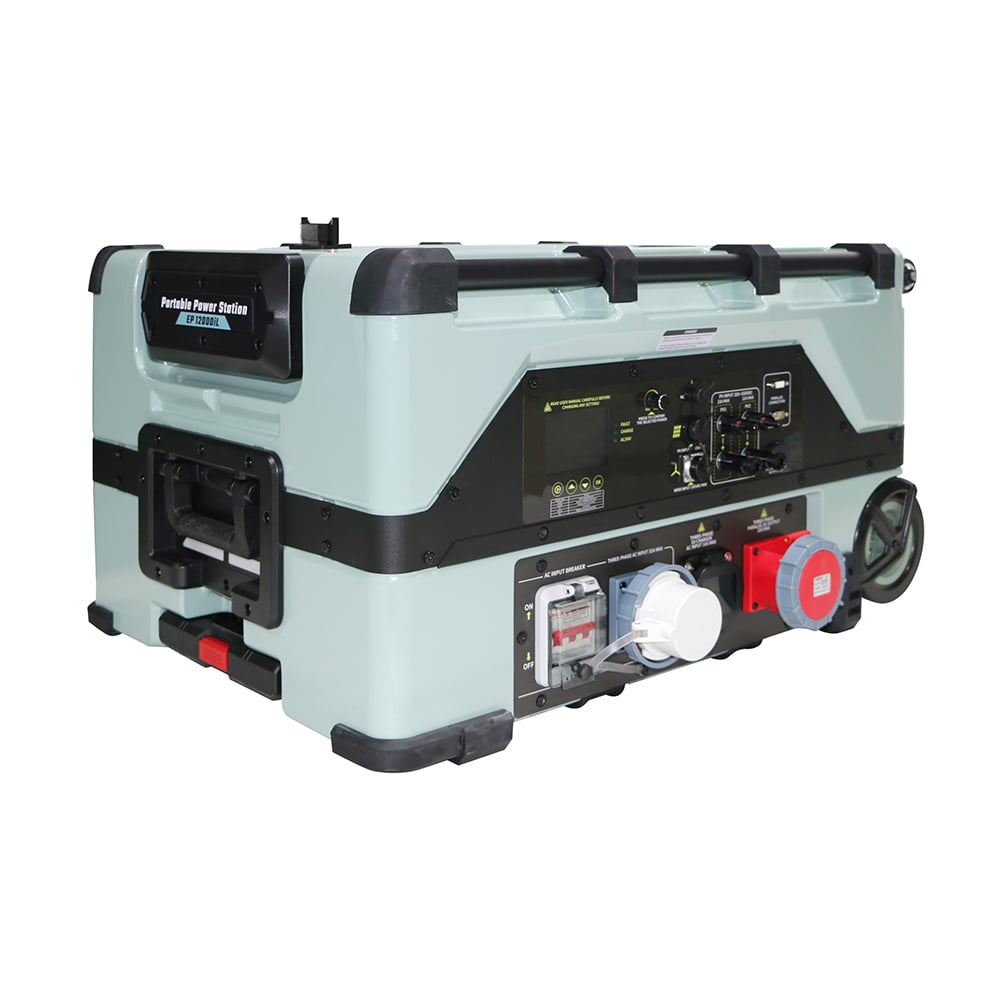
| Model | Rated (continuous) | Peak | Battery | Max continuous AC output | Expandable to |
|---|---|---|---|---|---|
| EP3600iL | 3,600VA | 7,200VA | 3,430Wh LiFePO4 | 3.6kW | 109kWh (31 packs) |
| EP5000iL | 5,000W | 10,000W | 3,430Wh LiFePO4 | 5kW (10kW with two units in parallel) | 109kWh (31 packs) |
| EP6000iLS | 6,000VA | 12,000VA | 5,376Wh LiFePO4 | 6kW | 172kWh (31 packs) |
| EP12000iL | 12,000VA | 24,000VA | 7,680Wh LiFePO4 | 12kW three-phase / 11kW single-phase / 10kW split-phase | 372kWh (31 packs), 24kW parallel |
The EP5000iL additionally publishes a pure-sine waveform with THD below 3% — the waveform compressor motors and their start capacitors are designed around — plus a UPS transfer time of 10ms or less for backup installations where utility power drops, discharge from -20°C to 60°C, and CE, RoHS and UN 38.3 certification.
Confirm These Points With Us Before You Order
We would rather quote against real conditions than have a unit sized wrong in the field. Three points are worth confirming at the RFQ stage:
Surge duration. Our spec sheets publish the 2x peak rating but not how long the peak is sustained before the overload timer acts. If your application depends on extended start intervals — long pipe runs, high static head, hard-starting compressors — ask us for the overload-duration test data for the specific model.
Your nameplate data. Send the running wattage and LRA of each motor. The sizing check in this article is only as good as the numbers fed into it.
Market configuration. The EP5000iL covers 220/230/240V single-phase and 100/200V to 120/240V split-phase at 50/60Hz; the EP12000iL covers three-phase sites. Confirm the voltage, frequency and socket configuration for your destination market with us at order time, together with the certification set — the EP5000iL carries CE, RoHS and UN 38.3, and certificates for the other models are issued per shipment and available on request.
Send Us the Load List
If you are sourcing power stations for well pumps, air conditioners, workshop equipment or any motor-driven load, send us the equipment list — running wattage and LRA per item, your voltage and frequency, and the runtime you need per charge. We will match the load list against the EP range, tell you which model fits and which does not, and quote the configuration with battery expansion if the load list calls for it.
Start from the RFQ form on any EP product page, or reply directly with your load list — either way you get a sizing check and a quotation, not a brochure.