
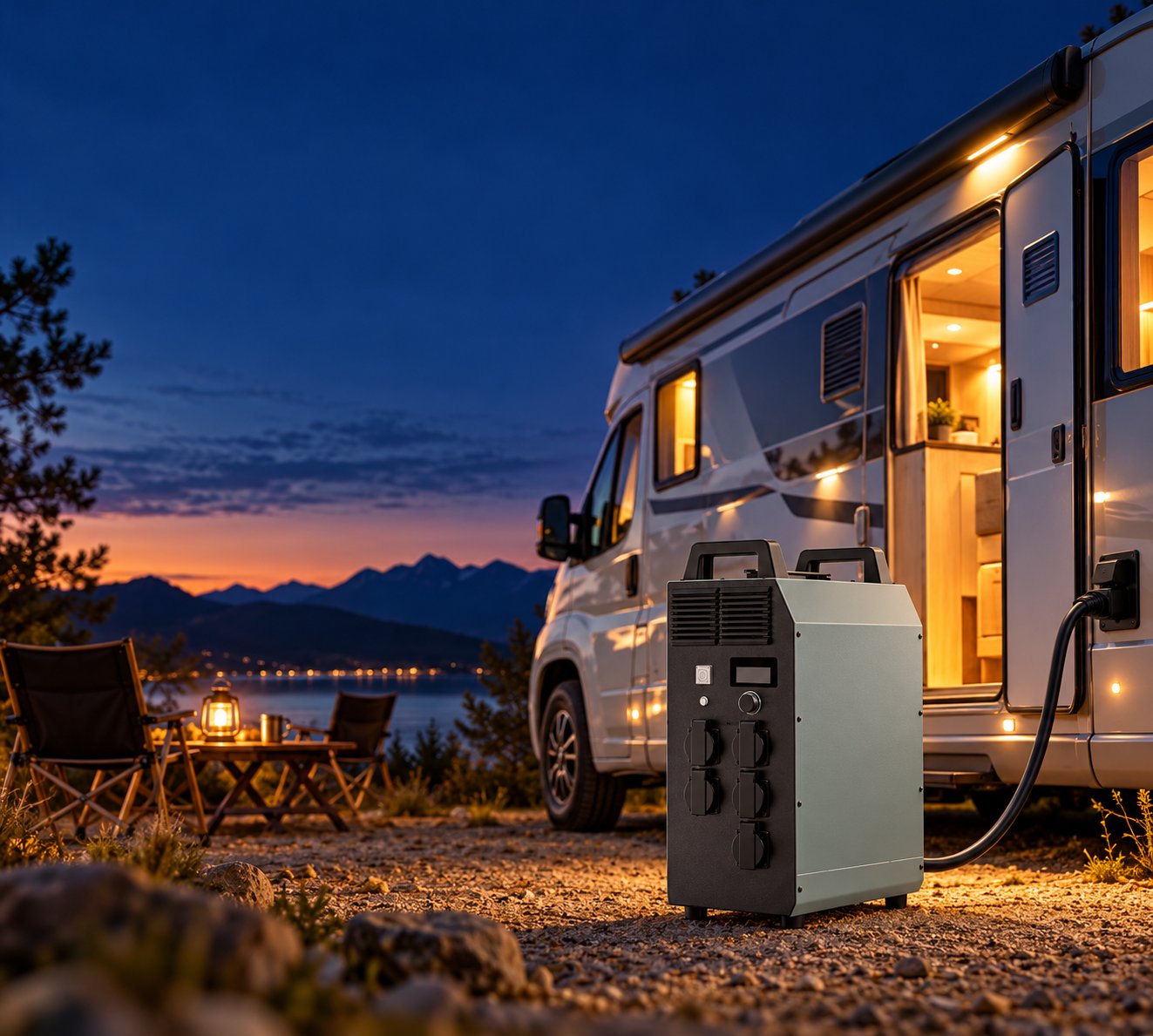
A sizing and wiring guide for RV enthusiasts: how to match DRIVELONG portable power stations to RV appliance loads or a five-device network, with solar recharging plans and model selection.
Life on the road no longer means living without power. Whether you are running a recreational vehicle through Europe, the Americas or Australia, or keeping a small five-device network online at a remote site, a modern portable power station can carry the whole load quietly and emission-free. This guide explains how to size a unit from DRIVELONG's published specifications, how to recharge it from solar panels, and how to wire both scenarios in practice. All figures below come directly from the published product specifications of the models named.
Step 1: Convert Your Loads into Watt-Hours
Every sizing decision starts with one calculation. List each device you want to run, note its rated power in watts, and multiply by the hours you need it per day. Sum the results to get your daily energy demand in watt-hours (Wh), then add 15–20% for inverter conversion losses and battery aging headroom. Also check the highest single surge load — appliances with compressors, such as refrigerators and air conditioners, draw several times their running power at startup, so the power station's peak output rating must cover that moment.
In short: required capacity (Wh) ≈ Σ (device watts × hours per day) × 1.15, and rated output (W) ≥ your simultaneous running load, with peak output covering motor startups.
Scenario A: Powering an RV
A typical RV load profile looks like this: a 12V compressor fridge at 60–100W, LED lighting at around 20W, a ventilation fan at 40W, a water pump at 60W, a microwave at about 1,000W, and a rooftop air conditioner at roughly 1,350W. You rarely run all of them at once, but the air conditioner and microwave set the peak requirement.
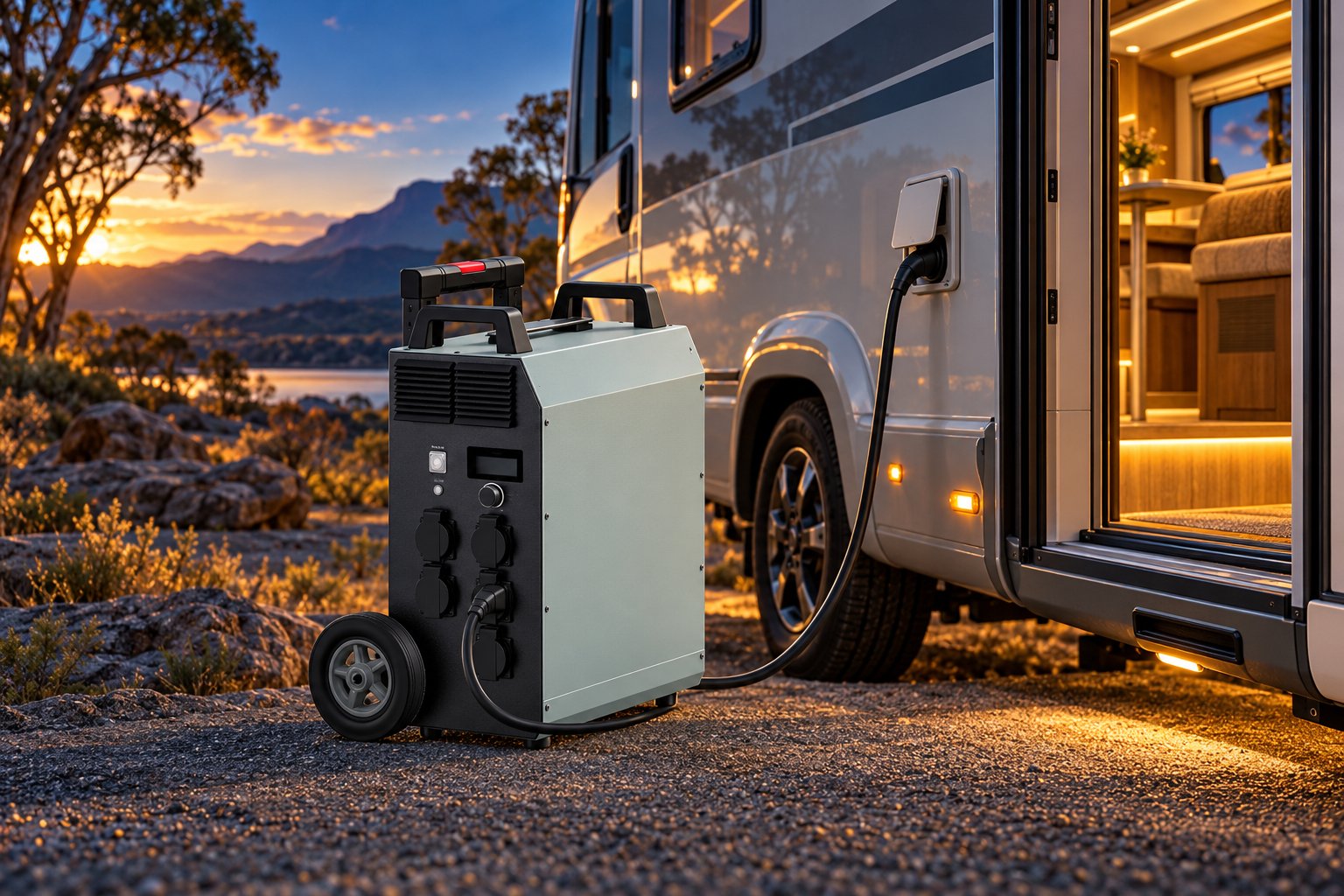
For a day built around essential loads — fridge, lights, fan, phone and laptop charging — the BP2400 Smart Mobile Power Portable Power Station is a well-matched choice. Its 2,662Wh LiFePO4 battery delivers 2,400W rated and 4,800W peak pure sine wave output (THD<3%). Applying the 85% usable-energy rule of thumb, estimated runtimes are:
| Load on BP2400 (2,662Wh) | Estimated runtime |
|---|---|
| 12V fridge, 60W | ~37 hours |
| Lights + fan + router, 100W | ~22 hours |
| Microwave, 1,000W | ~2.2 hours |
| RV air conditioner, 1,350W | ~1.7 hours |
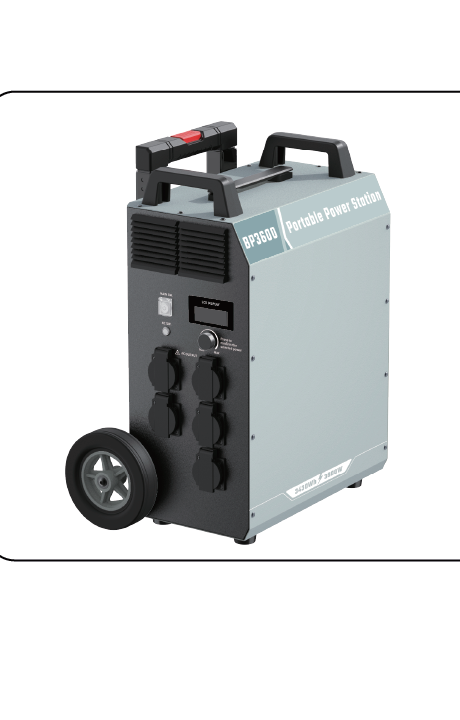
These are arithmetic estimates at 85% usable energy, not measured guarantees — real figures vary with ambient temperature and duty cycles. If you want to run the air conditioner or microwave more freely, step up to the BP3600 Portable Power Station: 3,430Wh, 3,600W rated and 7,200W peak output, with AC charging up to 3,000W at 220–240VAC (fully charged in 1.2 hours) and solar charging up to 2,400W (fully charged in 1.5 hours under sufficient irradiance). It rides on wheels with a telescopic handle (45kg with wheels and handle), so moving it between the garage and the campsite stays a one-person job.
For longer off-grid stays or heavier equipment, the EP3600iL High-Power Mobile Power Station offers the same 3,430Wh and 3.6kW continuous output in a patented four-wheel chassis, and can be stacked with up to 31 extra battery packs for a total of 109kWh. It also supports emergency charging of an electric vehicle — useful for RV owners towing or traveling with an EV.
Scenario B: Keeping a Five-Device Network Online
A small network of five devices — a fiber modem/ONT (~15W), a Wi-Fi router (~10W), a network switch (~15W), a laptop (~65W) and a monitor or small NAS (~30W) — draws roughly 135W when everything is active, while the always-on core (modem, router, switch) needs only about 40W. That low, steady load is exactly where compact units shine.
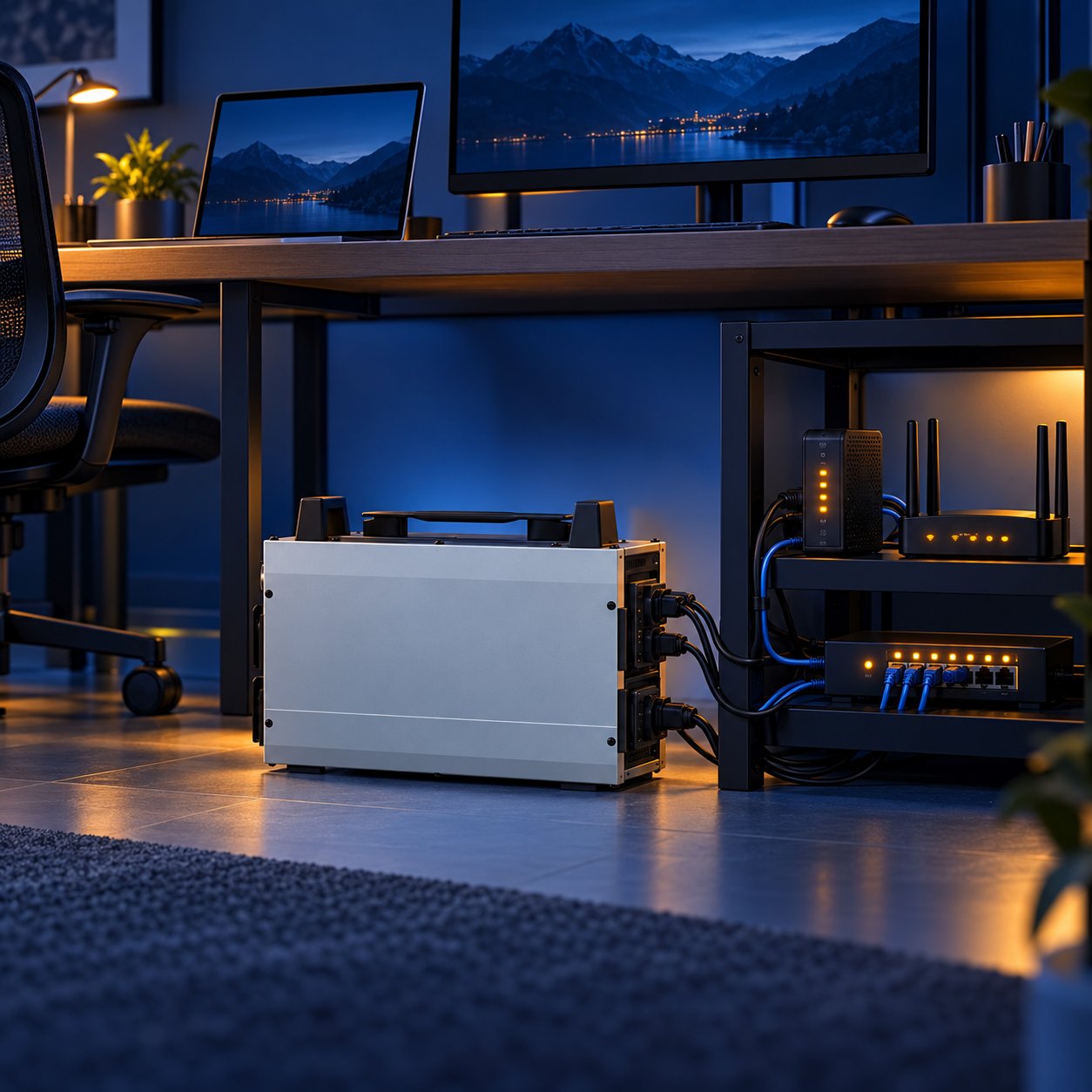
The BP500 Portable Power Station, at 1,004.8Wh and 500W continuous pure sine wave output in a 10kg body, keeps the 40W network core running an estimated ~21 hours. The BP1000 Portable Power Station, with 2,010Wh and 1,000W output at 18.5kg, stretches that to roughly 43 hours, or around 12.7 hours if all five devices run at full draw continuously. Both use ultra-low voltage LiFePO4 cells rated for 8,000 cycles, built for the daily charge-discharge rhythm of remote work.
If the network must survive grid outages without a reset — for example, a security camera recorder or a VoIP line — choose a unit with UPS function. The BP2400 and BP3600 both switch to battery in under 10 milliseconds, fast enough that routers and switches stay up through the transfer. Wiring is straightforward: the BP2400's 12V cigarette-style port (12V/10A) and four 5521 DC ports (12V/3A) can run 12V routers and switches directly and efficiently, while its USB ports, QC3.0 port and 60W USB Type-C PD port cover laptops and phones without a separate charger.
Recharging from the Sun
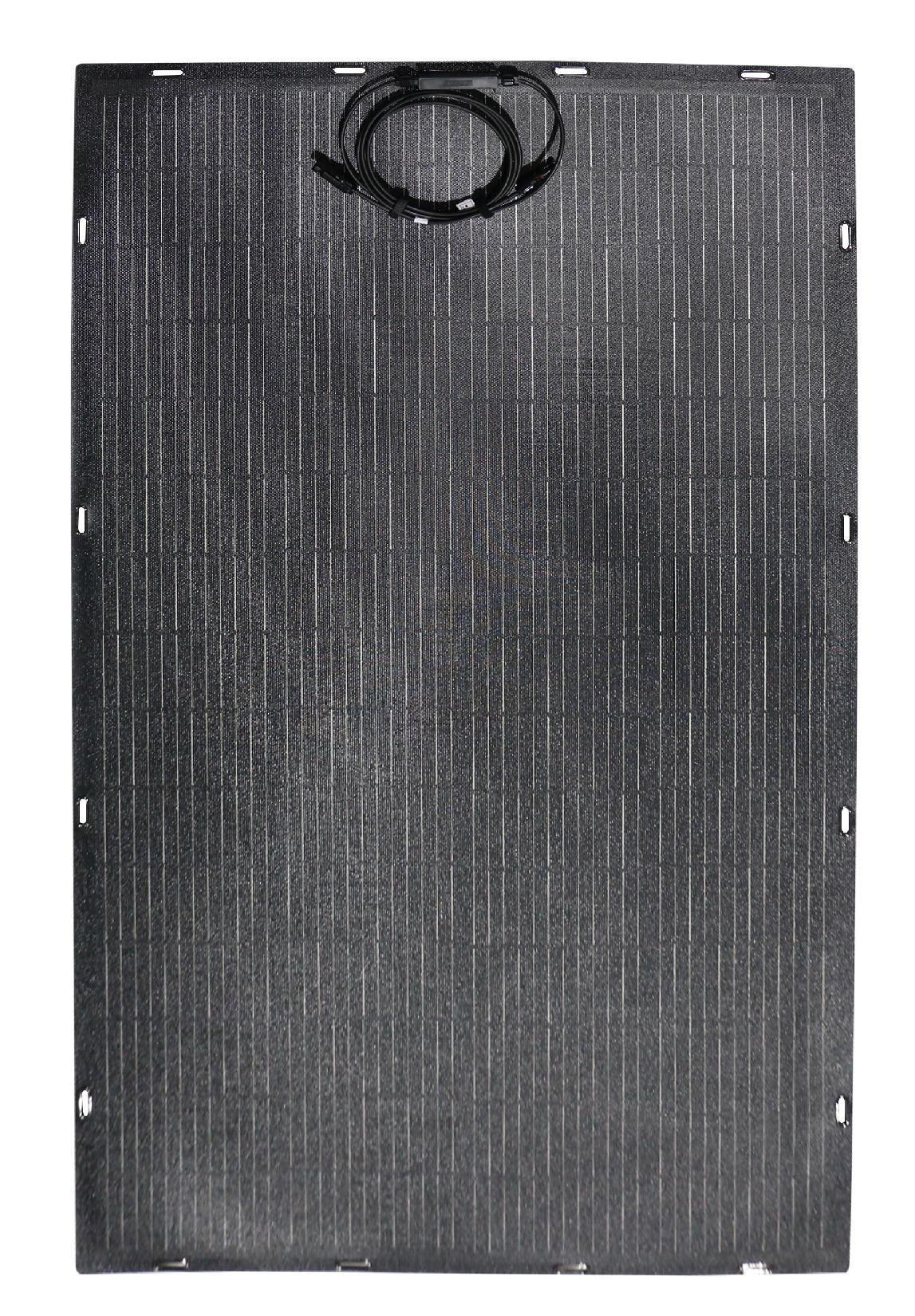
Every scenario above becomes self-sustaining when you pair the station with solar input. For permanently mounted panels on a curved RV or yacht roof, DRIVELONG's flexible monocrystalline panels are designed for exactly that surface: the DS100F (100W) and DS300F (300W) bend to curved roofs, use A-grade 5-busbar mono cells for long service life, and seal the junction box with a full glue fill to protect against rain; eyelets make hanging and mounting simple. For ground-deployed setups, the foldable DSF series — including the DSF600A/DSF600 (600W), DSF200/DSF300 (200W/300W), DSF100C (100W) and compact DSF30C/DSF50C (30W/50W) — unfolds to a large charging area and packs down small for travel.
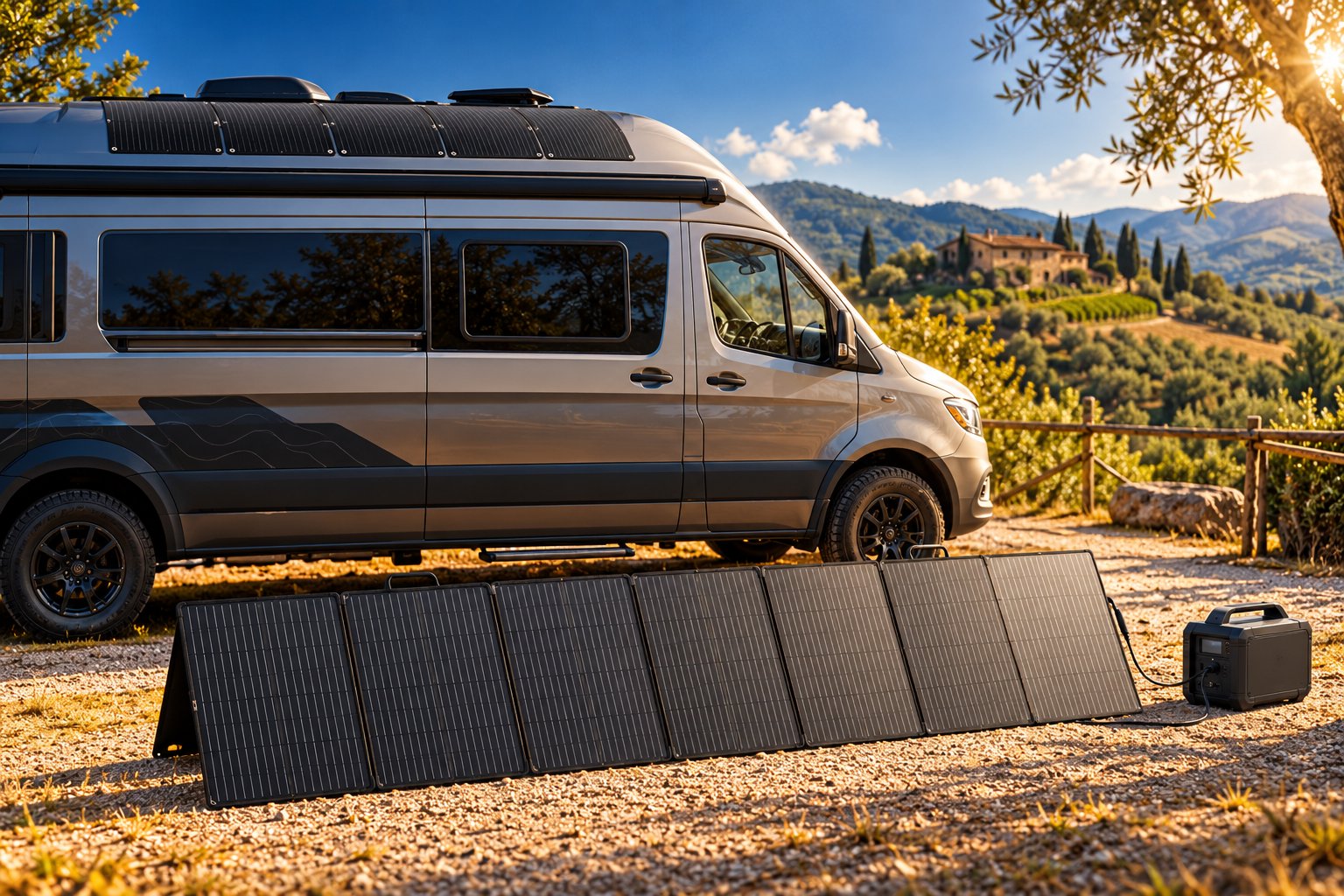
Match the panel string to the station's solar input window: the BP3600 accepts 12–150VDC up to 2,400W with a built-in 2,400W MPPT controller; the BP2400 accepts 12–105VDC up to 1,200W via its built-in 1,200W MPPT; the BP1000 carries a 500W MPPT controller and the BP500 a 350W MPPT controller compatible with various portable solar panels. As a planning number, a single DS300F under good irradiance returns roughly 1.2kWh on a day with four peak sun hours — enough to cover a day of essential RV loads or several days of network-core power. Before ordering, confirm that your chosen panel string's open-circuit voltage stays inside the station's input window and that connectors match; our engineers will verify the pairing for your exact configuration.
Wiring and Usage Checklist
- AC loads: plug appliances into the pure sine wave AC outlets (the BP2400 provides five 10/16A outlets selectable across 100–120V and 220–240V, 50/60Hz); keep simultaneous load below the rated output and motor startups below peak.
- DC loads: run 12V fridges, routers and switches from the cigarette-style port or 5521 ports, respecting each port's 10A or 3A limit — DC paths avoid inverter losses entirely.
- Solar: connect panels to the station's solar input before sunrise or with the panel covered, verify polarity and voltage within the MPPT window, and mount flexible panels with their eyelets on clean, curved roof sections.
- Temperature: charge between 0°C and 45°C, discharge from −20°C to 50°C (BP2400 ratings); avoid charging a cold-soaked battery straight from sub-zero transport.
- Outdoors: BP2400 and BP3600 units carry IP53 metal enclosures with IP66 battery packs and an integrated auto-extinguishing device, so campsite dust and rain splashes are covered — do not submerge them.
- Monitoring: use the LCD panel and Wi-Fi/Bluetooth app on the BP2400, or the intelligent wireless monitoring system on the BP3600 and EP3600iL, to track input and output while loads run.
Model Quick Reference
| Model | Capacity | Rated / Peak | Solar input | Best suited to |
|---|---|---|---|---|
| BP500 | 1,004.8Wh | 500W | 350W MPPT | Five-device network core, day trips |
| BP1000 | 2,010Wh | 1,000W | 500W MPPT | Full network with laptop, light RV loads |
| BP2400 | 2,662Wh | 2,400W / 4,800W | Up to 1,200W (12–105VDC) | RV essentials + UPS-protected network |
| BP3600 | 3,430Wh | 3,600W / 7,200W | Up to 2,400W (12–150VDC) | RV with air conditioner and microwave |
| EP3600iL | 3,430Wh → 109kWh | 3,600W / 7,200W | Solar + utility + driving charge | Extended off-grid, stackable growth |
FAQ
Can one station cover both scenarios? Yes. The BP2400 and BP3600 handle RV appliance loads and, thanks to their under-10ms UPS function, keep a network online during outages at the same time — size the battery against your combined daily Wh.
How long will a BP2400 keep a router and modem running? A 25W combined draw runs for roughly 90 hours from its 2,662Wh battery at 85% usable energy; the 12V DC output path stretches that further by avoiding inverter losses.
Which panel suits a curved RV roof? The DS100F and DS300F flexible monocrystalline panels are made for curved surfaces such as RV and yacht roofs, with rain-sealed junction boxes and eyelet mounting.
Can I expand capacity later? The EP3600iL accepts up to 31 additional battery packs, growing total storage to 109kWh, so you can start with one unit and expand as your loads grow.
Request a Configuration Proposal
The fastest way to the right configuration is a short load list: tell us which devices you run, for how many hours, and whether your roof takes flexible or foldable panels. DRIVELONG's engineering team will match a power station and solar panel combination to your figures, confirm voltage windows and connectors, and quote for your market — Europe, the Americas or Australia. Submit your inquiry to receive a sizing proposal with specifications and lead time.