
A verified DRIVELONG load analysis and model recommendation for a small house: which appliances the BP3600 can run together, solar panel sizing with DSF foldable panels, comparison with the flagship EP12000iL, and a trial-order-to-retail purchasing path.
Power Solution for Your Small House — DRIVELONG Portable Power Station Selection & Solar Sizing
Thank you for your interest in DRIVELONG (Suzhou) portable power stations. Based on the appliances you listed, we have prepared the following load analysis and recommendation. All specifications below are taken from our official product records.
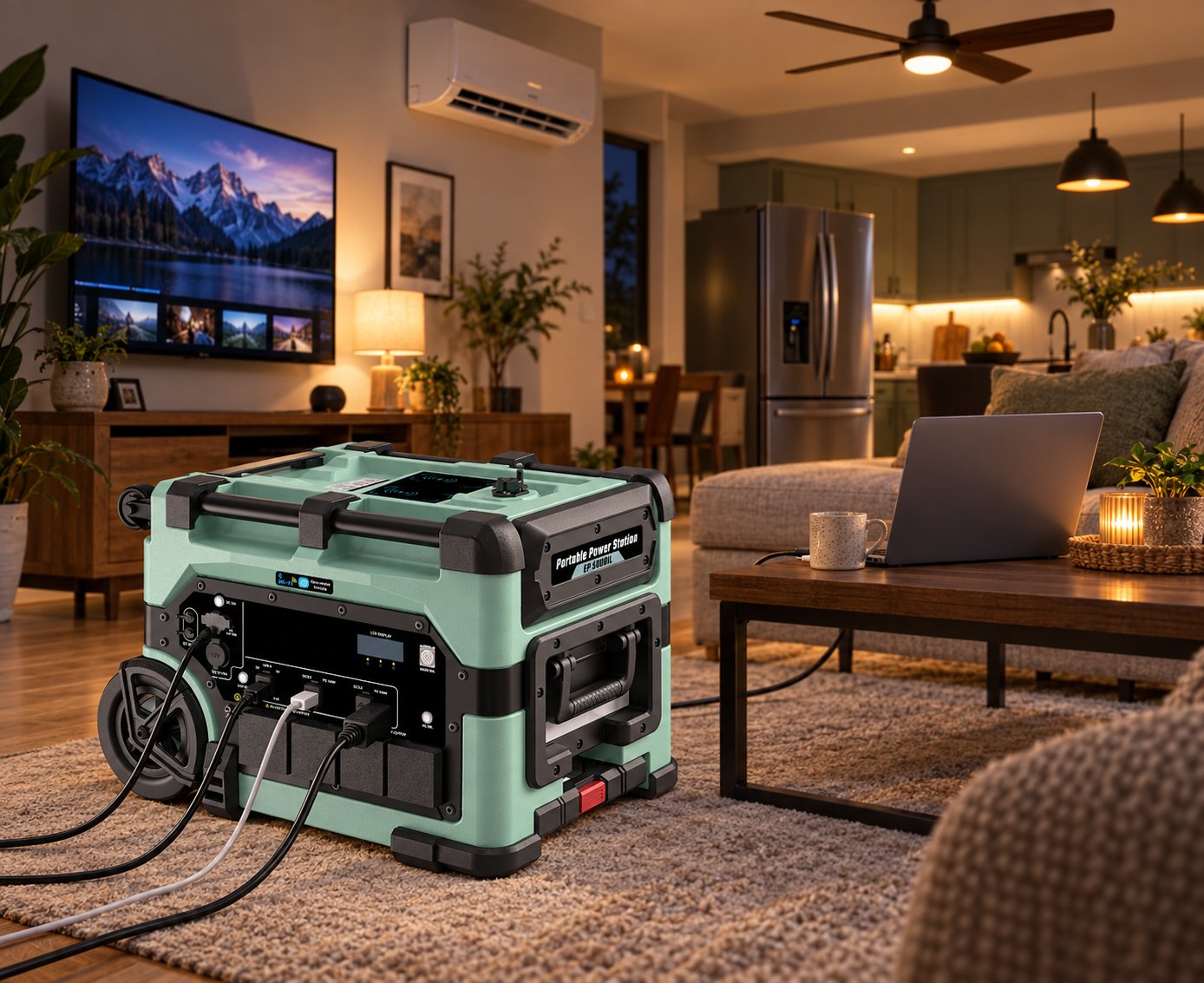
1. Your Appliance Load Analysis
| Appliance | Typical Running Power | Startup / Surge Power |
|---|---|---|
| Air conditioner (small room unit) | 900–1,500 W | 2,000–3,000 W (compressor start) |
| Fan | 50–100 W | 100–200 W |
| Refrigerator | 100–200 W | 800–1,200 W (compressor start) |
| Microwave oven | 1,000–1,500 W | 1,500–1,800 W |
| TV | 60–150 W | 100–200 W |
| Laptop | 45–100 W | negligible |
| Electric stove (one burner) | 1,500–3,000 W | 2,000–3,200 W |
Note: running and surge figures are typical ranges for household appliances in this size class; your actual units may differ. We can recalculate against the nameplate data of your specific appliances before you order.
2. Recommended Model: BP3600 Portable Power Station
Verified specifications (from our product record): 3,600 W rated / 7,200 W peak pure sine wave output; built-in 3,430 Wh LiFePO4 battery; bidirectional inverter; charges from AC, solar and smart generator; up to 80% charge in one hour; UPS function for seamless backup.
What it can run simultaneously (approx. 3,400 W total)
- ✅ Refrigerator + fan + TV + laptop + lights at all times (~500–700 W)
- ✅ Air conditioner can run together with refrigerator, fan, TV and laptop (~1,800–2,300 W total, well within the 3,600 W rating; the 7,200 W surge comfortably covers two compressor starts)
- ⚠️ Microwave oven: runs fine alone (~1,500 W), but we recommend not running it at the same moment as the air conditioner plus other loads — stagger microwave use by a few minutes
- ❌ Electric stove: a 1,500–3,000 W heating element leaves no headroom and is not recommended on this unit. For cooking, use a microwave, induction plate (800–1,300 W, run alone) or gas
Runtime reference: the 3,430 Wh battery stores about 3.4 kWh. A typical daily duty cycle for this appliance list (fridge 24 h cycling + fan + TV 4 h + laptop + AC 4–6 h at night) consumes roughly 4–7 kWh/day, so one full charge covers part of the day — for example, overnight AC plus refrigeration. Continuous multi-day coverage relies on daytime solar recharging (see Section 4) or periodic AC/generator recharging, and we recommend sizing the solar array to your actual daily consumption.
3. Is This the Strongest Model? — No, We Have Larger Units
- BP3600 (recommended here): 3,600 W / 3,430 Wh — a balance of household output and manageable size for a small house
- EP5000iL: 5,000 W output, 3,430 Wh, stackable to 109 kWh with 31 extra batteries, 10 kW parallel output of two units
- EP6000iLS / DP6000iL: 6,000 W rated / 12,000 W peak, 5,376 Wh, expandable to 172 kWh
- EP12000iL — our strongest model: 12,000 W rated / 24,000 W peak, 7,680 Wh, stackable to 372 kWh, 24 kW parallel output, built-in 22 kW EV charger, full charge in about 70 minutes
With the EP12000iL, even your electric stove plus all other appliances could run at the same time. For a small house trial, however, the BP3600 is the most cost-effective choice; the EP series suits whole-home backup where the budget is higher.
4. Recommended Solar Panel Configuration
Our matching solar panels (verified product records): DSF600A/DSF600 foldable 600 W, DSF200/DSF300 foldable 200 W/300 W, DSF100C 100 W, plus flexible DS-series panels (DS100F/DS170F/DS300F).
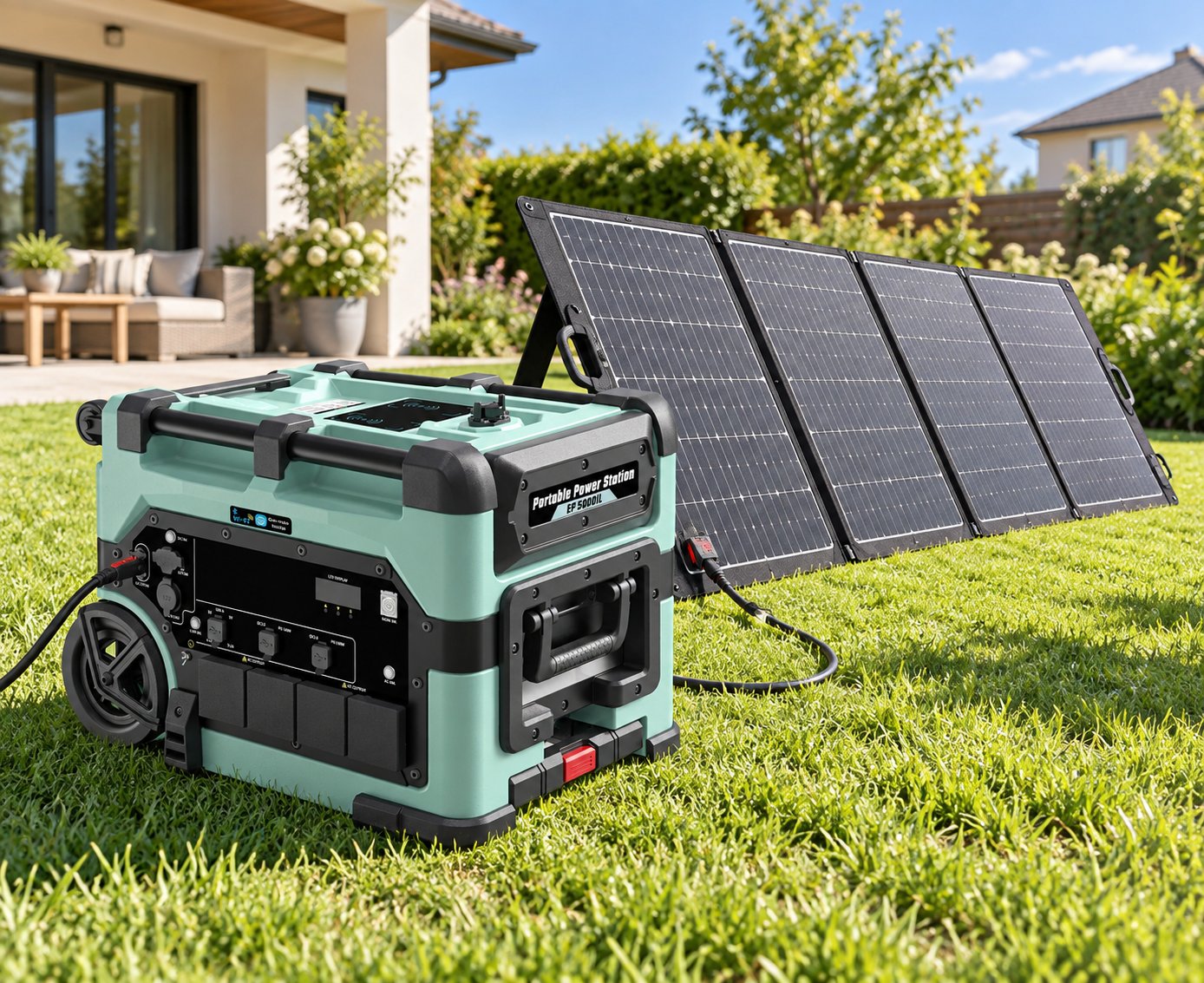
Indicative configuration for BP3600 (final sizing to be confirmed)
- Reference option: 4 × DSF600A 600 W foldable panels ≈ 2,400 W nominal array — the BP3600's exact maximum solar input (MPPT) limit is not stated in our product record, so the array power the unit can actually accept must be confirmed before ordering. Once confirmed, we will state the achievable input power and expected recharge time for your region's irradiance (regions with more peak sun hours recharge faster).
- Budget alternative: 2 × DSF600A + 1 × DSF300 (1,500 W nominal) — subject to the same MPPT confirmation
- The DSF600A folds compactly for retail display and outdoor use, with multiple connectors and hanging eyelets
Please confirm the MPPT limit and your local peak sun hours with us before ordering a large array; we will verify the panel configuration for your region.
5. From Trial Order to Retail Program
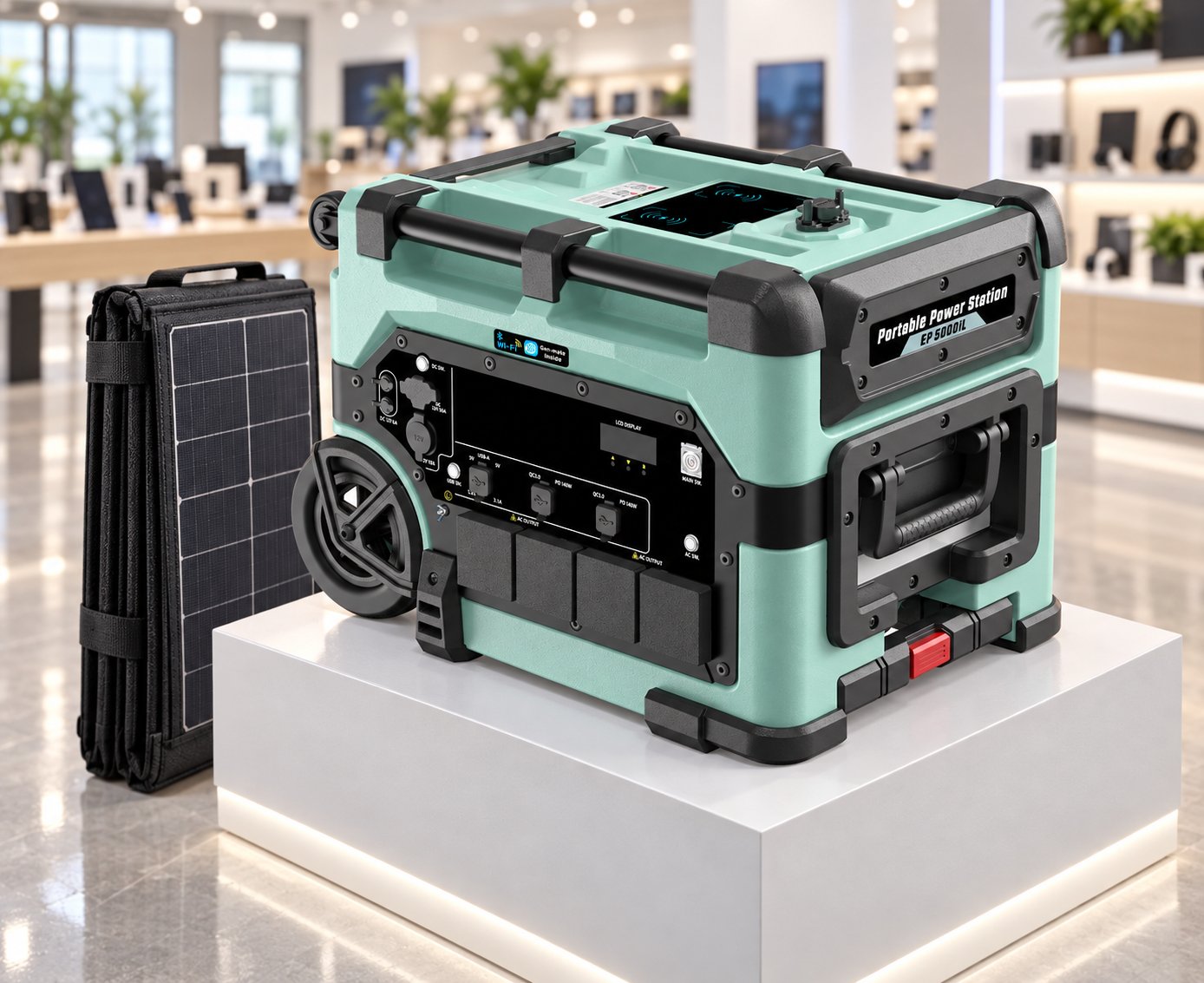
- Trial order: Start with 1 unit of BP3600 (+ optional solar panels) to evaluate performance in real conditions.
- Evaluation support: during the trial we can provide the product spec sheet, charge/discharge test reports, and setup and usage videos, so your team can verify output, capacity and recharging behavior before committing to volume.
- Batch purchase for your retail store: After approval, recommended retail line-up: BP500 (500 W) and BP1000 (1,000 W) as entry SKUs, BP2400/BP3600 as core sellers, with DSF/DS solar panels as add-on accessories; EP series for high-end customers.
- OEM/ODM: As the manufacturer, DRIVELONG supports OEM/ODM — custom branding, packaging and capacity configurations. Certification requirements vary by destination market; tell us your target market and we will confirm which certifications apply and how we can support them.
- Next step: Submit an RFQ via our website (www.drivelongpower.com) with your target quantities and market; our sales team will respond with formal quotation and lead time, and will confirm MOQ, warranty terms, and packaging/logistics options for your retail program at that stage.
Ready to start your trial? Tell us your target quantity, target market and preferred models, and our sales team will prepare a formal quotation and lead time for your retail program.
Submit an RFQ at www.drivelongpower.com